

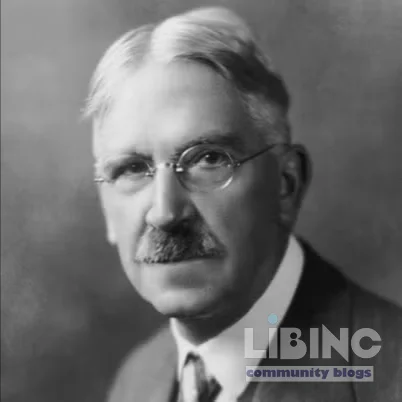
John Dewey, Experimentalism, and the Modernization of Education: An Analytical Reconstruction
Table of Contents
John Dewey stands as a central node in the history of educational thought, a thinker whose career bridged philosophy and classroom practice. He taught at universities from 1884 to 1930, and his work blossomed into a program of reform that linked learning to concrete experience. In 1894 he launched an experimental elementary school to test his ideas about learning by doing, a venture that would seed later institutions and debates. Dewey’s influence extended beyond the university—he helped to establish The New School for Social Research in 1919, a hub for progressive inquiry that foregrounded social science, arts, and honest debate. Why does this matter now? Because Dewey’s questions—how education cultivates democratic citizens, how ideas translate into practice, and how institutions adapt to rapid social change—remain pressing as societies navigate digitization, inequality, and political polarization. The stakes are not merely academic; they shape how people come to know, participate, and act in a complex world.
The core challenge in understanding Dewey lies in tracing how a single intellectual program—experimentalism, sometimes called instrumentalism—maps onto a sprawling array of schools, journals, and social experiments. Dewey argued that ideas function as tools for testing experience: through thoughtful experimentation, humans learn to reshape habits and environments. This is not a retreat from theory but a theory of inquiry that treats thought as practical engagement with the world. Yet the path from abstract principle to classroom practice is not linear. Dewey faced conflicts between tradition and reform, between scholarly authority and the messy demands of real classrooms, and between national debates about democracy and the institutions that organize learning. The direction of this analysis is to illuminate those tensions and show how Dewey’s method—learning through doing—transformed both how we teach and how we think about knowledge itself.
Analytics of John Dewey’s Life and Thought
Dewey’s career unfolds as a sequence of environments that sharpened his belief in education as a public instrument. He studied philosophy and psychology at Johns Hopkins after early schooling in Vermont, then moved through Michigan, Minnesota, and Chicago, each posting sharpening his sense of how institutional design shapes intellectual life. The analytic takeaway is straightforward: Dewey does not present a single doctrine but a methodological stance that connects curriculum, method, and democracy. His early exposure to William James’s writings provided a pragmatic anchor, while his movement through multiple universities exposed him to the frictions between disciplinary specialization and the translational demands of social reform. This biography is not mere chronology; it is the scaffolding of a philosophy that treats education as a living enterprise.
The term Dewey popularized—experimentalism—frames thought as a dynamic tool. Dewey argued that human beings act first on habit and then must improvise in light of the consequences of their actions. This is an essential correction to static models of knowledge. In the Deweyan view, experiential learning is not a garnish but the engine of intellectual growth. The concept of instrumentalism, closely tied to this line of thought, insists that ideas gain meaning through their capacity to guide action and to produce workable results in uncertain environments. For Dewey, the value of philosophy lies in its capacity to orient practical experiments that improve life rather than to establish abstract certainties detached from action. This is a crucial lens for assessing his educational reforms.
The institutional dimension matters as well. Dewey’s leadership of the Chicago School of Education, his later move to Columbia and Teachers College, and his collaboration on The New School for Social Research reveal an ambition to fuse rigorous scholarship with applied reform. The University Elementary School, founded in 1894, embodies the critical testbed for his educational program: curriculum emerges from engagement with real problems, students’ present experiences become the focal point of inquiry, and the teacher acts as facilitator of inquiry rather than a mere transmitter of facts. By analyzing these institutions, we see how Dewey translated theory into a blueprint for modern schooling, a blueprint that emphasizes inquiry-based learning, democratic participation, and continuous adaptation.
The political dimension runs parallel to the pedagogical one. Dewey linked democratic vitality to education that fosters reflective judgment and collaborative problem solving. Industrialization, he argued, creates wealth for a minority and disenchants broad swaths of society if education fails to cultivate civic competence. This diagnosis explains his involvement with the People’s Lobby and his experiments with party politics that aimed to align political processes with everyday people’s concerns. The analytic core here is causal: economic structure shapes political life, and education serves as the critical conduit by which citizens learn to navigate those structures. Dewey’s life thus reveals a tight loop between social context, institutional design, and epistemic aims.
Finally, Dewey’s long engagement with public discourse—through essays in The New Republic and scholarly treatises—demonstrates a consistent commitment to accessible, argumentative clarity. He never reduced philosophy to abstraction; he insisted that ideas must be tested against concrete problems and public debates. This orientation—philosophy as a public practice—anchors the analytic method of this reconstruction: read doctrines in relation to their institutional experiments, and assess their durability by their capacity to stimulate new questions and adaptable solutions. Dewey’s analytic architecture, then, rests on three pillars: experiential learning, democratic pedagogy, and institutional experimentation. These pillars illuminate why his work endures in contemporary debates about schooling and civic life.
Contrast: Dewey in Relation to Traditions
Dewey’s rejection of rigid Transcendentalist abstractions follows from a commitment to experiential inquiry. He opposed ideas that detach thinking from actual life, arguing that education should ground students in present interactions rather than chase an idealized past. This stance contrasts with traditional pedagogy, which often emphasizes authority, memorization, and discipline over inquiry. The Deweyan critique is not anti-knowledge; it seeks a form of knowledge that remains actionable in a changing world. In this sense, Dewey’s philosophy aligns with a broader movement in progressive education, yet he differentiates himself through a disciplined emphasis on the experimental status of ideas and on democracy as a living educational medium.
The tension with tradition also appears in the practical unfoldings of his career. The University Elementary School, established to test his theories, faced institutional friction when leadership changed. The resulting resignation is not a failure of the program but a data point about the frictions that arise when reform challenges the core premises of established universities. Dewey’s response—continuing to advocate for testing ideas in real schools and then translating those ideas into public institutions—illustrates a distinctive method: reform must move between theory, practice, and policy, with each phase informing the next. This is a crucial contrast with purely academic or purely populist approaches to education.
In debates about pedagogy, Dewey’s emphasis on learning through doing sits between the continuum of classic, lecture-based instruction and late-20th-century constructivist models. The Deweyan emphasis on problem-driven inquiry resonates with modern inquiry-based curricula, but it is grounded in a broader democratic rationale: education should equip citizens to participate in public life. The experimental school movement, then, constitutes a deliberate attempt to bridge classroom activity with social ends, a contrast against schools that treat knowledge as a static archive rather than a set of tools for democratic problem solving.
The Russia connection adds another layer of contrast. Dewey returned from observing Russian educational experiments with a nuanced view: he valued interactive student engagement but did not abandon the past entirely. This juxtaposition—past learning as a resource rather than a constraint—embodies the Deweyan stance: education must learn from diverse systems while retaining a clear sense of present-oriented aims. The contrast with both static tradition and unbridled avant-garde experimentation helps explain why Dewey’s program has remained relevant: it preserves the impulse to adapt while resisting faddish radicalism in pedagogy.
Across these contrasts, one constant remains: Dewey treats education as a political act grounded in social life. The difference with traditional schooling lies not in skepticism about knowledge but in a method that treats knowledge as provisional and improvable through collaborative inquiry. This contrast clarifies why contemporary debates about curriculum, assessment, and school organization still lean on Deweyian logic: to educate citizens who can navigate complexity, schools must be laboratories for thinking, not museums of finished answers.
Cause and Effect: Societal Pressures, Institutional Experiments, and Democratic Ideals
The cause-and-effect logic in Dewey’s work begins with a diagnosis of industrial modernity. Industrialization creates wealth and power for a narrow segment of society, while broad public life confronts new dislocations. Dewey argues that this social structure endangers democracy unless education trains citizens to think critically and participate collaboratively. The effect is a program of reform that treats schools as sites of social experimentation. The University Elementary School and The New School for Social Research are not footnotes but active instruments designed to cultivate students who can adapt to changing economic and political conditions. The causal chain is clear: economic organization shapes civic life, and education shapes the capacity of citizens to respond to that life with coordinated action.
The built-in feedback loop between thought and action becomes visible in Dewey’s method. Ideas gain traction when they produce tangible improvements in the classroom and in public debate. This iterative testing, in turn, refines Dewey’s own philosophy, leading to new experiments and broader institutional adoption. The effect of this approach extends beyond a single school or policy; it creates a culture of continuous inquiry in education that invites scrutiny, adaptation, and reform. In practice, Dewey’s method requires schools to respond to present conditions—present needs, present problems—while maintaining a historical sensibility that recognizes the value of past knowledge as a reservoir for inquiry.
The social experiments associated with The New School for Social Research further illustrate the cause-and-effect logic. By foregrounding progressive inquiry in the arts and social sciences, the institution offered a space where ideas could be tested against real-world questions rather than abstract theory alone. The school’s emphasis on free exchange of intellectual ideas aligns with a democratic aim: to democratize knowledge by making it collaborative and contestable. The effect of this impulse is a sustained openness to interdisciplinary collaboration, an enduring feature of modern higher education that mirrors Dewey’s insistence on the interdependence of education and democracy.
Another causal thread runs through Dewey’s political engagement. He believed democracy requires more than ballots; it demands institutions that cultivate informed, reflective citizens who can navigate economic power and social strife. His participation in labor and reform networks—such as the People’s Lobby and the People’s Party initiative—reflects a conviction that education and political mobilization should reinforce each other. The effect of this stance is a broader argument that schooling is a public responsibility with civic consequences, not merely a private or technical enterprise. In sum, the causal architecture of Dewey’s program links economic structure, educational design, and democratic legitimacy into a coherent, testable project.
Looking forward, the Deweyian frame remains a powerful tool for analyzing today’s reforms. As education confronts digital disruption, persistent inequality, and evolving civic norms, the call to align instruction with present experience and public purpose persists. The cause—societal complexity—requires an educational response that combines experimentation, community engagement, and accountability. The effect—to cultivate citizens capable of shaping their institutions in democratic fashion—remains a benchmark for evaluating policy choices, curriculum reforms, and institutional architectures. Dewey’s logic thus offers a durable analytic for understanding both past transformations and contemporary redesigns of schooling.
Expert Reconstruction: Implications for Modern Education
If one takes Dewey’s program seriously, the present educational project must resemble a continuous experiment in which students, teachers, and communities co-create knowledge. Modern classrooms should treat problems as starting points rather than endpoints, encouraging students to test hypotheses, revise strategies, and share findings with broader publics. This reconstruction preserves the Deweyan commitment to present-focused learning while integrating scalable forms of assessment, collaboration, and critical reflection. Experiential learning becomes less a method and more a disciplinary stance—an obligation to connect cognitive work to social consequences, to measure outcomes by real-world impact, and to adjust practices in light of evidence.
The institutional corollaries are equally clear. Schools, colleges, and policy labs must operate as interlocking ecosystems where pedagogy, research, and governance inform one another. The New School for Social Research remains a salient model: a space where social inquiry, arts, and public dialogue converge, enabling scholars and practitioners to pursue reform not as a one-off project but as an ongoing conversation with society. For Dewey, such an arrangement strengthens democracy by distributing authority, inviting critique, and sustaining learning that is relevant to present conditions. The expert reconstruction thus centers on institutional flexibility, cross-disciplinary collaboration, and a persistent commitment to public accountability.
In the classroom, a Dewey-inspired approach translates into curricula that begin with real questions—local community concerns, workplace challenges, or cultural inquiries—and move toward transferable skills: problem-solving, collaboration, and ethical reasoning. The teacher’s role shifts from information gatekeeper to facilitator of inquiry, guiding students through guided investigations, reflective writing, and structured debate. Assessment follows the logic of inquiry: evidence-based, process-oriented, and publicly shareable. This reconstruction, though faithful to Dewey’s core claims, updates them for digital learning environments, globalized labor markets, and rapid social change while preserving the critical aim: education as a tool for democratic flourishing.
Critics rightly challenge education reform to avoid technocratic overreach, to respect intellectual autonomy, and to prevent the instrumentalization of learning. A careful Deweyan reconstruction acknowledges these cautions. It foregrounds student agency, ethical deliberation, and pluralistic inquiry while maintaining rigorous standards for inquiry, collaboration, and civic responsibility. The result is a balanced program that honors the roots of experimentalism and instrumentalism in John Dewey’s work, yet translates them into contemporary forms that resist stagnation, celebrate diversity, and sustain public trust in educational institutions.
The historical arc of John Dewey’s thought offers more than a retrospective narrative. It presents a practical framework for interpreting how education can contribute to democratic resilience in times of social and technological upheaval. Dewey’s insistence that ideas serve as tools for action, that schools must engage with present life, and that democracy depends on educated publics remains a foundational challenge for policymakers, educators, and researchers. By examining his life, his experiments, and his institutions, we glimpse a method for reimagining education that is at once principled and adaptable—an approach that continues to inform debates about curriculum, pedagogy, and the role of schools in a changing world.
Practical Pathways for 21st-Century Deweyan Education
Translating Dewey's experimentalism into contemporary classrooms requires a concrete, scalable blueprint that preserves inquiry, democratic participation, and accountability across settings.
The missing piece is a clear design that ties problem-driven learning to observable outcomes, so teachers can plan, enact, and assess ongoing inquiries without sacrificing standards or equity. This section offers practical routes, with field-tested scenarios and actionable steps.
| Aspect | Traditional Instruction | Deweyan Inquiry | Modern Implications |
|---|---|---|---|
| Instructional Focus | Content transmission | Problem-centered inquiry | Projects tied to real issues |
| Teacher Role | Director of facts | Facilitator of inquiry | Coaches and co-learners |
| Assessment | Summative tests | Formative, portfolios | Rubrics, performance tasks |
| Student Agency | Passive reception | Active responsibility | Distributed leadership |
| Curriculum Design | Fixed sequence | Emergent from problems | Adaptive, local relevance |
| Evidence of Impact | Grade outcomes | Learning-to-learn, civic engagement | Public-facing demonstrations |
Practical scenarios include a middle school science project on water quality that begins with community questions, a high school civics unit built around interviews with local officials, and a university policy lab that tests proposals through stakeholder feedback. These cases illustrate how inquiry-based learning (IBL) and project-based learning (PBL) activate curiosity while aligning to public accountability and equity objectives.
- Learn by doing: students tackle real problems, not abstract drills.
- Reflection as part of practice: periodic journaling and critique.
- Community as curriculum: partnerships with local organizations guide inquiry.
Assessment is reimagined as portfolios and performance tasks that document process and impact, not only final accuracy. Formative feedback, peer reviews, and public demonstrations of work become routine, supporting continuous improvement and accountability.
| Milestone | What it demonstrated | Impact |
|---|---|---|
| 1894 | University Elementary School founded | Prototype for inquiry-led learning |
| 1919 | The New School for Social Research established | Public discourse as lab |
| 1920s–30s | Collaborative reforms in teacher education | Democratic schooling experiments scale |
These elements translate Dewey's vision into modular practices that districts can pilot while maintaining equity and standard alignment, with continuous feedback cycles feeding back into policy and classroom design.
What is Dewey's experimentalism and how does it translate to modern classrooms?
John Dewey's experimentalism treats knowledge as a tool tested in action, asking learners to pose meaningful questions, design investigations, and interpret evidence within real contexts. In contemporary classrooms this translates into inquiry-based learning where students pursue authentic problems such as analyzing local water quality or evaluating community needs. This approach foregrounds process, collaboration, and reflection, and requires teachers to design problems with clear real-world stakes. The result is a more vibrant classroom where ideas meet evidence and social relevance. This framing supports practical skills essential for modern work and civic life, including critical thinking, collaborative problem solving, and ethical reasoning.
Analytically, the strategy aligns curriculum with authentic assessment and fosters democratic participation by inviting student voices into problem framing and evaluation. The practical effect is a learning culture that treats mistakes as data for iteration, not as failures, and that values public demonstration of understanding alongside private mastery.
How can schools implement inquiry-based learning without sacrificing standards?
Implementation starts with mapping standards to real tasks and designing them around central questions that matter to students. This means breaking big standards into iterative, evidence-based projects with rubrics that capture process, collaboration, and impact as well as product. It also requires regular check-ins, formative feedback, and transparent criteria so students understand what success looks like across domains. In practice, teachers curate tasks that connect to local issues (for example, climate resilience or community health) and document outcomes through public portfolios, ensuring alignment with learning goals while preserving equity and accountability.
Analytically, success depends on implementation supports, professional development, and a culture of shared leadership that distributes responsibility for assessment, not just content delivery.
What role do teachers play in a Deweyan classroom?
In a Deweyan classroom, teachers act as facilitators of inquiry, designers of meaningful problems, and collectors of evidence about student growth. They scaffold research processes, help students articulate questions, guide collaborative work, and provide timely feedback. The teacher also curates community connections, inviting experts and stakeholders to participate in investigations. This shifts the classroom from a one-way knowledge channel to a collaborative learning hub where students co-create knowledge with adults and peers, while teachers monitor progress and ensure ethical, rigorous inquiry.
Analytically, this role requires new professional practices, including collaborative planning, performance-based assessment, and reflective practice to refine problems and methods over time.
How does democracy connect to education in Dewey's framework?
Dewey links democracy with educated publics capable of reflective judgment and collaborative action. In the classroom, this means structuring activities that encourage dialogue, disagreement, and joint problem solving, with decisions made through deliberation and shared accountability. The curriculum becomes a microcosm of public life, where diverse perspectives are welcomed, tested, and synthesized toward common civic ends. Such design fosters participation skills, ethical reasoning, and a sense of public responsibility in students, preparing them to engage constructively in broader political and social processes.
Analytically, schools thus function as political laboratories where the quality of discourse, inclusivity of voices, and transparency of goals are as important as test scores.
What challenges arise when moving from theory to practice in implementing Deweyan reforms?
Several obstacles frequently surface: entrenched teaching habits, misalignment with high-stakes testing schedules, and limited time for collaborative planning. Schools may also face resource constraints, resistance from stakeholders who favor traditional methods, and uncertainties about sustaining long-term reform. To overcome these barriers, districts can start with small, well-supported pilots, align tasks with stated outcomes, provide professional development focused on inquiry design and assessment, and build communities of practice that share curricular materials and feedback. Incremental, evidence-based scaling is essential for durable change.
Analytically, the path requires leadership, clear metrics, and ongoing feedback loops that connect classroom inquiry to policy and vice versa.
What are examples of institutions like the University Elementary School and The New School in this program?
Historical examples show how schools can serve as laboratories for reform. The University Elementary School tested Dewey's ideas by grounding curriculum in present problems and enabling teachers to act as facilitators of inquiry. The New School for Social Research offered a platform for public debate, cross-disciplinary collaboration, and scholarly experimentation with real-world relevance. Modern equivalents include university labs co-designing curricula with community partners, or urban schools functioning as hub schools where districts test new assessment models and governance structures. These models demonstrate how learning communities can sustain experimental practice at scale.
Analytically, replication requires intentional design for community partnerships, governance, and cross-disciplinary collaboration to maintain democratic purposes while delivering scalable outcomes.







Add a comment
To comment, you need to register and authorize
Comments