

Gen Z Football Stars at the 2026 World Cup: The Rise, Sacrifice, and Strategy Behind a Youth Revolution
- Gen Z football stars at the 2026 World Cup: Analytics View
- Gen Z football stars at the 2026 World Cup: Contrast with the past
- Gen Z football stars at the 2026 World Cup: Causes and effects
- Gen Z football stars at the 2026 World Cup: Expert reconstruction
Problem: The World Cup stage, once dominated by seasoned veterans, now frequently features teenagers and very young adults who arrive with the weight of national expectation on their shoulders. The stakes are existential for managers who must balance the thrill of a fresh start against the risk of burnout or misalignment with a team’s core identity. Hidden conflict emerges as these players sprint toward peak performance under relentless media scrutiny, social media fever, and the fatigue of back-to-back fixtures. This article interrogates how a fearless Gen Z cohort is remaking the tournament—and what it costs behind the scenes. The direction is clear: evaluate the rise through analytics, contrast with historical norms, map cause-and-effect dynamics, and reconstruct expert insights into a practical playbook for the future.
The Gen Z football stars at the 2026 World Cup narrative is not only about flashy goals or viral clips. It’s a case study in how talent development pathways, data-driven selection, and modern football culture intersect to accelerate a generation’s leap onto the global stage. Across Spain, England, Brazil, Argentina, and beyond, players born in the late 2000s and early 2000s leverage club academy systems, loan strategies, and advanced conditioning to arrive ready to transform matches within minutes of kickoff. This is a measured, evidence-based look at why the current cohort feels inevitable, how teams manage the pressure, and what this means for football’s evolution in the next decade.
What follows is a layered examination. First, we analyze the core players and the data that accompanies their performances. Then we contrast this moment with prior eras, highlighting how the conditions surrounding early impact have changed. We move to cause-and-effect relationships—why the system produces these players, and what results follow for national teams and clubs. Finally, we reconstruct an expert framework for integrating Gen Z talent sustainably, turning hype into durable excellence rather than a temporary spark.
Gen Z football stars at the 2026 World Cup: Analytics View
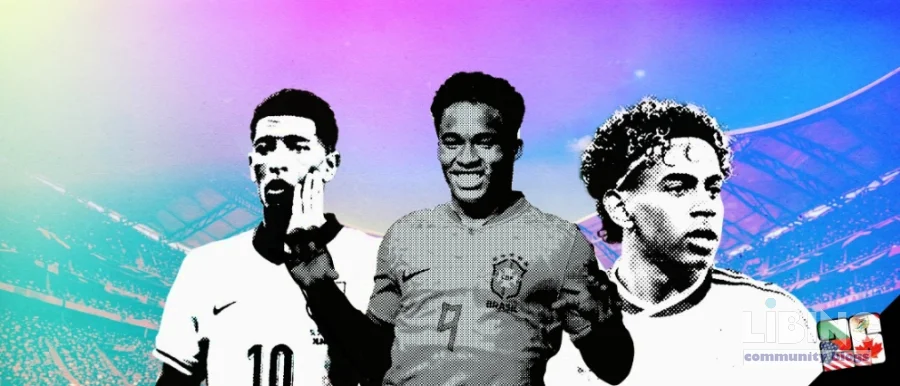
The 2026 World Cup is the stage on which the newest rule of football appears: youth as a strategic asset, not a risk. Lamine Yamal’s breakthrough moment for Spain—an 18-year-old scoring within 10 minutes of his first World Cup start—became a data-trigger that redefined expectations. At 18 years and 343 days, he joined a rare club of the world’s youngest scorers, and his pace, decision-making, and off-ball timing reveal a generation steeped in high-intensity training from an early age. This is the clearest signal that the age barrier is dissolving at the top level through deliberate development pathways rather than chance glimpses of promise.
From a tactical analytics standpoint, Yamal’s impact goes beyond a single goal. It altered Spain’s press-and-break rhythm, forcing opponents to adjust their lines earlier and opening channels for subsequent attackers. The pattern demonstrates a broader shift: coaches increasingly trust young players to execute high-variance moments because they come equipped with finely tuned perceptual skills and rapid decision cycles. The data tell a story of accelerated readiness: minutes-per-season in elite contexts, early exposure to international rhythms, and a maturity curve that folds into a single match-winning movement rather than a slow, protracted apprenticeship.
Consider Jude Bellingham, whose performance with England in the same tournament embodies another analytics-driven arc. At 22 years and 353 days, his consistency across major internationals—Euro 2020, World Cup 2022, Euro 2024, and World Cup 2026—marks a historic benchmark. He stands as the youngest European player to feature in four major international tournaments, a testament to the modern development environment’s velocity. His 46th-minute break-through against a tense Croatia match carried more than a goal; it reinforced that young players, when given recurring exposure to high-pressure situations, perform with veteran timing and composure. The lesson is not merely about talent; it’s about the tempo of development that clubs and national teams cultivate across seasons, not just in the lead-up to a World Cup.
Endrick offers another essential data point: a 19-year-old striker whose minutes are carefully conditioned. His limited field time has been strategically deployed to maximize impact—scoring crucial late goals while preserving his readiness for bigger moments. The medical and sports-science teams backing him emphasize load management and situational effectiveness. The result is a player who remains emotionally disciplined, even when subjected to intense on-field duels and brutal social scrutiny. This is controlled ambition in action: patience paired with readiness, a balance that Gen Z players have learned to strike with precision.
Nico Paz’s emergence as a high-value specialist further illustrates the analytics-based dimension of this generation. He has become a pivotal off-the-bench operator who can shift pace and tempo with vertical passes and smart positioning. His progression demonstrates a core concept: every minute matters when a player is elite at spatial awareness and decision speed. Clubs and national teams have begun using progressive metrics—through-ball frequency, tempo modulation, and keystroke-like passing sequences—to quantify impact in micro-windows that once would have faded into the noise of a full match. The practical implication is simple: invest in players who can transform the game in small but decisive moments, not just in sequences that look flashy on highlight reels.
The combined analytics narrative points to a trend: the Gen Z cohort arrives with a data-validated toolkit, a capacity for rapid adaptation, and a readiness to assume responsibility under bright lights. This is not luck; it is a systemic outcome of modern football’s investment in youth development, tactical coaching, and the intelligent assignment of roles. The central insight is this: greatness today hinges on preparation as much as on opportunity.
Gen Z football stars at the 2026 World Cup: Contrast with the past
To understand why this generation feels so transformative, we must contrast current conditions with the era that birthed the old guard. In previous World Cups, established legends often spent years biding time in reserve roles or in loan spells, collecting experience across continents before earning the right to anchor a national squad in the main event. Youth teams and academy silos existed, but the jump to the global stage carried a longer acclimation period, a weightier learning curve, and a greater appetite for patience from coaches and media alike. The dynamic was different because the ecosystem rewarded patience and measured exposure.
Today, the environment shifts on several fronts. First, the club-to-national-team pipeline operates with fewer gatekeeping barriers; clubs routinely align young players’ development with international duties, ensuring that the integration happens in a controlled but continuous loop. Second, media ecosystems have shortened the window between promise and expectation, compressing the time young players have to calibrate their off-field resilience. And third, tactical revolutions—such as flexible front lines, compact midfields, and multi-positional use of central midfielders—demand players who can adapt quickly, regardless of age. In this new reality, an 18-year-old or 19-year-old can anchor a game in ways that would have required years of seasoning in earlier generations. The contrast reveals a design shift: youth is not incidental; it is strategic and structural.
From a leadership standpoint, Gen Z players approach responsibility differently. They leverage social accountability, data-backed preparation, and peer-driven feedback loops that compress learning cycles. The consequence is a fresher, more adaptable leadership style that can galvanize teammates in moments of crisis. Yet the flip side is real: the same visibility that accelerates learning also amplifies scrutiny, inviting a harsher atmosphere around any misstep. The net effect is a double-edged sword—opportunity and pressure arrive in tandem, and success depends on how well a player navigates both.
In terms of tactical profile, the current crop often blends technical mastery with a high level of psychological readiness. The modern 18- to 20-year-old player must read the game under constant expectation, a capability that historically took longer to mature. This shift is visible in the way teams deploy younger players in pivotal moments—no longer waiting for a late-career window to open, but seizing the moment precisely when it appears. The historical contrast underscores a broader evolution in football’s talent management: speed of integration, prioritization of ready-made impact, and a valuation of immediate influence as a strategic asset.
These contrasts expose a broader narrative: the game rewards players who can deliver high-impact results in uncertain conditions. The old model’s emphasis on gradual assimilation has given way to a new norm where readiness is a product of systematic, continuous development rather than a series of isolating trials. The result is not a reckless surge of untested talent, but a measured acceleration born of a holistic approach that blends clubs, academies, and national teams into a single development machine.
Gen Z football stars at the 2026 World Cup: Causes and effects
What makes Gen Z players so ready to emerge at the World Cup? Several causal threads intersect here. First, elite clubs have refined development systems that treat youth players as pipelines rather than one-off projects. Second, there is a robust ecosystem for loans, rotations, and targeted minutes that help players accumulate high-stakes experience without eroding their long-term health. Third, the coaching philosophy has shifted toward early autonomy, where players are trusted to execute complex ideas in real time, reinforcing confidence and decision speed. The outcome is a generation that practices high-level football long before stepping onto the world-stage platform.
But cause and effect do not operate in a vacuum. The increased prevalence of international tournaments across multiple windows accelerates learning by exposing players to diverse tactical demands, cultures, and game tempos. That exposure speeds up cognitive adaptation: players develop situational awareness, anticipate opponents’ next moves, and adjust their strategies on the fly. The consequence is a cohort that can quickly translate theory into on-field performance, even under the glaring lights of a World Cup stage. The system’s design—load-aware training, performance analytics, and a culture of continuous improvement—produces results that look like overnight breakthroughs but are, in fact, the product of years of deliberate preparation.
However, the causal web also carries risks. Intensive exposure can magnify injuries or lead to burnout if recovery cycles aren’t carefully managed. Teams must balance minute-by-minute impact with long-term physical and mental health. The social dimension adds another layer: the pressure to perform at the highest level presses on players who are still developing their identities off the field. This tension is not unique to football; it mirrors a broader trend in elite sport where rapid ascent must be matched by robust support systems, otherwise the upward trajectory can stall or regress. The overarching effect is clear: the Gen Z generation is reshaping the game’s tempo and demands, but sustainable success requires a structured, holistic approach to development and welfare.
Beyond performance metrics, the dynamics of fame and branding play a decisive role. The most effective players manage public narratives alongside tactical responsibilities. They cultivate mental toughness and a resilient mindset that can withstand influxes of attention, sponsorship pressures, and the constant evaluation that accompanies international competition. In short, the cause of this new wave is not a single breakthrough moment but a synergistic alignment of club development, international exposure, and personal readiness that creates a virtuous circle of growth.
The practical takeaway is that national teams and clubs must keep innovating with their development models. The existing structures—if properly aligned—allow Gen Z players to sustain their momentum beyond a single tournament. The cycle of growth becomes self-reinforcing: more minutes lead to more confidence, which drives better performances, which then leads to more opportunities. This is why the 2026 World Cup feels less like an isolated event and more like a milestone in a longer arc of football evolution.
Gen Z football stars at the 2026 World Cup: Expert reconstruction
Experts in sports psychology, performance coaching, and talent development converge on a practical reconstruction of how to sustain and scale this Gen Z wave. The first pillar is structured integration: a deliberate plan that introduces young players into World Cup squads with clear roles, micro-goals, and predictable rest cycles. Coaches should balance the need for immediate impact with the risk of overexposure, defining a roadmap that allows the player to grow while contributing meaningfully to the team in every phase of a tournament.
Second, teams require a minute-efficient playbook that leverages players’ unique strengths without forcing them into rigid roles. The high-value specialist idea, as exemplified by Nico Paz, motivates using a bench-to-breakthrough model: a player who can alter tempo, space, and sequence from a limited time on the pitch. This strategy rewards precision, not volume, and it emphasizes the quality of each touch, each pass, and each decision. In practice, coaches should craft game plans that maximize a youngster’s specific asset—pace, vision, or ball-striking—while ensuring it harmonizes with veteran leadership and the team’s broader tactical framework.
Third, teams must institutionalize mental resilience routines: sleep discipline, stress inoculation, mindfulness, and performance psychology that translate training habits into on-field poise. The 2026 cohort’s maturity is tested by the social-media echo chamber surrounding every match; therefore, robust psychological support becomes a non-negotiable asset. The aim is not to eliminate pressure but to convert it into a measurable driver of focus and consistency. This requires a culture that treats mental wellness as a core performance metric, with regular screening, evidence-based interventions, and a clear path for players to seek help without stigma.
Finally, the reconstruction emphasizes sustainable load management: data-informed rest cycles, strategic rotation, and individualized conditioning plans that prevent injury while preserving peak form across the tournament’s demanding cadence. When teams treat workload not as a constraint but as a variable to optimize, they extend a player’s competitive life at the top level. The result is not merely a string of standout matches but a durable profile that supports continued excellence across successive campaigns and years. This is the practical blueprint for transforming Gen Z talent into lasting national-team and club success.
In sum, the Gen Z rise at the 2026 World Cup reflects a broader transformation in football, driven by intensified development pipelines, analytics-enabled decisions, and a reimagined balance between youth energy and veteran wisdom. The most compelling takeaway for practitioners is straightforward: prepare, protect, and empower young stars in a way that converts potential into durable impact. This is how a generation reshapes a sport’s present and writes its future.
Takeaways from this Gen Z moment:
- Preparation precedes permission: readiness is built through structured experiences, not by chance.
- Impact in micro-moments: high-value contributions can come with limited minutes if the player is tactically astute.
- Holistic welfare: mental and physical health protections are essential to sustain peak performance.
- Rotational strategy: smart player management preserves long-term viability and performance across windows.
The world is watching a generation that refuses to wait for the stage to be fully built around them. Their rise is not a rebellion against tradition; it’s a carefully engineered evolution that blends talent, technology, and discipline. As clubs and nations adapt their systems, the 2026 World Cup may well become the blueprint for football’s next era, where youth and experience collaborate as never before.
For players inspired by this narrative, the call to action remains simple: start your training this summer with intention, structure, and a mindset built for the long game. Football Flick’s training range underlines one truth: greatness isn’t built on match day; it’s forged in the hidden hours when no one is watching, when repetition compounds into real capability. The path from a promising teenager to a world-stage force is paved with daily discipline, deliberate practice, and an unwavering belief that age is a number, not a limit.
What’s next? As Gen Z continues to shape the World Cup’s rhythm, clubs will refine their talent ecosystems, and national teams will innovate their succession plans. The result could be a football landscape where the brightest stars graduate to leadership roles sooner and with deeper resilience, redefining excellence for a generation that refuses to wait for permission to shine.
Focused playbook for Gen Z readiness
To turn the Gen Z surge into durable impact, clubs need a concise, repeatable plan that translates minutes into value across a tournament cycle. This section delivers a practical framework built on structured integration, minute-efficient execution, and holistic welfare.
| Player | Age | Role | Minutes (est) |
|---|---|---|---|
| Lamine Yamal | 18 | Winger | 270 |
| Jude Bellingham | 22 | Midfielder | 450 |
| Endrick | 19 | Forward | 320 |
| Nico Paz | 19 | Mid/Creative | 210 |
Note: minutes are indicative and reflect expected squad rotation and knockout phase usage.
- Structured integration: clear roles and micro-goals at each phase build trust quickly.
- Minute-efficient execution: leverage small windows to influence tempo and space.
- Mental resilience: routines for sleep, stress management, and support sustain consistency.
- Load management: data-guided rest and rotations preserve peak form across matches.
These pillars translate analytics into on-field actions that coaches can apply in camp and at match time.
Minute-efficient rotation playbook
- Phase A: Pre-tournament ramp-up
- Set rest cycles and training loads with medical sign-off
- Assign micro-goals for initial 15 minutes
- Phase B: Group-stage management
- Rotate to sustain energy; cap minutes per player
- Adjust tempo by opponent
- Phase C: Knockout-stage adaptation
- Leverage veterans for late-game control
- Prioritize high-impact moments for youth
Putting these elements into practice creates a repeatable path from talent to sustained impact.
What makes Gen Z players ready for the World Cup?
Gen Z players arrive ready because their development is accelerated by structured club pathways, early international exposure, and tactical coaching that emphasizes decision speed. This combination yields performers who can deliver high-impact moments with mature composure, even under intense media scrutiny.
Readiness reflects minutes in elite contexts, cognitive adaptation to diverse tempos, and the ability to translate training into on-field execution, with adaptability and multi-positional skills adding resilience.
How do clubs manage load and prevent burnout?
Clubs use load-management plans balancing intensity, rest, and travel, guided by medical oversight and shared thresholds. The aim is to sustain peak performance across a tournament while protecting long-term health, through planned rest days, restricted back-to-back minutes, and strategic rotations for youth.
Analytically this reduces injury risk and preserves cognitive sharpness, enabling decisions when it matters most.
What role does analytics play in selecting young players?
Analytics identify readiness signals like quick, accurate decision-making, resilience under pressure, and effective off-ball movement, guiding who to trust in critical moments and how to deploy them within game plans.
Practically, clubs combine data with video reviews to build balanced squads that blend youth energy with veteran leadership.
How can teams balance youth energy with veteran leadership?
Balance comes from clear roles, rhythm, and mentoring that align young players with veteran guidelines. Consistent communication and a shared tactical language help maintain cohesion despite mixed experience levels.
Data shows lower volatility when young players operate within a structured, supportive framework.
What practical steps can aspiring players take to prepare?
Aspiring players should adopt a disciplined routine: daily technical drills, targeted conditioning, mental skills, and frequent reviews with coaches. Seek diverse experiences—loans, international games, varied tactical roles—to develop versatility and quick pattern recognition.
Maintain a training log to refine decision-making under pressure and accelerate growth.
How does rapid youth promotion affect branding and media?
Rapid promotion magnifies attention, necessitating media training and psychological support to navigate scrutiny. A mature off-field approach supports growth into leadership roles while protecting focus on team goals.
Smart branding and sponsorship education can help players leverage visibility without compromising performance.






Add a comment
To comment, you need to register and authorize
Comments
No comments yet