

AGOA Renewal at 25: Navigating expiry, renewal uncertainty, and a path to Africa's export competitiveness
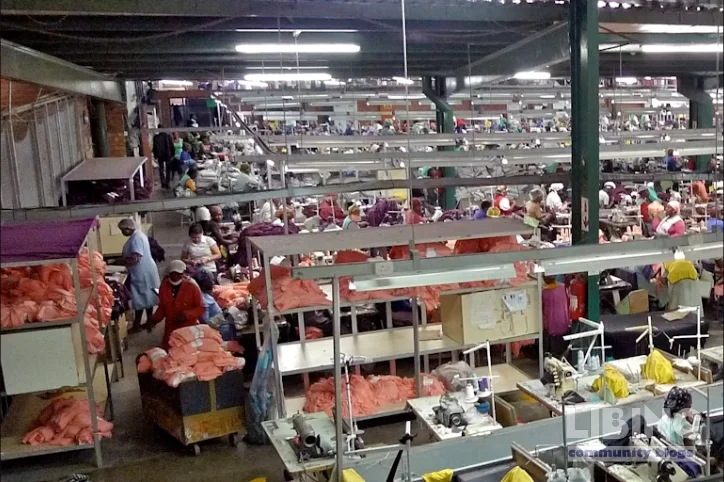
AGOA, the US-Africa preferential trade deal, stood as a pillar of Africa’s integration into global supply chains for a quarter century. Its expiry on 30 September 2025 did not just close a tariff loophole; it opened a corridor for uncertainty that risks eroding hundreds of thousands of jobs, especially in the apparel and light manufacturing sectors. Roughly 35 sub-Saharan countries enjoyed duty-free access to thousands of US products, a framework designed to spur exports, create jobs, and deepen trade links. Yet usage varied starkly by country and sector: South Africa shipped cars and citrus; Kenya and Ethiopia emphasized apparel; Lesotho and Eswatini relied on garments; Mauritius focused on textiles and seafood. The consequence has been a robust but uneven set of gains, with women and young workers disproportionately represented in formal employment. The immediate question is whether Congress will revive AGOA and, if so, how swiftly and with what scope.
Table of contents
- Block 1 — Through analytics
- Block 2 — Through contrast
- Block 3 — Through cause-and-effect relationships
- Block 4 — Expert reconstruction
Block 1: Through analytics
Analytical portrait of AGOA’s past performance shows a mix of success and selective efficiency gains. The device of duty-free access amplified the margin for a large swath of low- and mid-value exports, most notably apparel, textiles, agriculture, and light manufacturing. A striking datum anchors the analysis: US imports from AGOA-eligible countries totaled about $791 billion from 2001 to 2021, underscoring the program’s scale in the US-Africa trade dynamic. By comparison, US economic assistance to these same economies amounted to roughly $145 billion from 2001 to 2019, illustrating that trade preferences carried a more persistent and direct leverage over real production and employment than aid alone.
Within that larger picture, the distribution of gains reveals why the lapse matters unevenly. Apparel hubs such as Lesotho, Eswatini, Madagascar, Kenya, and Mauritius built export bases around AGOA’s duty-free access for clothing. In those economies, the loss of preferences translates into razor-thin margins once US MFN tariffs, typically 10–20 percent for clothing, reassert themselves. A simple arithmetic point illuminates the stakes: for a basic cotton T-shirt from Kenya or Lesotho, the duty saved under AGOA can be worth several cents per unit. When margins are thin, that difference determines whether orders stay in place or shift to other suppliers or regions.
Beyond garments, South Africa’s automotive supply chain—cars, parts, and related components—has been highly sensitive to tariff preferences and relative cost structures. The loss of preferences threatens not just the direct margins but the investment trajectory, as auto assembly lines and component suppliers recalibrate to tariff regimes in both the US and the EU. Oil exporters, by contrast, face less exposure because crude oil benefits from comparatively low US tariffs; the risk calculus for producers like Nigeria and Angola centers more on non-oil manufacturing and agriculture where preference margins matter more.
Three further analytical levers explain why uncertainty hurts more when the economy is already strained: (1) marginal buyers with thin budgets are highly price-sensitive and quickly reallocate orders to guaranteed suppliers; (2) the timing of new lines and capacity expansion aligns with policy clarity, not with episodic policy tinkering; (3) complex rules of origin—where origin criteria determine eligibility—become a critical determinant of which firms can pivot to alternative schemes such as the EU Generalised Scheme of Preferences (GSP) or AfCFTA regional rules. The data point on orders is more poignant when overlaid with employment patterns—women and younger workers are disproportionately represented in the vulnerable segments of the value chain, increasing the human cost of a lapse.
LSI: duty-free access, rules of origin, AfCFTA, EU GSP, supply chains, value chain resilience
Block 2: Through contrast
The AGOA experience must be read through contrasts that reveal the heterogeneous economic structures across Africa. The first contrast is between apparel hubs and non-apparel exporters. Lesotho and Eswatini depended heavily on garment production, creating a social fabric of jobs anchored in female labor participation. When AGOA access wanes, orders do not simply decline; they vanish from the model that gave those economies a predictable growth glide path. In contrast, South Africa’s automotive and agricultural exports derive some insulation from already low US tariffs on crude goods and a more diversified export base. The impact, therefore, centers on whether the US market remains a reliable buyer and whether the supply chain can absorb a tariff shock without collapsing.
Second, oil exporters present a different kind of shield. Nigeria and Angola enjoy lower exposure to AGOA’s friction because their hydrocarbons already interact with favorable tariff regimes, while non-oil manufacturing and agro-processing are more vulnerable. The contrast exposes a broader truth: export structure, not just policy, governs exposure to policy shock. Third, the story of “returnees”—countries that temporarily lost eligibility over human rights or governance concerns and subsequently regained status—highlights how investor confidence hinges on perceived political stability and rule-of-law guarantees. When eligibility is uncertain, investors hesitate and capital flares inward to familiar, safer markets.
Within this mosaic, the AfCFTA emerges as a critical counterbalance. Regional buyers and intra-African supply chains offer a viable hedge against bilateral policy volatility with the United States. The EU’s preference schemes provide another degree of freedom to reallocate orders while maintaining export volumes. These contrasts matter not as mere curiosities but as strategic anchors for policy choices. In a world without AGOA or with a broader US tariff regime, the region faces a double squeeze: higher costs and the risk of losing access to a principal, albeit volatile, external market.
LSI: intra-African trade, regional buyers, tariff shock, policy volatility, governance concerns
Block 3: Through cause-and-effect relationships
The cause-and-effect logic behind AGOA’s lapse is not a simple trigger-cascade but a web of interdependencies that amplify costs for the most vulnerable actors. When preferences vanish or become uncertain, three outcomes unfold in sequence. First, buyers re-optimize supplier networks. In apparel and light manufacturing, this means reassigning production to regions with clearer tariff regimes or more robust rules of origin compliance. The consequence is canceled orders, schedule slippage, and the postponement of shifts in factory lines. This is the direct link between policy ambiguity and real-world jobs.
Second, investment cycles slow or reverse. Plant improvements, port upgrades, and certification programs become fragile when buyers cannot forecast long-run demand or when a country lacks a credible pipeline of orders to justify capital expenditures. The lack of predictability reduces capital formation and increases financing costs for working capital, inventory, and raw materials—raising the price of production and compressing margins. The micro effect cascades into macro risk as job losses mount in vulnerable communities.
Third, exporters pivot to alternative routes with mixed results. Redirecting orders to the EU’s GSP or AfCFTA requires quick adjustments in sourcing, qualification, and compliance. Logistics wins—pre-clearance, single-window customs, and scheduled sailings—become essential to restore margins. Yet these improvements are not free and require public-private coordination. The net effect of a lapse, therefore, is not only a loss of preferences but a misalignment of supply chains to suboptimal arrangements, unless there is timely policy correction.
These causal chains illuminate why the proposed four-part strategy can be effective: predictability matters more than cost alone, while the reliability of logistics determines buyer confidence just as much as price competitiveness. The result is a more resilient regional economy when the policy horizon is uncertain.
LSI: rules of origin, supply chain resilience, working capital, pre-clearance, single-window customs
Block 4: Expert reconstruction
What should come next for AGOA and Africa’s exporters? The answer is not simple continuity but a deliberate recalibration that acknowledges both the value of the preference regime and the realities of a volatile US policy calendar. The expert reconstruction is fourfold and designed to be implementable within months, not years.
- Plan for uncertainty Ensure vulnerable orders are redirected to EU preference routes and AfCFTA regional buyers where rules of origin remain met. This can be paired with quick logistics wins—pre-clearance in ports to reduce dwell times, single-window customs to accelerate document processing, and scheduled sailings to stabilize delivery cycles. These changes help protect margins and maintain buyer confidence even when AGOA is in limbo.
- Lobby smartly in Washington Coordinate with embassies and lead exporters to present hard evidence of the economic footprint: buyer letters, job counts, and the likely US price pass-through if AGOA remains uncertain. A credible, cross-sectoral message should emphasize the broader US interest in supply-chain diversification away from single-source dependencies, not narrow industry pleas.
- Invest in competitiveness Trade officials should focus on reliability as a competitive lever. Key investments include dependable power, faster ports, and predictable customs. Build regional inputs—yarn-to-garment, packaging, and components—so a shock in one market doesn’t halt production. Scale up testing and certification to meet US, EU, and UK standards, and move up the value chain toward branded products, integrated sourcing, and finished goods.
- Tie incentives to verifiable outcomes Link policy support to measurable results: jobs created or saved, on-time delivery rates, and clean production. A performance-based approach reduces the risk of underutilized capacity and creates a clear yardstick for progress.
- Bridge with a retroactive window Advocate for a short, retroactive renewal that preserves the integrity of existing orders while policymakers negotiate a longer-term framework. Time-bound renewal reduces the cliff effect while preserving price discovery for buyers and workers alike.
In practice, four moves can be implemented in parallel: rechannel risk, accelerate logistics reform, strengthen regional value chains, and pursue a credible, time-limited renewal. The strategy should be paired with domestic reforms that improve governance, transparency, and ease of doing business so the broader economy remains attractive to investors even as policy noise persists. The aim is not to defend a protectionist fringe but to preserve a rules-based system that has helped many African producers reach US markets efficiently and fairly.
LSI: supply chain diversification, value chain upgrading, performance-based incentives, retroactive renewal
In the end, only Congress can restore long-term certainty for AGOA. The four-pronged plan proposed here offers a way to cushion the immediate pain, preserve gains already earned, and build a base for a more resilient, diversified export sector. If a multi-year extension proves possible, that would lock in strategic planning for manufacturers and workers alike. If not, the short-term bridge remains essential to prevent a cliff-edge shock that would ripple through factories, ports, and communities across Africa.
Conclusion
The expiry of AGOA is not merely a tariff question. It tests Africa’s ability to manage risk, diversify markets, and convert policy volatility into competitive advantage. A timely, well-structured renewal—whether short or long—must be part of a broader strategy that strengthens regional value chains, upgrades logistics and certification, and aligns public and private sector incentives with measurable outcomes. The overarching objective is clear: sustain jobs, protect livelihoods, and keep Africa’s export engines running even as policy trajectories in Washington evolve.
Additional notes on structure and flow
The four blocks above are designed to illuminate the issue from multiple angles without recourse to canned risk or scenario labels. The analytic lens (Block 1) establishes the historical and economic terrain, the comparative logic (Block 2) highlights structural differentials across economies, the causal chain (Block 3) links policy to real-world outcomes, and the expert reconstruction (Block 4) translates insights into actionable policy and business choices. The aim is to empower policymakers, exporters, and regional buyers to navigate uncertainty with clarity and urgency.
Closing the practical gaps: A focused action plan
In the face of policy uncertainty, the most critical missing piece is a rapid, action-oriented package that protects orders, preserves jobs, and anchors investment while negotiations continue. The four-pronged approach below translates high-level insight into concrete steps that can be launched within weeks.
Table: Sector exposure and policy alternatives
| Sector | Exposure to policy shifts | Policy alternative (short term) | Country example |
|---|---|---|---|
| Apparel | High; margins hinge on duty waivers | EU GSP, AfCFTA-linked sourcing | Lesotho, Eswatini |
| Automotive | Medium; diversified supply base helps | Broadened supplier networks, regional inputs | South Africa |
| Oil & Gas (non-oil manufacturing) | Lower exposure; non-oil depends on policy | Regional value chains, processing within AfCFTA | Nigeria, Angola |
| Textiles | Moderate; sensitive to duty margins | Local yarn-to-garment, EU routes | Mauritius |
The table shows where the cushion is strongest and where the pull is weakest. Apparel hubs like Lesotho and Eswatini rely on margin support from duty-free access; automotive-heavy South Africa benefits from diversification. To keep supply chains resilient, policy design should align with AfCFTA and EU GSP routes, enabling quick reallocation of demand without abrupt price shocks.
Immediate actions emphasize quick wins: redirect orders, accelerate port reform, build regional inputs, and tie aid to measurable outcomes. For instance, a Kenyan garment plant could move some lines to EU-sourced fabrics under existing origin rules while pursuing AfCFTA-certified suppliers for staples. A Nigerian feeder yard could prioritize components to short-haul buyers with commitments. These practical moves convert policy options into real relief for workers.
- Redirect vulnerable orders to EU GSP and AfCFTA regional buyers with verified origin compliance.
- Launch quick logistics reforms: pre-clearance, single-window customs, scheduled sailings.
- Invest in regional value chains: local yarn-to-garment, packaging, and components to reduce external shocks.
- Adopt performance-based incentives tied to jobs, on-time delivery, and clean production.
The goal is to preserve momentum, keep markets open, and frame a credible path to a longer-term, rules-based framework that benefits workers and enterprises across Africa.
Frequently asked questions
What could AGOA renewal look like?
Renewal could be a short-term extension with targeted rules of origin adjustments and faster implementation timelines.
Analytical note: This approach preserves supply chain continuity while policymakers negotiate a longer-term framework, balancing risk and opportunity.
How can Africa shield jobs if AGOA expires?
Redirect vulnerable orders to EU GSP and AfCFTA regional buyers, accelerate logistics reforms, and strengthen regional value chains.
Analytical note: Diversifying demand and improving logistics reduces exposure and supports job retention across sectors.
What role does AfCFTA play?
AfCFTA provides a larger intra-African market, offering diversified demand and lower dependence on a single external buyer.
Analytical note: A robust regional market can cushion external shocks while global negotiations continue.
How do rules of origin affect eligibility?
They define which shipments qualify for preferences; compliant suppliers can maintain eligibility with proper documentation.
Analytical note: Streamlining documentation and supplier certification improves predictability and competitiveness.
Which logistics reforms matter most?
Pre-clearance, single-window customs, and reliable port operations reduce dwell times and improve predictability.
Analytical note: Faster clearance translates into steadier cash flow and resilient scheduling for exporters.
What is a realistic renewal timeline?
A time-bound retroactive renewal can preserve orders while negotiations mature into a longer-term framework.
Analytical note: A well-timed bridge minimizes cliff effects and unlocks longer-term planning for firms and workers.






Add a comment
To comment, you need to register and authorize
Comments