

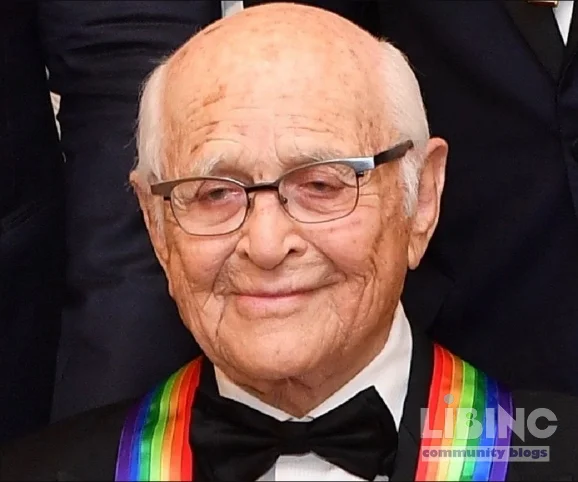
Norman Lear: A Lifecycle of Satire, Social Change, and Television Innovation
Norman Lear's life reads like a blueprint for how television could become a platform for social dialogue. Born July 27, 1922, in New Haven, Connecticut, Lear grew from a wartime radio operator to a towering figure in American entertainment. He survived a childhood marked by religious and economic precarity, absorbed the lessons of antisemitism and resilience, and turned those experiences into a method: make the audience laugh while making them think. His career arc—from public relations and theatrical writing to a string of transformative TV hits—reveals a persistent belief that the screen can reflect lived reality and catalyze public discourse.
The wager was not merely about ratings but about the power of a medium to influence public life. The television influence on American culture, as Lear would later demonstrate, hinges on the brave pairing of intimate family dynamics with urgent political and social questions. The stakes are existential for any creator who wants to keep entertainment commercially viable while pushing the boundaries of what the culture will accept. Lear's path began with small screens and big questions, and it culminated in a portfolio that reimagined what a sitcom could be and what a producer could stand for.
Through analytics: Norman Lear's method
Norman Lear treated television production as a social laboratory, testing how audience empathy could be engineered through narrative, character, and timing. He learned from wartime discipline and postwar humor movements to calibrate jokes that reveal bias and hypocrisy without alienating viewers. This analytic focus was not a cold calculation; it was a disciplined craft that sought to map the emotional arc of a family while surfacing the friction points in American life.
In practice, Lear's technique fused character-driven comedy with urgent topics—civil rights, gender roles, class, and political debates—where satirical sitcoms addressing politics kept audiences engaged while pushing cultural evolution. The approach demanded that writers craft scenarios where the audience recognizes themselves in the folly of the characters, creating cognitive dissonance that prompts reflection. This is not slapstick; it is a method for aligning laughter with civic awareness, a synthesis rarely seen in commercial television prior to his era.
He anchored controversial material in authentic relationships, using the perceived normalcy of family life as a conduit for critique. His shows did not lecture; they invite viewers to watch, laugh, and question the assumptions that underpin social norms. The analytics mindset, paired with bold subject matter, became Lear's signature, informing a run of projects that would redefine what prime-time storytelling could accomplish.
Through contrast: Lear among peers
Against the backdrop of a growing television industry, Lear's programs stood out for the friction between everyday warmth and policy disruption. Critics and executives alike faced a dilemma: lean into proven formats, or risk audience backlash by confronting sensitive topics head-on. Lear chose the latter and demonstrated that a show could be both commercially viable and culturally provocative. This contrast—comforting family humor paired with destabilizing social questions—became Lear's differentiator, attracting a diverse audience and expanding the boundaries of what was permissible on network TV.
The contrast becomes clearest when we compare Lear's catalog with his contemporaries: The Jeffersons, Maude, Good Times, and Sanford and Son each wove sharper social critique into familiar formats, redefining the idea of a successful sitcom. Where many peers chased escapist fare, Lear built a scale of shows that acted as cultural barometers. The result was a broader audience reach and a more ambitious remit for television as a public square, a transformation that reshaped the American television landscape and established a new standard for the genre's potential for social impact.
These outcomes are not merely about novelty; they reflect a strategic sensitivity to audience mood and the politics of the era. Lear understood that entertainment could mobilize viewers to view issues through a different lens, which in turn could influence commercial decisions and policy conversations. The contrast with conventional comedies of the period clarifies why his work endured as a benchmark for risk-taking in entertainment and social commentary.
Through cause-and-effect relationships: how Lear changed culture and industry
At the root of Lear's influence lies a chain of cause-and-effect relationships that began in his personal history and extended into his business choices. His early exposure to antisemitic rhetoric and the dynamics of his family life provided a template for exploring prejudice and bias with nuance rather than sermon. This personal blueprint translated into content that held up a mirror to society while inviting debate, a dynamic that not all producers dared to pursue. The cause was not simply to entertain; it was to create a public space where viewers could confront uncomfortable truths without losing their engagement or trust in the medium.
As Lear's companies grew—Tandem Productions, then Embassy Communications—he built a production ecosystem capable of sustaining such ambitious work. The vertical integration of development, production, and distribution allowed Lear to shepherd projects with clear social objectives while maintaining financial discipline. The effect was a durable pipeline of content that remained relevant across changing political climates, a rare feat in an industry notorious for shifting tastes and volatility. This alignment of mission and mechanism propelled the evolution of television from episodic entertainment into a platform for civic discourse.
Another causal vector emerged through Lear's advocacy and organizational work. The creation of People for the American Way, the Declare Yourself initiative, and his involvement with public policy discussions linked the entertainment industry to broader civic campaigns. These moves extended Lear's influence beyond the screen into real-world outcomes, showing how media leadership can translate into sustained political engagement and policy discussion. Such integration of content and advocacy became a prototype for how media figures could shape public life without forfeiting creative autonomy.
Through expert reconstruction: business, media, and legacy
Expert reconstruction treats Lear's career as an integrated system rather than a string of hits. Tandem Productions, born in the late 1950s, served as a laboratory for developing and refining shows that balanced humor with social critique. The 1967 Divorce American Style showcased Lear's willingness to explore thorny topics within film structure, earning him an Academy Award nomination and signaling the viability of more ambitious, adult-driven comedies. The subsequent films and television projects—paired with the growth of The Wave and other alliance ventures—demonstrated how a production company could become a platform for ideological experimentation while maintaining commercial viability. This reconstruction clarifies why Lear's approach endured: a persistent coupling of social relevance with compelling storytelling, anchored by a sustainable production framework and a keen sense of audience appetite for meaningful engagement.
As Lear matured into a media magnate, his expansion into multi-channel holdings—ultimately forming Act III Communications—further embedded his philosophy into the industry’s DNA. The empire enabled not only a string of influential series—Sanford and Son, Maude, Good Times, The Jeffersons—but also ambitious film projects such as Stand By Me and The Princess Bride, which showed that a social vision could coexist with cinematic quality. The broader impact extended into philanthropy and policy, with Lear's endowments supporting academic centers and journals focused on media studies, public discourse, and secular civic life. This holistic reconstruction reveals the mechanism by which Lear turned a personal mission into an enduring institutional presence.
If you chart Lear's trajectory, you see a pattern: creative risk, structural enablement, public engagement, and institutional leverage. The result was not only a string of beloved programs but a durable cultural infrastructure that redefined the social role of the television producer. The legacy lives in the way networks approach controversial topics, in the prominence of socially conscious storytelling, and in the ongoing efforts to connect media power with civic responsibility. Norman Lear did not merely produce content; he cultivated an ecosystem in which entertainment and advocacy could coexist and reinforce each other, a model that continues to shape how audiences perceive and discuss the world around them.
In sum, Lear's life demonstrates a disciplined fusion of artistry and activism. His work shows that entertainment can be a catalyst for public conversation, not a passive mirror of it. The result is a legacy that persists in contemporary serials, production philosophies, and civic initiatives that seek to harness storytelling for social good. This is the enduring contribution of Norman Lear: a blueprint for media as a public instrument, responsibly wielded by a creator who believed that laughter and conscience belong on the same stage.
Conclusion: Norman Lear's influence endures because he treated television not as a reflection of culture but as a force capable of shaping it. His career offers a playbook for future generations—one that respects audience intelligence, challenges prejudice, and demonstrates that artistic achievement and social responsibility can be mutually reinforcing.
Final reflection: Lear remains a case study in how a creative life can intersect with public life without compromising artistic integrity. He built a legacy that refuses to settle for easy entertainment and instead invites viewers to participate in the ongoing task of making democracy more visible, more thoughtful, and more inclusive.
Norman Lear’s influence transcends episodic comedy by offering a working blueprint for how television can interrogate society while entertaining millions. This expanded view ties his storytelling craft to measurable outcomes in audience engagement, cultural dialogue, and creative risk-taking that still informs today’s streaming-era platforms. By reframing family warmth as a vehicle for public conversation, Lear demonstrated a repeatable method: calibrate humor to reveal bias, anchor challenges in authentic relationships, and pair provocative themes with character-driven reversals that keep viewers returning for more thoughtful entertainment. This section integrates concrete practices, illustrative examples, and practical steps that contemporary producers can adapt without sacrificing commercial viability.
| Show | Year | Theme | Social Topic | Impact | Notes |
|---|---|---|---|---|---|
| Maude | 1972 | Single-episode social debates | Women’s rights, abortion | Topical alignment with national conversations | Premium for brave, audience-tested storytelling |
| The Jeffersons | 1975 | Cartoonishly warm family, sharp social critique | Racial representation, class mobility | Broad appeal with undercurrent of challenge | Expanded audience without sacrificing stakes |
| All in the Family | 1971 | Provocative family satire | Ethnic stereotypes, politics | Provoked dialogue, polarized reception | Set standards for controversial comfort zones |
| Sanford and Son | 1972 | Generational conflict with social undercurrents | Urban life, economic struggle | Balanced humor with serious context | Demonstrated accessibility to diverse audiences |
| Stand by Me (film) | 1986 | Adult themes in a coming-of-age lens | Friendship, moral choice | Proved that social themes can ride broader formats | Linked cinema to audience empathy beyond TV |
Expanding Lear’s toolkit for today’s creators
The modern production environment rewards nimble experimentation across platforms. Lear’s approach translates into four actionable practices: (1) map a central social question to a core character arc; (2) design scenes where the joke exposes bias before it absolves it; (3) align production economics with mission—vertical integration or strategic partnerships can sustain ambitious storytelling; (4) build an ecosystem that extends impact beyond air time through philanthropy, public policy, and academic dialogue. In practice, a contemporary show might frame a family dispute around housing equity, then weave in guest experts, audience polls, and companion short-form videos that continue the conversation on social feeds.
- Identify a bias or hypocrisy within ordinary life.
- Anchor the issue in genuine relationships that viewers recognize.
- Deliver humor that disarms while prompting reflection.
- Follow with concrete stakes or outcomes that invite public dialogue.
To translate this into today’s market, consider how cross-platform storytelling magnifies impact: a half-hour episode, a 5-7 minute VOD recap, and a live-tantrum-free Q&A with cast and writers. These formats keep the conversation honest and productive, not polemical. The aim is not to sermonize but to create cognitive friction that invites viewers to revisit assumptions, just as Lear did in the past, but with the tools of the present era.
| Dimension | Trad. Sitcom | Lear-Style Sitcom |
|---|---|---|
| Tone | Escapist | Warmth plus critique |
| Theme | Light social tropes | Direct social questions |
| Engagement | Passive laughter | Active reflection |
Closing the critical gap: measuring real-world impact
Despite strong storytelling, the original coverage often underplayed how modern audiences parse social risk, especially across diverse demographics and digital touchpoints. A robust measurement approach combines return-to-air metrics with real-world conversations: social sentiment analysis, policy discussions sparked by the content, cross-platform engagement hours, and longitudinal studies on changes in attitudes toward the issues depicted. Practically, producers can pilot a companion data brief for every season, publish a transparency report on impact, and collaborate with researchers to quantify shifts in public discourse. This creates accountability, guides future writing, and preserves Lear’s legacy as a living, measurable force for social storytelling.
What is Norman Lear’s core contribution to television storytelling?
Norman Lear’s core contribution is the disciplined fusion of intimate family dynamics with urgent social questions, using humor to reveal bias without alienating audiences and anchoring controversial topics in authentic relationships. This approach transformed TV into a platform for public dialogue while preserving commercial appeal; it showed that entertainment and civics could grow together rather than apart, creating a lasting blueprint for socially conscious storytelling. This model remains relevant as creators navigate today’s multi-platform ecosystems and diverse audiences. Lear demonstrated that laughter and conscience can co-exist on the same stage and reach broad audiences in meaningful ways.
Analytically, the method operates at the intersection of empathy, timing, and risk management: identify the bias, dramatize it through relatable characters, and deliver moments that encourage reflection after the joke lands. The result is a cultural artifact that resonates across generations and reformats itself for new media channels, not merely a collection of episodic hits but a durable mechanism for public conversation.
How did Lear use humor to address sensitive social issues?
Humor served as a shield and a scalpel: it softened resistance while exposing uncomfortable truths. By presenting political and social questions as elements of everyday life—often within a family setting—the audience can see their own biases in action without feeling attacked. The jokes create cognitive bridges that invite viewers to reconsider assumptions, making serious topics more approachable and less polarizing. This strategic humor was backed by careful writing, character consistency, and a pace that allowed reflection to follow laughter, turning entertainment into a vehicle for civic insight.
What role did Tandem Productions play in Lear’s legacy?
Tandem Productions served as the experimental laboratory where Lear fused bold social themes with sustainable production pipelines. The company’s structure supported development, production, and distribution, enabling riskier projects like Maude and The Jeffersons to reach a broad audience while maintaining financial discipline. This vertical integration created a model for how a production house can balance artistic ambition with the realities of network television and, later, multi-channel platforms, ensuring that socially conscious content could endure beyond a single hit show.
Can Lear’s approach be applied to today’s streaming era?
Yes. The core idea—grounding social questions in relatable lives and using humor to invite dialogue—translates to streaming by pairing long-form storytelling with short-form companion content, interactive audience elements, and cross-platform discussion. For example, a streaming series could offer post-episode chats, explainer videos, and social polls that surface viewer perspectives, creating a feedback loop that guides subsequent storytelling while expanding reach across diverse communities. The approach remains adaptable: modern platforms can amplify the same principles with data-informed adjustments to tone, pacing, and topic selection.
What metrics best capture Lear’s impact in the digital age?
Beyond traditional Nielsen ratings, effective metrics include cross-platform engagement hours, time spent on companion content, qualitative sentiment shifts in public discourse, and policy-related conversations sparked by the work. Tracking demographic reach, social dialogue quality, and long-tail effects (such as education or civic engagement) helps quantify cultural impact. Producers should also measure the durability of themes across seasons, the willingness of audiences to revisit episodes for new insights, and the extent to which content informs or reframes public conversations, ensuring the work remains socially responsible and commercially viable.
What is a practical first step for creators inspired by Lear?
A practical first step is to identify a pressing social question tied to a relatable character arc, draft a pilot that reveals bias through dialogue and outcomes, and design a companion content plan that invites audience input and expert perspectives. Start with a small sample of episodes focused on one core issue, compile a simple impact brief after each episode, and iterate based on feedback. This iterative loop mirrors Lear’s method and helps build a sustainable model for thoughtful, audience-centered storytelling in today’s dynamic media landscape.





Add a comment
To comment, you need to register and authorize
Comments