

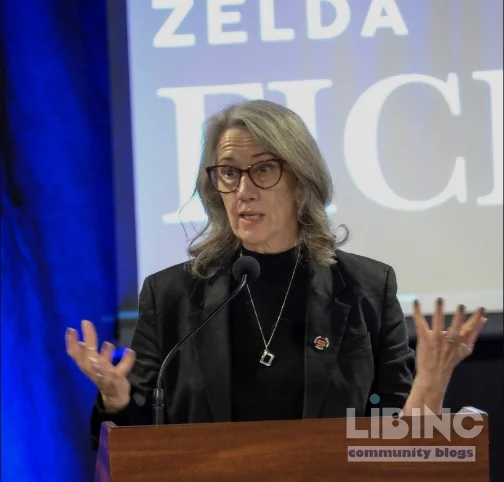
When a country feels its foundations fray, the question of what matters sharpens. The theatre endures as a stubborn constant, a space where strangers become neighbors for a moment and where memory is made tactile. The problem is not merely budget lines or schedules; it is a deeper drift away from live, communal experience that binds civil life. The stakes are explicit: without live performance, civic discourse thins, shared memory erodes, and democracy loses a living forum. Yet a hidden conflict runs beneath the surface. The very institutions that should sustain theatre—funding models, leadership pipelines, and policy environments—are being stressed in ways that threaten equitable access and long-term vitality. This analysis pursues four analytic angles to articulate a holistic response, always returning to the central thesis that theatre and democracy are interdependent, not separable.
Our work as theatremakers—artists, scholars, organizational leaders, educators, technicians, and unionists—must remain live. It must stay present in time and space, because the act of performing, like the act of writing a letter, binds people in a shared moment. The post office and the theatre share a surprising common ground: they are infrastructures of connection, portals through which information, intention, and care travel. In a world increasingly mediated by screens, the question becomes not whether we can digitize but whether digitization can replace the embodied encounter between audience and performer. The argument I advance here is that theatre is not a luxury but a civic technology, a critical site for cultivating informed citizens, ethical imagination, and collective responsibility. The term that anchors this inquiry is theatre and democracy—the two terms joined in practice, not merely in rhetoric.
In this moment of national strain, we need to understand how theatre can act as a civic technology—an instrument that sharpens our ability to read each other, to hold our voices, and to imagine collective futures. The post office, as I once reflected in a speech at the National Theatre Conference, is more than mail delivery; it is a public common, a social infrastructure that sustains privacy, free speech, and the dissemination of information. The theatre, likewise, carries our capacity to test ideas in a live public, to rehearse democracy under pressure, and to practice citizenship in real time. The convergence of these two institutions—stage and mailbox—offers a provocative lens on how culture can anchor democracy in times of fragmentation.
To move from rhetoric to praxis, I propose four analytic frames. Each frame asks: What are we losing if we fail to sustain live theatre as a democratic practice? What would a more holistic ecosystem look like if leadership, funding, and policy were aligned around shared civic purposes? And what concrete steps can the field take to ensure that those stepping into leadership do not inherit a structurally eroded, but still recoverable, system?
Before we dive in, a brief counterpoint: the crisis is not solely about money. It is about direction, accountability, and the willingness to embrace a more inclusive idea of leadership. It is about recognizing that the theatre’s greatest asset—its capacity to convene, challenge, and connect—must be protected with as much care as the physical buildings that house it. The central claim remains unromantic but precise: theatre and democracy are mutually reinforcing in proportion to our willingness to invest in both living art and living communities. If we cannot imagine a healthier ecosystem, we cannot expect healthier outcomes for democracy itself.
The following sections present the argument in four lenses, each anchored in evidence, history, and pragmatic strategy. They are not separate prescriptions but a coherent program: sustain live theatre, reframe funding and leadership, strengthen civic infrastructure, and build a more inclusive, resilient ecosystem. The aim is not to declare victory but to outline a method for long-term resilience—one that treats theatre as a vital civic technology rather than a mere cultural accessory.
Table of contents
Block 1 — Analytics on theatre and democracy
The first analytic lens treats the relationship between theatre and democracy as a measurable, instrument-like dynamic. Live performance creates a bounded public sphere where difference can be confronted in real time, where memory is reinforced, and where moral imagination is rehearsed under conditions of uncertainty. The claim that theatre supports an informed citizenry is not optional; it is a procedural necessity for democratic life. When audiences witness complex moral choices on stage, they rehearse their own capacity for deliberation, empathy, and critical judgment. That practice translates into more robust civic conversations offstage, in libraries, schools, and workplaces, where public decisions are debated and legitimized. The theatre’s capacity to translate abstract policy into embodied experience becomes a kinetic test of democratic legitimacy.
To render this analytically, we must treat audience exposure, access, and engagement as variables in a governance model. When theatres are accessible to diverse communities, when rehearsal rooms welcome varied cultural perspectives, and when audiences can attend without trying to cross insurmountable financial barriers, the civic uplift becomes measurable: higher levels of trust in public institutions, more nuanced public discourse, and wider participation in civic life. In other words, the theatre does not simply reflect democracy; it resculptures it through lived experience. This makes the relationship between the theatre and the public realm a matter of policy design as well as artistic choice. The health of the system depends on how well these levers are calibrated to strengthen an informed citizenry across a broad spectrum of communities.
LSI: informed citizenry, audience access, civic discourse, public engagement, live performance ecology
Consider the structural forces at play. Funding streams, scheduling cycles, and the distribution of leadership roles all influence who gets to participate in the making and presenting of theatre. If leadership remains concentrated among a narrow demographic, the resulting repertoire will not reflect the country’s plurality. If funding models reward short-term, high-visibility projects over sustained, community-based work, the field will lose the long tail of craft that supports quality and resilience. Analytics must track not only attendance or box office but also participation across communities, apprenticeship pipelines, and the durability of collaborations. Only by mapping these indicators can we identify where to intervene and how to measure improvement over time.
In this sense, the post office metaphor resurfaces as a governance instrument. Just as the postal network delivers messages with universal access and predictable timeliness, a healthy theatre ecosystem should guarantee accessible pathways for artists from all backgrounds and provide consistent opportunities for audiences to engage with new work. The comparison is not literal but functional: a robust public sphere requires reliable, inclusive channels for culture to circulate. If policy makers want to bolster democracy, they must treat theatre as a public utility that delivers not only entertainment but also information, debate, and communal memory. The data that will drive reform is not exclusively artistic; it is social, economic, and political in scope. The analytics must span these domains to reveal where a single underfunded institution can ripple outward, destabilizing the entire system.
Finally, the analytics reveal a paradox: the most significant transformations in leadership and funding often occur when there is sufficient tension between tradition and possibility. Incremental gains that fail to link to a broader civic mission yield fragile improvements. The question becomes: how can we align incremental progress with long-term transformation? The answer lies in building a coherent ecosystem in which data, policy, and artistry inform one another in continuous feedback loops. This is the core of the analytic project: connect the numbers to the lived experience of theatre and its democratic function, so that policy choices are guided by what theatre teaches us about collective life, not by short-term political arithmetic alone.
Analytic takeaways
- Live performance as civic technology: theatre translates policy abstractions into embodied experience, enriching civic literacy.
- Inclusive leadership as a governance imperative: diverse leadership expands repertoire and strengthens democratic legitimacy.
- Holistic metrics: measure access, retention, and collaboration across communities, not just attendance.
The analytics ground the argument in a concrete policy frame: the health of theatre ecosystems directly shapes and is shaped by democratic vitality. When we understand this mutual dependence, the path to reform becomes clearer and more durable.
Block 2 — Contrast between eras
History offers a stark contrast between eras when theatre and public life sat in close proximity and our current period, in which screens, market pressures, and diffuse networks have altered how audiences encounter performance. The era to which many of us still refer—when post offices, libraries, schools, and theatres formed a triad of civic infrastructure—gave the public a reliable rhythm: mail deliveries in predictable cycles, performances on predictable seasons, and a social life anchored in shared spaces. In that milieu, the post office and the theatre could be read as complementary nodes in a single civic nervous system. The audience moved through these spaces, carried ideas back home, and fed a tempest of conversation that shaped policy, not merely taste.
Now, the speed of digital communication compresses what used to require time and proximity. Screens fragment attention; social algorithms curate echo chambers; and the theatre competes with ever-expanding entertainment options for a seat in the same living room. Yet this contrast is not a lament for a lost past; it is a diagnostic for what must be reimagined if theatre is to remain a public good. Accessibility becomes a central issue: who gets to step into a theatre, who can stay, and who is asked to contribute their voices to a shared repertoire of stories? If we can recouple the theatre to the public sphere by rethinking space, programming, and partnerships, we gain not only audiences but a more resilient democratic habitus. In this sense, the contrast illuminates a path forward: rebuild social infrastructure that makes live culture indispensable, not optional.
LSI: audience access, social infrastructure, democratic habitus, inclusive programming
One concrete contrast lies in the distribution of opportunities. Earlier eras offered longer arcs of collaboration that built trust across institutions—universities, unions, municipal governments, and local theatres learned to speak a common language. Today, fragmentation can erode that shared language. The result is a misalignment between what funders want, what artists imagine, and what communities need. The contrast exposes a critical design flaw: programs are often conceived in silos, with little cross-pollination across sectors. If we are serious about theatre as a democratic practice, then cross-sector collaboration must become a standard operating principle rather than an optional add-on. The contrast thus becomes a blueprint for action: rebuild bridges, reimagine partnerships, and reassert the theatre’s place in a broader civic ecosystem.
At the edge of this contrast sits a provocative inquiry: can a post office logic—universal service, predictable access, and civic trust—inform a 21st-century theatre practice, even as audiences increasingly meet work in non-traditional spaces? The answer, again, is affirmative, if we redesign access and deliverability. The post office here is not a relic but a reminder that public services can be reimagined for contemporary realities without sacrificing universal principles. The theatre, in turn, must prove its relevance by meeting audiences where they are, in formats that respect both the privacy of individual experience and the public value of shared meaning.
Block 3 — Cause-and-effect relationships
Understanding the causes behind the current fragility of theatre networks helps reveal the most effective intervention points. The first cause is funding architecture: many systems impose ten-year price caps and require pre-funding of future liabilities, a policy posture that constrains institutions’ willingness to invest in experimentation, long-range planning, and inclusive programming. The result is a risk-averse sector that talks about transformation but funds only incremental adjustments. The second cause is the way screens reframe our attention. The industry now negotiates attention in bites and metrics that reward short-term hits rather than long-form, audience-building relationships. The third cause is governance: leadership pipelines have not kept pace with the sector’s diversity, producing a mismatch between the experiences of those who run theatres and the communities they serve. Finally, the structural underpinnings of democracy—civic education, public engagement, and policy feedback loops—are underdeveloped in the cultural sector’s ecosystem, so the theatre speaks to a narrower audience while democracy requires a broader common language to survive.
These causes do not operate in isolation. They compound each other in a feedback loop: funding constraints force risk-averse programming, which reduces audience breadth and community involvement, which then shrinks the case for investment and reform. The cycle exacerbates inequities in access to opportunities, voices, and stories; it also weakens the theatre’s ability to contribute to civic discourse. The policy levers—funding models, procurement practices, and leadership development—must be designed to interrupt this loop. A holistic approach that links financial sustainability with social impact, audience development with public policy, and artistic freedom with civic accountability offers a way out of the trap. The post office analogy helps here: universal service cannot be achieved by chance; it requires intentional design, transparent metrics, and accountable management.
LSI: funding architecture, audience development, governance diversity, public policy integration
We must also acknowledge the social disruptions that exacerbate fragility: racial inequities, disability access gaps, and the uneven distribution of work opportunities. The crisis is not only about money; it is about voice, belonging, and the right to participate. The question becomes not whether we can reform, but how quickly we can align reform across a wide spectrum of theatres, funders, and communities. In that alignment, the post office emerges again as a model: reliable service, predictable schedules, and a universal expectation that every address is reachable. If theatres can aspire to a similar universality—an accessible pipeline from idea to stage, from rehearsal to audience—then the democratic value of theatre can be preserved and expanded even in difficult times.
Block 4 — Expert reconstruction: a holistic path forward
The final analytic frame is reconstruction—what concrete, expert-driven actions could reorganize the field into a resilient, inclusive, and democratically enabling ecosystem? The core proposition is straightforward: align policy design, organizational practice, and public expectations around shared civic aims, while preserving artistic autonomy. This is not technocratic tinkering; it is a reimagining of the theatre’s role within a broader public infrastructure that includes libraries, museums, schools, parks, and indeed post offices as central nodes of civil life.
First, adopt a holistic cultural policy framework. This means combining structural funding with programmatic flexibility and a long horizon for impact. It means creating dedicated streams for community-engaged work, livable wages for artists, preservation of diverse repertoires, and the development of durable touring networks that reach underserved regions. It also means embedding performance in civic spaces—municipal buildings, public squares, schools—so that theatre becomes a daily, accessible practice rather than a rare event. This is a structural shift, not a cosmetic rebranding, and it requires political will and cross-partisan support that foregrounds democracy as culture’s core objective.
Second, retool leadership pipelines for inclusivity and accountability. Leadership must reflect the demographics and geographies of the communities served. This implies targeted recruitment, mentorship, and governance structures that embed equity at every level. It also means holding leaders to civic metrics: the breadth of access, the quality of community partnerships, and the impact on civic discourse. The ultimate measure is not only box office or grant totals but the degree to which theatre broadens public participation and deepens collective understanding. The post office is a reminder that public institutions gain legitimacy through reliable, inclusive service—something the theatre must replicate in every city, town, and neighborhood.
Third, cultivate cross-sector collaboration that makes theatre indispensable to civic life. Embedding theatre within schools, libraries, community centers, unions, and local media builds a dense ecosystem in which artists, educators, policymakers, and audiences learn from one another. This requires durable partnerships, shared data platforms, and joint programming that invites diverse voices to shape the repertoire. The objective is not token representation but sustained, meaningful engagement that transforms both artmaking and public life. When the network tightens, the civic imagination expands, and the theatre becomes a catalyst for public deliberation rather than a detached enclave of prestige.
Fourth, leverage the post office as a real-world exemplar of reliability and public service. The theatre can borrow lessons about accessibility, inclusivity, and predictable deliverability from postal logistics, while the post office can draw on theatre’s capacity to teach empathy, question authority, and catalyze civic action. Joint initiatives—mail literacy campaigns, letter-writing programs tied to performances, community mailouts that announce new work, and audiences’ participatory events—return the theatre to the public square. These collaborations bridge private creativity and public accountability, reinforcing the theatre’s democratic function without compromising artistic integrity.
Finally, reframe measurement and accountability. The success of theatre as a democratic instrument should be assessed through composite indicators: audience diversity, inter-generational participation, educational outreach impact, policy influence, and the quality of civic dialogue stimulated by performances. The aim is to replace as much as possible the false dichotomy between art for art’s sake and art for public good with a unified framework that treats culture as a public necessity. The post office demonstrates that a reliable, universal service can coexist with innovation; the theatre must prove that public purpose and artistic risk can thrive together in the same ecosystem.
In sum, the four blocks—Analytics, Contrast, Causality, and Expert Reconstruction—offer a coherent approach to reviving theatre as a democratic anchor. The core claim remains unshaken: theatre is not ancillary to democracy; it is a potent instrument of democratic life when designed, funded, and governed with explicit civic intent. The post office, theatre, libraries, schools, and parks can form a network whose strength depends on deliberate governance, shared values, and the courage to invest in long-term resilience. If we commit to this path, we do not only save a cultural sector; we reinforce the very fabric that allows a diverse society to speak to itself with clarity, compassion, and courage.
Closing thought: Shouldn’t we go to the post office? Shouldn’t we go to the theatre? Shouldn’t we save democracy? The answer is not to choose one over the other but to insist that each is essential to the other. The theatre remains our most reliable stage for accountable citizenship, and the post office remains our most reliable public artery for information, trust, and connection. Together, they offer a practical blueprint for a civic future rooted in live experience, collective responsibility, and democratic hope.
LSI: democratic life, inclusive leadership, public infrastructure, cross-sector collaboration
As we close, consider Zelda Fichandler’s admonition that the work is hard—and will stay hard. The question now shifts from endurance to strategy: can we design a system that makes hard work sustainable, meaningful, and equitable? If we can, the theatre will not merely survive the current crisis; it will redefine what democracy demands from culture in the 21st century. The answer lies in action, in willingness to redesign through shared governance, and in the disciplined practice of keeping the conversation, the audience, and the stage alive—together.
Short conclusion: a resilient theatre democracy depends on a robust public infrastructure, creative leadership that reflects society, and a policy environment that treats culture as a public good. The post office lesson—universal access, reliable delivery, and transparent accountability—must inform how we structure funding, measure impact, and cultivate communities ready to engage in civic life through live performance.
Will we answer the call? The theatre, the post office, and the broader public sphere are asking for a coordinated, long-term strategy. The work is hard, yes. But the work is real, and the stakes are profound: theatre and democracy, once inseparable in structure and spirit, deserve a future where both can thrive together.
Practical pathway to a resilient civic theatre ecosystem
Bridging theory and practice requires a compact, scalable blueprint that translates civic purpose into everyday habits. The following moves align policy, funding, and artistry with public life, without sacrificing artistic autonomy.
| Model | Stability | Impact on Access |
|---|---|---|
| Baseline public funding | Low | Limited expansion |
| Program-based grants | Medium | Moderate growth in access |
| Public‑private partnerships | Medium-High | Broadens reach via co-funding |
| Community foundations | High | Deepens local ties and equity |
These models set expectations for stability and inclusive access. The aim is not to choose a single path but to blend streams that jointly raise the ceiling for participation, while preserving artistic autonomy. The table below sketches how to combine them into a practical funding portfolio.
- 60% baseline funding + 20% flexible program grants
- 15% partnerships with private/community funds
- 5% dedicated to touring and accessibility initiatives
Progress hinges on measurable indicators beyond box office: sustained artist wages, widened audience diversity, ongoing collaborations, and public‑facing programs in civic spaces. This practical mix enables risk‑taking while preserving a stable base for the arts to flourish as a democratic instrument.
■ Multi-year planning cycles align with school calendars and municipal budgets; ■ transparent dashboards track participation across communities; ■ community advisory boards inform repertoire with public input. Implementing these moves turns theory into routine civic practice.
Implementation steps
- Establish a cross‑sector advisory council with representatives from arts, education, libraries, unions, and local government.
- Design a durable touring network that targets underserved regions and nontraditional venues.
- Embed performances in civic spaces (schools, public squares, clinics) with co‑created programming.
- Create shared data platforms to monitor access, engagement, and civic outcomes.
- Publish annual public reports linking artistic activity to community well‑being and policy outcomes.
In practice, a city could pilot a 12‑month program pairing performances with letter‑writing workshops in libraries, followed by community discussions in town halls, creating a visible link between culture and civic life.
| Progress indicators | Target (12 mo) | Status |
|---|---|---|
| Artist wages and residencies | +20% | On track |
| Audience diversity (age/ethnicity) | +15% | Improving |
| Cross‑sector partnerships | +25 | Active |
These metrics help ensure the ecosystem delivers on public purpose while maintaining artistic vitality. The blueprint is intentionally modular: theatres can start with one or two pilots and scale as impact becomes visible.
In this way, practical action complements theory, building a resilient, inclusive theatre that serves democracy as a living infrastructure.
Frequently asked questions
The core claim of the article is that live theatre functions as a civic technology that strengthens informed citizenship, and this is not merely decorative but foundational for democratic life because performances rehearse deliberation, empathy, and collective reasoning in the public square; when funding, leadership, and policy align with a shared civic purpose, theatre becomes a durable infrastructure that carries memory, fosters trust, and expands civic participation; without such alignment, audiences drift to private entertainment and democratic discourse loses its public testing ground.
In practical terms, this means theatre must be supported by stable funding, inclusive leadership, and policies that treat culture as a public good, not a market luxury. The result is a public sphere where creative risk aligns with social impact, ensuring performances reach diverse communities and contribute to public dialogue rather than private consumption.
How does cross‑sector collaboration help integrate theatre into civic life?
Cross‑sector collaboration brings together schools, libraries, unions, local media, and government to embed theatre in daily life; it expands audiences, shares data, and creates durable partnerships that outlive individual productions. This approach turns theatre into a community anchor, not a one‑off event, by co‑creating programs that address local needs and civic priorities while preserving artistic freedom.
Analytically, partnerships expand repertoire, deepen public trust, and provide sustainable channels for learning, participation, and policy dialogue.
What are the four analytic frames and how do they operate?
The four frames—Analytics, Contrast, Causality, and Expert Reconstruction—offer a holistic method: (1) quantify access and engagement; (2) compare eras to reveal opportunities; (3) diagnose causes and feedback loops; (4) translate insights into actionable policies and collaborations. Together they guide redesign without erasing artistic agency.
Practically, use them to map leverage points, design pilots, and align leadership with civic aims.
What practical funding changes can catalyze reform?
Adopt a blended funding model that stabilizes core operations, funds long‑term community work, and supports touring and accessibility. Add dedicated streams for lived experience, wages, and capacity building. Outside funding should encourage cross‑sector partnerships and transparent governance with civic metrics. The aim is a predictable, accountable system that rewards public value as much as artistic risk.
Measurably, funders should track participation breadth, community partnerships, and policy influence, not just short‑term outputs.
How can audiences be broadened to reflect a country’s diversity?
Expand access through subsidized tickets, transport partnerships, and performances in nontraditional venues. Create community advisory boards that shape programming and outreach, ensuring voices from different regions and backgrounds inform programming decisions. This inclusive approach strengthens democratic legitimacy and social cohesion.
From a policy lens, broaden representation to sustain legitimacy and legitimacy to sustain participation.
What is a measurable way to track theatre's impact on democracy?
Use composite indicators that include audience diversity, intergenerational participation, civic outreach, and documented policy conversations sparked by performances. Public dashboards should be updated quarterly, with independent audits to maintain credibility. The link to democracy is visible when performances trigger civic inquiries, deliberations, and actual community action.
In short, impact is not only box office but civic resonance.






Add a comment
To comment, you need to register and authorize
Comments
The article’s post office metaphor offers a concrete path: treat culture as universal service with predictable access and reliable delivery. In practice, that means designing access programs that meet people where they are—transitional venues like community centers or public squares—while sustaining the artistic risk that fuels democracy. It also means reimagining leadership pipelines so that gatekeepers reflect the communities served rather than a legacy caste. When leadership diversity is matched with governance transparency and performance that centers civic outcomes, we unlock a broader repertoire, richer collaborations, and deeper trust in democratic life. My question for colleagues and funders alike is: how do we design a funding architecture that nurtures experimentation without risking the collapse of smaller theatre ecosystems under sudden shocks? How can we embed participatory processes so that community members influence repertoire while respecting artists’ autonomy and the integrity of the creative process?