

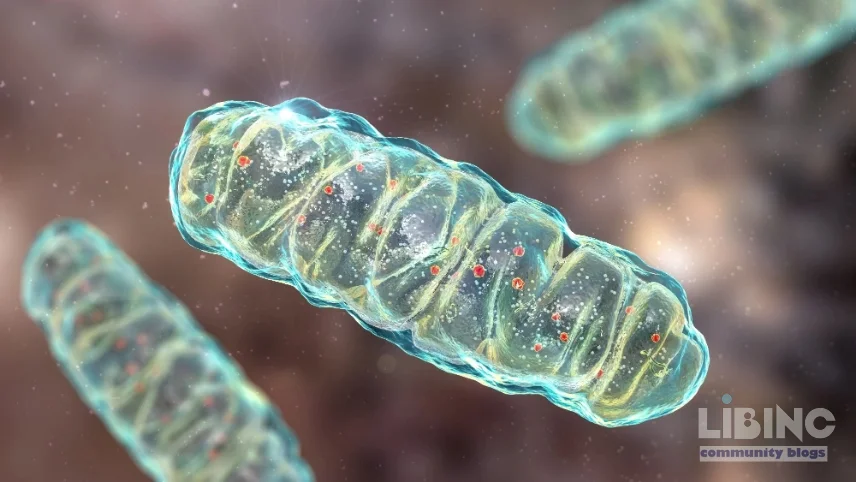
Mitochondrial Health as the Central Driver of Energy, Aging, and Longevity: An Analytical Perspective
Physiological reactive oxygen species (ROS) arise from the electron transport chain, but at controlled levels they act as redox signals that tune transcriptional and enzyme activities. Excessive ROS, or overwhelmed repair systems, damages proteins, lipids, and mitochondrial DNA (mtDNA). Importantly, mtDNA sits close to the electron transport chain, lacks robust repair over time, and accumulates mutations at tissue-specific rates. When mutations clonally expand beyond a threshold, oxidative phosphorylation efficiency declines, and energy production becomes kinetic bottlenecked in demanding organs such as the brain, heart, and skeletal muscle. This dynamic highlights a key diagnostic truth: mitochondrial health rests on both the integrity of mtDNA and the fidelity of the surrounding repair and antioxidant machinery.
Beyond ATP, mitochondria orchestrate metabolic signaling cascades that determine cellular fate. When energy supply tightens, AMP-activated protein kinase (AMPK) activates catabolic pathways and dampens anabolic processes, while NAD+-dependent sirtuins modulate chromatin and mitochondrial gene expression via PGC-1α. The outcome is coordinated mitochondrial biogenesis and adaptive remodeling of cristae to optimize respiration. This coordination depends on tissue context, nutritional state, and age. A critical inference for researchers is that enhancing mitochondrial health demands targeting both the bioenergetic core and the signaling feedback loops that govern adaptation and resilience.
Another layer of control lies in mitochondrial dynamics. Fission and fusion, governed by DRP1, MFN1/2, and OPA1, reorganize mitochondrial networks to balance content mixing, repair, and distribution. Fusion supports content sharing under mild stress, while fission isolates damaged segments for removal. Neither extreme is universally beneficial; the net effect depends on the duration and severity of stress, the cell type, and the regenerative capacity of the tissue. The causal linkage is clear: mitochondrial dynamics modulate energy production and quality control, which in turn influence aging trajectories through the balance of repair and removal.
Mitophagy serves as the selective clearance mechanism for impaired mitochondria. In healthy cells, a drop in mitochondrial membrane potential stabilizes PINK1, recruiting Parkin and triggering autophagic removal. Receptors such as BNIP3, NIX, and FUNDC1 offer alternative routes to direct damaged mitochondria to the autophagy machinery. Dysfunction in mitophagy associates with neurodegenerative and metabolic diseases, underscoring that quality control is a gatekeeper of cellular health. The analytical takeaway is that mitochondrial health emerges from an integrated network: energy production, redox signaling, dynamics, and selective turnover collectively determine cellular resilience and aging trajectories.
The practical frontier requires reliable biomarkers that reflect this integrated health status. Indicators of mtDNA integrity, oxidative stress, metabolic flexibility, and organelle turnover must distinguish adaptive responses from irreversible dysfunction. For translational progress, we need longitudinal, tissue-specific measurements that can guide precision interventions while clarifying safety profiles and potential tradeoffs between enhanced clearance and essential signaling. The overarching principle is that mitochondrial health defies a single metric; it requires a composite readout that captures energy output, signaling fidelity, and quality-control efficacy.
Key mechanisms and their interdependencies
- Oxidative phosphorylation as the primary ATP generator, modulated by substrate availability and mitochondrial density.
- Redox signaling that informs gene regulation and stress adaptation through controlled ROS production.
- Mitochondrial biogenesis driven by AMPK, SIRT1/3, PGC-1α, and NAD+ signaling to expand respiratory capacity.
- Mitophagy the selective removal process balancing accumulation of damaged mitochondria with the maintenance of energy networks.
The analytic lens shows that even subtle shifts in any of these nodes ripple through energy balance, inflammatory tone, and cellular senescence. In turn, these shifts sculpt the aging process and influence disease susceptibility, revealing mitochondrial health as a multiplier of risk and resilience rather than a single organelle’s function.
Contrast: healthy versus dysfunctional mitochondrial states in aging and disease
In healthy aging, mitochondrial quality control networks adapt to reduced maximal respiratory capacity by refining substrate preference and enhancing antioxidant defenses. Such remodeling can preserve function despite age-related constraints. In contrast, chronic dysfunction accumulates when biogenesis fails to compensate for mtDNA damage, when dynamics skew toward persistent fragmentation, or when mitophagy stalls. The contrasts illuminate a critical principle: the same processes that enable rapid adaptation can, if misregulated, accelerate decline.
Healthy mitochondrial health supports metabolic flexibility, allowing tissues to switch between fatty acids and glucose as energy demands shift. This flexibility depends on intact NAD+/NADH cycles and the activity of sirtuins that regulate mitochondrial gene expression and metabolic enzymes. When these pathways falter, tissues become less resilient under stress, elevating the risk of insulin resistance and age-related metabolic syndrome. The comparative insight is that resilience stems from preserved network integrity rather than peak capacity alone.
In the cardiovascular system, mitochondrial efficiency sustains cardiac contractility and perfusion. Redox balance governs calcium handling and excitation-contraction coupling, and disruptions contribute to age-related cardiac aging and heart failure risk. In the brain, neurons demand consistent energy; mtDNA mutations or defective mitophagy can escalate neurodegenerative risk by impairing synaptic function and promoting inflammatory signaling. The tissue-specific picture shows that mitochondrial health remains a context-dependent determinant of aging outcomes rather than a universal, one-size-fits-all target.
Diet, exercise, and pharmacology interact with these dynamics. Regular physical activity robustly stimulates mitochondrial biogenesis and turnover, fostering metabolic flexibility and reducing oxidative damage. However, caloric restriction and related dietary patterns trigger nutrient-sensing pathways that extend beyond energy yield to influence longevity-associated programs. The contrast reveals that interventions may be beneficial only within particular physiological windows and that off-target effects demand careful evaluation.
From a therapeutic perspective, heterogeneity across organs and age stages means we must tailor expectations: mitochondrial health improvements in one tissue may not translate uniformly elsewhere. This nuance matters when assessing interventions such as mitophagy enhancers or NAD+ precursors, which may yield tissue-specific gains or tradeoffs in signaling networks. The ongoing challenge is to map these tissue-specific responses to practical healthspan gains without overestimating universal lifespan extension.
Cause-and-effect relationships: how mitochondrial changes drive aging and disease
The causal chain begins with mtDNA integrity. Mutations and deletions accumulate with age, compromising ETC components, lowering ATP yield, and elevating ROS leakage. The resulting redox imbalance activates inflammatory pathways and promotes cellular senescence, which in turn further disrupts mitochondrial turnover and function. This creates a self-reinforcing loop: dysfunctional mitochondria provoke inflammation, inflammation impairs mitochondrial quality control, and both feed cellular aging.
Energetic constraints influence systemic metabolism. When oxidative phosphorylation falters, cells shift toward glycolysis or alternate substrates, challenging insulin signaling and lipid handling. Such shifts can propagate metabolic syndrome and type 2 diabetes in susceptible tissues, especially when nutrient excess and sedentary behavior persist. The causal logic links energy failure to downstream pathologies through metabolic signaling axes like AMPK and mTOR, which coordinate autophagy and anabolic processes.
Hormetic stress, by contrast, can induce protective remodeling when controlled and reversible. Mild mitochondrial stress can activate adaptive programs that increase antioxidant capacity, promote mitochondrial biogenesis, and improve stress tolerance. The caveat is that persistent or severe stress overwhelms repair mechanisms, accelerating dysfunction. The causality here hinges on stress magnitude, duration, and the tissue’s inherent reserve capacity, illustrating why generalized claims about “mitochondria as aging accelerants” miss the nuance.
Mitophagy sits squarely in the causal web. Efficient mitophagy removes damaged mitochondria, preserving network integrity and limiting inflammatory signaling. When mitophagy fails, damaged mtDNA and oxidized proteins accumulate, heightening inflammasome activation and shaping the inflammatory milieu that characterizes aging. The PINK1-Parkin axis is central, but receptors BNIP3, NIX, and FUNDC1 extend the reach of quality control to subcellular contexts where autophagic flux is seasonally constrained. The bottom line is that a functioning clearance system protects against a cascade of downstream dysfunctions, while impaired turnover accelerates aging phenotypes.
Signaling pathways that sense energy and nutrient status—AMPK, NAD+-dependent sirtuins, and PGC-1α—translate mitochondrial health into gene expression and metabolic remodeling. Their activity patterns determine whether stress triggers repair and adaptation or collapse into dysfunction. Thus, the causal architecture of aging involves a triad: mitochondrial integrity, quality-control turnover, and signaling networks that regulate energy balance and repair capacity.
Expert reconstruction: synthesizing strategies to preserve mitochondrial health and healthy aging
What emerges from the current landscape is a set of targeted strategies, each with tissue-specific considerations and translational hurdles. Exercise remains the most robust, reproducible means to boost mitochondrial biogenesis, improve oxidative capacity, and enhance metabolic flexibility. The underlying mechanism hinges on AMPK activation and downstream engagement of PGC-1α, which coordinates mitochondrial gene expression, mtDNA replication, and antioxidant defenses. This is not merely a one-off gain; it reshapes the entire mitochondrial network toward resilience.
Caloric restriction and diet optimization similarly engage longevity-associated nutrient-sensing pathways, improving mitochondrial efficiency and stress resistance. Yet whether these responses extend human lifespan remains unproven, particularly given variability in adherence and potential adverse effects in some populations. In translation, we must balance biological plausibility with real-world feasibility and safety.
Pharmacological and nutraceutical approaches have emerged as a complementary frontier. Agents like Mitoquinone (MitoQ) and SkQ1 target the mitochondrial matrix to mitigate oxidative stress, while elamipretide (SS-31) interacts with cardiolipin to support inner-membrane integrity. Although preclinical results are encouraging, robust human aging or lifespan extension data are lacking. A critical caveat is that these interventions must be evaluated for long-term safety, tissue specificity, and potential interference with essential redox signaling.
Mitophagy enhancers, such as urolithin A, attract interest for their capacity to remove damaged mitochondria and preserve network function. Human studies show variable outcomes across populations and tissues, emphasizing the need for biomarkers that reflect mitophagic flux and mitochondrial quality rather than surrogate endpoints. NAD+ precursors, including nicotinamide riboside and nicotinamide mononucleotide, can influence mitochondrial biogenesis and sirtuin activity, but results to date are mixed and context-dependent. The overarching theme is cautious optimism: these tools offer routes to improve mitochondrial health, yet none has demonstrated consistent human lifespan extension.
Emerging mechanistic insights into phosphatidylcholine homeostasis reveal a novel axis linking membrane integrity to metabolic resilience. A 2026 study in C. elegans showed that age-related declines in phosphatidylcholine production disrupt mitochondrial networks, whereas restoring phosphatidylcholine improved network integrity and metabolic resilience in cultured human cells. While these findings are preliminary and not a dietary endorsement, they point to membrane composition as a determinant of mitochondrial stability and energy maintenance under stress. The translational implication is that preserving lipid environments around mitochondria may support function when mitochondrial stress arises with aging.
From a precision medicine perspective, the future lies in tissue- and life-stage–specific profiling. Validated biomarkers that capture mtDNA integrity, redox status, metabolic flexibility, and organelle turnover will enable targeted interventions and safer combination therapies. The integration of genomic, proteomic, and metabolomic data will guide individualized strategies, but this demands rigorous longitudinal assessment and careful monitoring for unintended cross-talk among signaling networks. The cautious pathway forward emphasizes proof-of-concept in humans, robust safety data, and transparent reporting of clinically meaningful outcomes that extend healthspan, even if not guaranteed to extend maximum lifespan.
In sum, mitochondrial health remains a central lever in energy management, aging, and resilience. The evidence supports lifestyle strategies that enhance biogenesis and turnover, while pharmacological and nutraceutical approaches require more definitive human data. The field stands at a crossroads: continue expanding mechanistic understanding, improve biomarker fidelity, and test combinations that preserve mitochondrial networks without blunting essential signaling. The goal is to translate mitochondrial health into functional longevity, delivering meaningful gains in metabolic health, cognitive function, and quality of life as populations age.
In pursuing this agenda, researchers should avoid oversimplifications. Mitochondrial health is not a single metric but a constellation of interdependent processes. A well-designed portfolio of interventions—tailored to tissue context and life stage—offers the greatest probability of meaningful healthspan gains. The horizon includes smarter biomarkers, safer multi-target approaches, and precision strategies that respect the balance between adaptive stress responses and durable mitochondrial function.
Practical implications for researchers and clinicians
- Adopt composite biomarkers that reflect mtDNA integrity, ROS signaling, and mitophagic flux to guide decisions.
- Tailor interventions by tissue and age to maximize benefits and minimize tradeoffs in energy balance and signaling networks.
- Prioritize combination therapies that harmonize mitochondrial biogenesis with quality-control turnover while monitoring inflammatory tone.
- Investigate lipid-mitochondria interfaces as a novel axis for maintaining network integrity under stress, including phosphatidylcholine regulation.
Concluding, mitochondrial health stands as a central determinant of energy supply and organismal resilience across aging. The most credible path forward combines lifestyle optimization with targeted, carefully tested interventions, anchored by robust, tissue-specific biomarkers. This approach offers the best prospect for enhancing healthspan in humans, even as decisive evidence for extending lifespan remains elusive.
In doing so, researchers must remain vigilant about unintended consequences in signaling networks, ensuring that interventions bolster mitochondrial function without dampening essential adaptive responses. The pursuit of mitochondrial health is not a single silver bullet but a nuanced program of maintenance, adaptation, and therapeutic precision that aligns energy stewardship with the goals of healthy aging.
Short synthesis: maintaining mitochondrial health requires a balanced integration of lifestyle and targeted strategies, guided by biomarkers and a deep understanding of tissue-specific dynamics. The path forward is incremental, evidence-driven, and oriented toward meaningful improvements in healthspan rather than overstated promises of life extension.
Targeted biomarker integration for tissue-specific aging resilience
To translate mitochondrial health into practical healthspan gains, the critical step is a composite, tissue-specific readout that guides when and what to intervene. A usable framework merges mtDNA integrity, redox signaling balance, and mitophagy flux into an interpretable score tracked in key tissues such as skeletal muscle, heart, and brain. In clinical practice this means moving beyond a single metric. By pairing measurements of energy output with signaling fidelity and turnover, practitioners can tailor exercise, nutrition, and pharmacology to the tissue at highest risk and the life stage of the patient.
In practical terms, this approach supports safer, more effective interventions by aligning goals with tissue context. A muscle-focused panel might prioritize AMPK and PGC-1α activity to boost mitochondrial content, while a cardiac panel emphasizes calcium handling and bioenergetic reserve; in the brain, maintaining consistent energy supply supports synaptic function and reduces inflammatory signaling. The result is a nuanced framework that informs both prevention and treatment strategies across aging trajectories.
| Aspect | Healthy mitochondria | Dysfunctional mitochondria | Clinical implication |
|---|---|---|---|
| Energy output | High OXPHOS efficiency | Lower ATP yield | Monitor fatigue and endurance capacity |
| Redox signals | Balanced ROS as signals | Excess ROS causing damage | Assess chronic inflammation potential |
| Turnover | Robust mitophagy | Impaired clearance | Intervene with lifestyle and possible modifiers |
This compact table helps translate biology into practice: track changes with exercise or dietary interventions, and use a composite score to guide intensity or monitoring frequency across tissues.
mtDNA integrity: high | redox balance: balanced | mitophagy: robust
Healthspan indicator: 78/100
In practice, tissue-specific panels enable nuanced decisions. For example, an older patient with metabolic syndrome may benefit first from muscle-centered metrics and exercise programs that raise PGC-1α and AMPK, while cardiac risk requires parallel attention to energy reserve. In the brain, preserving energy supports synaptic function and reduces inflammatory signaling. These are not universal prescriptions; they are tiered strategies aligned to tissue context and goals.
- Biomarker framework
- Core readouts: mtDNA integrity, ROS signaling, mitophagic flux
- Context: tissue type, age, metabolic state
- Interventions: lifestyle, targeted nutraceuticals, conditioning regimens
- Evaluation: longitudinal tracking, safety profiling, multi-omics integration
Overall, a multi-metric, tissue-aware approach reduces misinterpretation and supports safer, more effective strategies for healthy aging.
Short synthesis: a coherent biomarker strategy that spans energy production, signaling fidelity, and turnover is the most practical path to meaningful healthspan gains across tissues and life stages.
How are mitochondrial biomarkers used in practice?
Mitochondrial biomarkers are used to stratify risk and guide interventions by combining mtDNA integrity, redox status, and turnover into a composite score that can be tracked in key tissues. This supports personalized decisions about exercise, diet, and supplements. In practice, clinicians overlay tissue-specific readouts with patient goals to tailor regimens that balance resilience with safety.
In depth, this approach reduces reliance on a single metric. It emphasizes pattern recognition across energy output, signaling, and quality-control processes, enabling safer, dose-tuned strategies that respect tissue context and life stage.
Which tissues are most informative for aging-related mitochondrial changes?
Muscle, heart, and brain are typically prioritized because they demand high energy and exhibit clear age-related shifts in biogenesis, turnover, and signaling. Peripheral markers in blood or exosomes can complement tissue data, but tissue-specific panels remain most informative for risk stratification and intervention planning.
In practice, this means combining non-invasive assays with targeted tissue measurements to capture metabolic flexibility and repair capacity across organ systems.
How quickly can lifestyle changes impact mitochondrial health?
Exercise and caloric modification can modulate AMPK, NAD+, and sirtuin activity within weeks, producing measurable gains in substrate flexibility and turnover. The magnitude and duration of benefit depend on baseline fitness, age, and adherence. Reversibility varies by tissue and prior damage.
Longitudinal tracking confirms that sustained changes in lifestyle strengthen mitochondrial networks and resilience, though the pace and scope of improvement are tissue-dependent.
What are the risks of pharmacological modulators of mitochondria?
Targeting mitochondria carries the risk of disrupting essential redox signaling or interference with adaptive stress responses. Off-target effects, tissue-specific toxicity, and long-term safety remain key concerns. Rigorous human testing and biomarker-driven dosing are essential to balance benefit with safety.
In real-world practice, combination strategies require careful safety monitoring and iterative optimization across tissues.
How should clinicians measure mitochondrial health in practice?
Clinicians should use composite biomarker panels that combine mtDNA integrity, redox status, and mitophagic flux with longitudinal measurements. Integrating multi-omics data (genomics, proteomics, metabolomics) improves interpretation and supports personalized therapy windows.
Practical steps include baseline profiling, periodic re-evaluation, and cross-tissue comparisons to ensure interventions strengthen network integrity without compromising essential signaling.
What is the role of NAD+ precursors and sirtuins?
NAD+ replenishment can boost sirtuin activity, improving mitochondrial gene expression and biogenesis. However, responses are context-dependent and may vary by tissue, age, and baseline NAD+ status. Biomarker-guided dosing and monitoring help optimize benefits while minimizing risks.
In clinical terms, NAD+ strategies should be considered as part of a broader, tissue-specific plan rather than a standalone fix.








Add a comment
To comment, you need to register and authorize
Comments