

Walking Football and Aging: How a Late-Life Sport Reframes Health, Identity, and Community
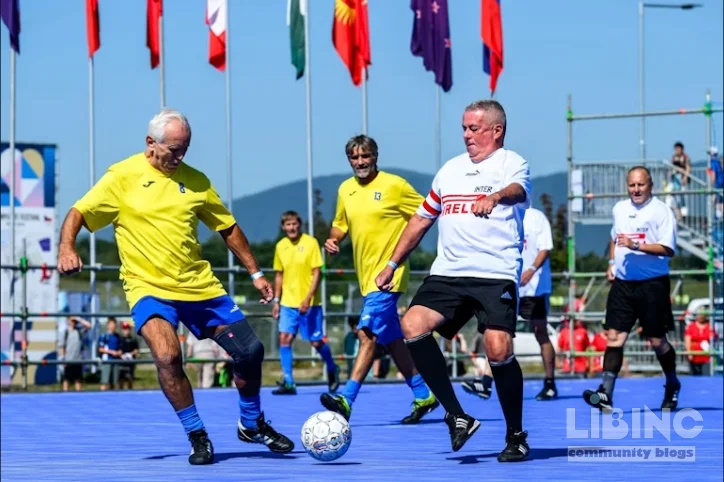
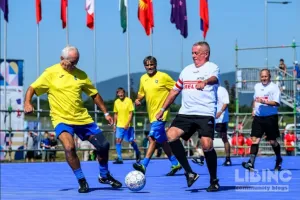
Across the UK's football pitches, walking football challenges aged stereotypes by turning a late-life pastime into a rigorous, socially transformative activity. The problem isn't activity itself; it's how society narrates ageing as a period of illness and dependence. Walking football—an adaptation of running football for older players—offers a counter-narrative that blends physical challenge with social connection. This article probes what participation in walking football means to people in their 50s, 60s and 70s, and why the sport matters beyond calories burned. It is estimated that around 100,000 people in England last year played walking football. Drawing on interviews with 53 men and 12 women who play the game, alongside sociological perspectives, the piece identifies how walking football reshapes health, identity, and belonging.
Table of Contents
Analytics: Walking football as a data-driven portrait of aging
A primary finding is the physical benefits narrative. Players report better stamina, weight management, and a sense of bodily upkeep through weekly sessions. In the words of a 68-year-old participant, the game helps him stay physically and psychologically healthier, turning a week of ordinary chores into something more vital. The sport’s design—lower pace, smaller-sided games, and controlled contact—does not soften the demand; it translates cardiovascular strain into sustainable, repeated effort, making measurable health gains plausible even in later life.
- Physical benefits: improved fitness, weight management, cardiovascular resilience
- Identity and social benefits: rekindled confidence, sense of purpose, social ties
- Care and inclusion: safer play, dementia-friendly adaptations, mutual support
Second, participants emphasise the experiential joy beyond physical metrics. For many, the chance to kick a ball again, to twist and turn as in youth, produces a tangible sense of revival. A 65-year-old recalls scoring goals “like when I was twenty,” and many describe a renewed pride in skills they feared lost. This is not nostalgia alone; it is a restoration of identity through bodily competence, where sport becomes a language for talking about aging as a capacity, not a deficit.
Third, discomfort is acknowledged and reframed as part of the game. Players discuss aches and occasional injuries, yet many do not see this as a reason to quit. Some wear discomfort like a badge of honour, while the group often intervenes to pause play or adapt rules for players with limited mobility or dementia. These practices reveal an underlying ethic of care: ageing is managed through mutual attention, not isolation.
Collectively, walking football presents a data-informed portrait of ageing that integrates health, identity, and social belonging. The practice keeps older adults in public life as active citizens with bodily capability and social capital.
Contrast: Against clichés about ageing and risk
Walking football challenges common stereotypes about what older people can and should do. It is neither a passive pastime nor a reckless pursuit of pain. It sits at the intersection of capability and care, where risk is acknowledged but mitigated through community norms and adaptive practice.
The sport contradicts the idea that aging equals withdrawal. Players describe the game as hard and skilful, requiring fast decision-making and precise footwork. A 67-year-old notes that the activity is more demanding than expected, while others recount quit-worthy pain as a trade-off for meaningful competition and social contact.
- Pain as conversation, not barrier: aches invite care and adaptation
- Inclusive design: matches pause when someone is hurt; modifications extend participation for dementia and mobility limits
- Balance of risk and reward: the social and psychological benefits offset physical discomfort
These contrasts reveal a broader truth: ageing in public space benefits from a culture that makes room for vulnerability, while preserving the thrill and skill of competition.
Cause-and-effect: How participation shapes health, belonging, and life trajectories
Walking football appears as a set of cause-and-effect relationships. Regular participation creates routine, social contact, and a sense of progress, all of which interact to produce health and psychosocial gains. In practical terms, players describe greater daily energy, better mood, and more opportunities to reconnect with former selves.
The chain begins with accessible physical activity: slower pace reduces barrier to entry, while still demanding cardiovascular effort and leg strength. This triggers improved endurance and weight management, which in turn enhances mobility and reduces the risk of comorbidities common in older age groups.
Socially, regular matches forge peer networks, mutual support, and a shared identity as athletes rather than dependents. These social ties can buffer isolation, a known risk factor for declining health. The interplay of exercise and social connection amplifies benefits beyond the gym or the living room alone, producing what researchers describe as health-enhancing social environments.
Functional benefits translate into psychological resilience. Players talk about a sense of purpose, pride in skill, and a narrative of bodily capability that survives and adapts to changing conditions, including dementia or mobility challenges. The approach to pain—addressed with care rather than avoidance—helps sustain participation and interest across diverse aging experiences.
In short, the causal loom extends from personal practice to community culture. Walking football isn't just exercise; it's a social technology for aging well, dependent on supportive clubs, inclusive rules, and an ethos of mutual responsibility.
Expert reconstruction: Insights from sociology and sport science
Scholars and practitioners push beyond anecdote to place walking football within broader social theories of health, aging, and sport. The activity emerges at the intersection of individual optimization and collective care, highlighting how public spaces can mediate narratives of aging from decline to possibility.
As sociologist Kass Gibson cautions, health narratives that celebrate exercise without acknowledging structural factors can mislead. 'Health is shaped by much more than individual activity levels. Poverty, inequality and access to support all matter.' You cannot jog your way out of poverty, nor press-up depression away. Walking football offers an opportunity to address these larger constraints by creating inclusive spaces where aging bodies are celebrated and supported.
From a sport-science perspective, the combination of aerobic demand and skill-based challenges makes walking football an efficient vehicle for maintaining cardiovascular health while preserving reflexes and balance. The slower tempo reduces acute injury risk, while the competitive tempo preserves motivation and cognitive engagement. The design of the sport—shorter matches, smaller pitches, and less contact—facilitates adherence across diverse aging populations.
Policy implications emerge from this synthesis. Leagues can invest in dementia-friendly training, flexible participation rules, and cross-generational outreach to keep aging adults engaged. More broadly, walking football offers a model for how public health messages can be reframed: promote active, joyful participation rather than simply target weight or blood pressure, while acknowledging the social determinants that enable or constrain access.
These observations reinforce the central thesis: walking football serves not only as a sport but as a social technology for aging well, worth serious attention from researchers, policymakers, and community organizers alike.
In sum, walking football demonstrates that aging can be experienced as a network of physical challenge, social vitality, and purposeful identity. Through movement, care, and shared skill, older players recast what it means to grow older in public—one match, one conversation, one goal at a time.
Operationalizing the insights: a practical framework
To translate these insights into sustainable programs, clubs need a practical playbook that blends safety, inclusion, and measurable outcomes. The framework below translates research into action, with concrete design choices that can be adopted by community clubs, leagues, and volunteers alike.
| Aspect | Examples | Impact | Notes |
|---|---|---|---|
| Session tempo | Slower pace, smaller squads | Maintains aerobic load with lower injury risk | Adjust per player |
| Rule adaptations | Limited tackles, paused matches when needed | Inclusive participation for mobility/dementia | Monitor fatigue |
| Memory supports | Pictograms, cue cards | Reduces confusion, supports routine | Update signage |
| Safety and supervision | Trained marshals, buddy system | Safer environment, quick response | Ongoing training |
| Equipment | Low-bounce ball, lightweight goals | Easier grip, reduced strain | Seasonal checks |
| Feedback | Monthly surveys, coach debriefs | Data-driven improvements | Keep it simple |
These adaptations translate health gains into everyday participation, balancing risk with social return. In practice, a club can pilot dementia-friendly signals, assign buddy pairs, and review matches weekly to ensure inclusion remains the default rather than an exception.
| Metric | Baseline | Target |
|---|---|---|
| Attendance | 60 per session | >75 |
| Active minutes | 35–40 | 45–60 |
| Mood score | 5/10 | 7/10 |
These metrics provide a compact view for volunteers and funders, guiding adjustments without adding burden to participants.
In sum, the practical framework aligns with the health, identity, and belonging themes already identified, while offering clubs a clear, scalable path to ongoing participation.
What is walking football and why is it popular among older adults?
Walking football is a slower, controlled version of traditional football designed specifically for older players, where running is replaced by walking, pace is intentionally reduced, and matches use smaller pitches with shorter halves, fewer players, and limited physical contact; this combination preserves the core skills and strategic decision making of football while prioritizing safety, accessibility, and social interaction. It appeals to people who want to stay active without excessive strain, to those recovering from injuries, and to communities seeking inclusive activity that can accommodate diverse mobility and cognitive needs without sacrificing competitive spirit. The activity also supports social connection, which many participants credit for sustaining long-term involvement.
Analytical note: its popularity reflects a demand for age-friendly sport models that blend health benefits with social belonging and practical accessibility in community settings.
What are the health benefits beyond calories burned?
Walking football yields cardiovascular benefits, better balance, and increased leg strength, alongside mood improvements from regular social interaction and purposeful activity; the structured yet flexible format helps individuals progress at their own pace without excessive strain. It also fosters cognitive engagement through decision making and teamwork, which can support mental sharpness in later life. Real-world reports show participants notice steadier energy levels and improved daily functioning over time.
Analytical note: the health impact tends to amplify when clubs pair physical activity with supportive routines and social connection, turning exercise into a holistic wellbeing habit.
How can clubs implement dementia-friendly practices?
Clubs can adopt dementia-friendly practices by building clear routines, using pictorial signage, assigning buddy volunteers, offering flexible participation rules, and training staff in communication cues and safety. Simplified rules, predictable match flow, and visible error tolerance help reduce anxiety and keep players engaged. Regular feedback loops ensure adaptations stay effective as needs evolve. In practice, a small club might run two volunteer-led sessions per week with one buddy per participant and a simple sign system to guide transitions between drills.
Analytical note: such practices reduce withdrawal risk and foster an inclusive culture that benefits all participants, not only those with dementia.
What measurable outcomes should clubs track?
Clubs should monitor attendance, duration of participation, mood indicators before and after sessions, balance and mobility benchmarks, and indicators of social connectedness such as perceived belonging. Simple surveys, coach observations, and one-minute functional tests can yield actionable data without overburdening volunteers. Reporting these metrics helps secure support and demonstrates impact to funders and policymakers.
Analytical note: consistent data collection enables continuous improvement and clarifies the link between participation and wellbeing for aging populations.
How does walking football address social isolation?
Walking football creates regular social contact, shared identity as athletes, and opportunities for cross-generational engagement, which collectively reduce loneliness and strengthen community ties. The sport offers a platform where older adults stay visible in public life, maintain friendships, and mentor younger players, reinforcing a sense of purpose. Programs that invite volunteers or family members to participate alongside players can expand social reach even further.
Analytical note: the social fabric around the game acts as a protective factor against isolation and reinforces healthy ageing as a communal endeavour.



Add a comment
To comment, you need to register and authorize
Comments