

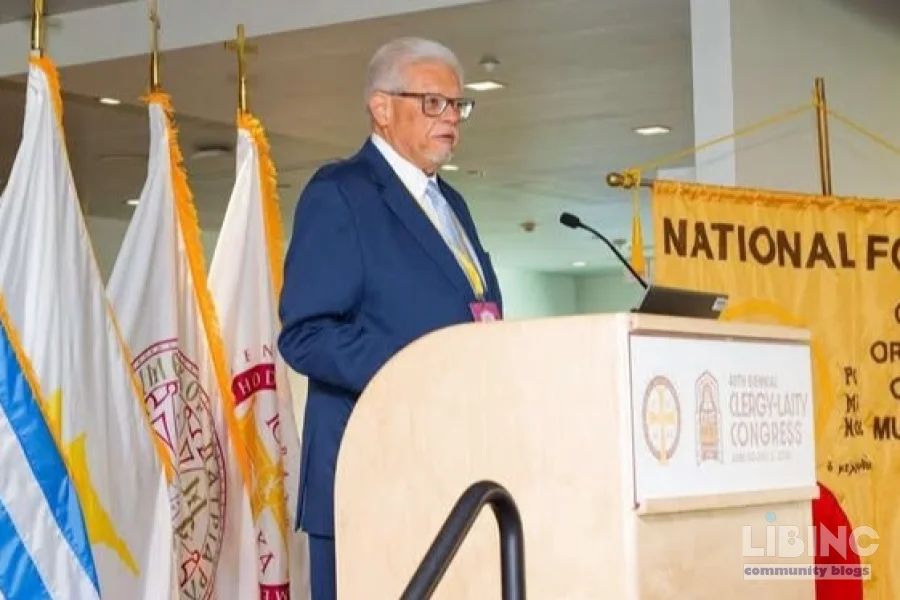
The National Forum of Greek Orthodox Church Musicians at the 2026 Clergy-Laity Congress: Sustaining Sacred Music Leadership Across Parishes
Table of Contents
- Analytics perspective
- Contrasts and comparisons
- Cause-and-effect relationships
- Expert reconstruction
- Conclusion
From the opening moments of Cleveland's Clergy-Laity Congress, the National Forum of Greek Orthodox Church Musicians asserts that sacred music remains a cornerstone of parish life in America. The centering of the Forum's 50th anniversary celebrations signals not merely memory but a strategic reorientation: to sustain, educate, and elevate the role of ministers of music within the Orthodox worship tradition. The Congress offers a stage where music ministry is tested against contemporary realities: shifting demographics, changing congregational participation, and the ongoing task of maintaining liturgical integrity in English-language hymnography. In this moment, the Forum locates its responsibility at the intersection of worship, education, and community leadership.
Through video messages and ceremonial greetings, leaders foreground sacred hymnography and parish music ministry as living traditions rather than dusty relics. This emphasis is not nostalgia but a blueprint for action: invest in training, preserve liturgical integrity, and equip choirs to serve diverse congregations without compromising Orthodox identity.
Analytics perspective on the Forum's trajectory
The data and events around the 50th anniversary reveal a deliberate trajectory from decentralized church music activities to a nationwide coordinating ministry. The Forum traces its roots to the Bicentennial Clergy-Laity Congress in 1976, a moment that seeded networks, resources, and leadership pipelines across archdioceses. By 2026, the organization has not only sustained visibility during the Clergy-Laity Congress but actively embedded itself in official liturgical life, including synodal services and national exhibitions. This evolution is not incidental; it reflects a conscious strategy to align musical ministry with parish life, catechesis, and ecumenically engaged worship.
Crucially, MELI—Music Education and Leadership Initiative—emerges as the practical engine behind this shift. The program promises to strengthen parish music ministries and cultivate the next generation of church musicians and leaders, connecting training with tangible improvements in hymnography and Sunday worship. The insistence on English-language liturgy and accessible choral settings is not mere accommodation; it is a deliberate attempt to widen participation while preserving Orthodox doctrinal integrity. The Forum’s leaders argue that robust musical education translates into more coherent ecclesial identity across communities that differ in language, culture, and demographics.
At the ceremonial heart of the luncheon, the Saint Romanos Medallion recognized Fr. Michael Pallad and Nicholas Chimitris for decades of service—an exemplar of how musical stewardship translates into long-term worship vitality. This honor underscores a broader analytic point: individual leadership matters because it seeds durable structures, repertoire, and mentorship pipelines. The award also signals a cultural valuation that ties composition, arrangement, and ministry to the parish worship rhythm. The result is a ripple effect, where a single act of recognition reinforces a shared vocabulary of sacred music ministry that travels beyond borders and generations.
Beyond recognition, the Forum's musical offerings during the Congress—most notably the Official Opening Ceremony's National Forum Choir paired with a brass sextet—demonstrate the capacity of Orthodox sacred music to unify communities around liturgy and the cultivation of liturgical music education. This emphasis positions education as a core lever in parish development, ensuring that worship patterns, rehearsal practices, and repertoire choices reinforce both doctrinal fidelity and congregational participation.
Analytics so far indicate that the forum’s national presence is not merely ceremonial; it translates into ongoing programmatic collaborations, from music theory workshops to standardized hymnography resources that can be adapted across parishes. The next phase, critics argue, should focus on measurable outcomes—participation rates, repertoire diversity, and the extent to which English-language hymnography coexists with traditional chant idioms.
Contrasts and comparisons in Church music ministry approaches
The contrast between the Forum’s centralized, event-driven model and smaller, localized parish initiatives yields important insights. Where a metropolitan-network approach accelerates adoption of best practices, it can also risk homogenization that erodes local idioms and language preferences. In this view, the Forum’s English-language emphasis—while expanding reach—must be measured against the need to preserve regional hymnography and sonic textures that have historically sustained Orthodox worship in immigrant communities. The tension is not between tradition and modernity, but between scalability and contextual fidelity, a dynamic that requires continuous recalibration of repertoire, pedagogy, and leadership selection. The result is a more nuanced understanding of how sacred music can serve both continuity and renewal within the parish.
In this comparison, the Forum’s model appears more music-education oriented than some traditional parish practices, which can privilege performance over pedagogy. The MELI initiative reorients the field from mere choir participation to a holistic parish music ministry that includes mentoring, repertory selection, and leadership development. That shift has implications for how music is taught, assessed, and funded at the local level, potentially prompting parishes to invest in acoustics, rehearsal space, and cross-generational mentoring—factors that influence long-term musical vitality. This contrast highlights that sustainable sacred music requires an ecosystem rather than isolated acts of performance.
Another contrast lies in how the Forum measures success. Where some institutions equate success with attendance at high-profile events or the volume of commissioned works, the Forum’s emphasis on education, mentorship, and standardized liturgical settings aims for durable capability in parish contexts. The presence of public recognitions like the Saint Romanos Medallion reinforces professional value, but the real leverage comes from building a pipeline of trained leaders who can guide choirs through changes in language, repertoire, and liturgical practice. The overall picture suggests that the strongest practice blends ceremonial visibility with concrete, scalable training modules that can be adapted across archdioceses.
Cause-and-effect relationships shaping Orthodox sacred music ministry
The causal thread is clear: investment in education and leadership pipelines yields more coherent worship experiences at the parish level. When MELI materials surface in diocesan workshops and parish libraries, choirs gain access to structured curricula, repertoire frameworks, and assessment tools that translate theory into practice within the liturgy. The immediate effect is heightened congregational participation, but the longer-range consequence is a generation of church musicians who view service not as a role but as a form of liturgical ministry, integrated with catechesis and evangelism. In short, the Forum’s strategic emphasis on pedagogy strengthens the very fabric of Orthodox worship.
Nevertheless, this causal model encounters friction points. Resource disparities between urban and rural parishes, language transitions, and changing demographics can derail even well-designed MELI modules. If training fails to address local realities—festive languages, chant traditions, and time constraints—parishes risk superficial adoption that does not endure. The Forum must therefore adapt its materials to be modular, linguistically flexible, and applicable to short-term worship cycles, ensuring that the pipeline remains durable across diverse contexts. The risk is underinvestment in the critical time window when new leaders are most teachable.
Despite such challenges, the approach yields measurable, instrument-level outcomes. Quarterly assessments of choir cohesion, repertoire breadth, and liturgical alignment provide tangible indicators of impact, while feedback from clergy and parish councils signals how music ministry threads into stewardship, catechesis, and outreach. The MELI program’s modular design supports continuous improvement, allowing schools, parishes, and youth programs to reallocate funds toward music education where it matters most. In this way, cause and effect reinforce the case that sacred music ministry is not ornamental but essential for parish vitality.
Expert reconstruction: futures for the Forum and Orthodoxy’s musical life
Experts propose a reconstruction built on scalable, locally resonant models. A blueprint emphasizes expanding MELI's reach through regional hubs, online resource libraries, and mentor networks that pair veteran church musicians with new entrants. The goal is to create an adaptive ecosystem where Orthodox hymnography remains doctrinally precise while embracing accessible English-language liturgy. This requires careful curation of repertoire, clear performance guidelines, and a feedback loop that ties worship to education, ensuring that the music ministry becomes a formal, credentialed component of parish leadership rather than an optional extra. In practice, that means collaborative governance, shared best practices, and sustained funding for mentoring programs.
Strategic alignment with archdiocesan structures is essential. The Forum’s leadership should facilitate cross-archdiosan exchanges, joint trainings, and the development of portable curricula that can be localized without losing doctrinal coherence. The expert community recommends partnerships with seminary programs and university music departments to codify sacred music pedagogy, protect repertoire quality, and support future composers who can contribute to Orthodox hymnography in multiple languages. The result would be a living archive of liturgical music that grows with the Church and remains faithful to its theology while reflecting diaspora realities.
Finally, the reconstruction contends with a cultural imperative: to make sacred music ministry attractive as a vocation rather than a fallback. The design includes scholarships, residencies, and recognition programs that reward excellence and service. A contemporary model would incorporate digital learning platforms, mobile practice tools, and collaborative composition spaces that enable musicians from different backgrounds to contribute to a shared liturgical vocabulary. The effect would be not only stronger choirs but a more resilient, inclusive Orthodox worship experience.
In closing, the 50th anniversary of the National Forum of Greek Orthodox Church Musicians at the Clergy-Laity Congress signals a turning point in how sacred music ministry is taught, organized, and sustained across communities. By linking education, mentorship, and liturgical fidelity, the Forum positions Orthodox worship to endure amid demographic shifts and cultural change. The real measure of success will be the breadth of parish music ministries that can articulate a clear, shared musical theology while honoring local idioms and sacred hymnography. If the road ahead remains faithful to that dual aim, Greek Orthodox church musicians will continue to shape worship, nurture leaders, and preserve sacred hymnography for generations to come.
Practical blueprint to close the readiness gap
To turn policy into practice, a modular, locally adaptable plan is essential. This section offers concrete actions, with language-sensitive repertoire, mentoring networks, and short training cycles that parishes can implement this year, while tracking progress in a simple way.
Module snapshot shows how MELI translates into parish action.
| Module | Focus | Typical Duration | Parish Example |
|---|---|---|---|
| Repertoire Basics | Liturgical language choices and chant alignment | 4 weeks | Urban parish, English chant |
| Harmonics & Musicianship | Voice leading and ensemble balance | 6 weeks | Suburban choir |
| Leadership Mentoring | Mentor pairing and succession planning | 3 weeks | Rural parish network |
Analysis: This snapshot demonstrates a practical cadence: short cycles, cross-generational mentoring, and language-smart repertoire can be adopted without overhauling parish life.
Two real-world scenarios illustrate this approach:
- Urban parish adopting English chant with existing Byzantine tones.
- Rural parish pairing a veteran choir with youth singers for a mixed-language service.
Implementation path for parishes
- Assess local hymnography history and language needs
- Adopt a 6-week MELI module with a clear practice plan
- Pair a mentor with a novice musician and schedule quarterly check-ins
- Invest in simple acoustics and rehearsal space
When parishes run these cycles regularly, they build a scalable ecosystem that supports liturgical fidelity and broader participation.
How does MELI improve parish music ministry?
MelI delivers a practical, modular framework that translates doctrine into daily worship life. By combining targeted curricula, regional mentoring, and readily adaptable hymnography, parishes gain stronger leadership, clearer repertoire, and more cohesive liturgical practice. This leads to higher choir cohesion, better congregational participation, and a more confident sense of belonging during services. In the broader view, MELI creates durable capacity by aligning training with church rhythms and local language realities.
Analytically, the approach yields measurable shifts in rehearsal efficiency, repertoire consistency, and ministry engagement, especially when paired with small, repeatable cycles that fit parish calendars.
How is English-language hymnography balanced with traditional chant?
The balance relies on parallel tracks: preserving core chant idioms while introducing carefully mapped English hymnography in the liturgy. This involves translation rules that respect doctrine, cross-referencing with standard chant templates, and phased integration to avoid disruption. The practical result is inclusive participation without diluting Orthodox identity. Ongoing review ensures translations maintain theological precision while enabling wider worship participation.
What metrics indicate success in parish music ministry?
Key metrics include participation rates in choirs and liturgy, breadth of repertoire across languages, rehearsal efficiency, and alignment of sung portions with the liturgical rite. Quarterly assessments of choir cohesion and parish feedback further reveal how music ministry influences catechesis, outreach, and stewardship. Strong results show steady participation growth and clearer liturgical articulation over multiple cycles.
What is the Saint Romanos Medallion and its significance?
The Saint Romanos Medallion recognizes long-term service and leadership in sacred music ministry. It signals professional valuation of musical stewardship and creates aspirational benchmarks for upcoming generations. Beyond ceremonial applause, the award reinforces a shared vocabulary for composition, mentoring, and liturgical service that travels across parishes and archdioceses.
How can rural parishes participate in MELI?
Rural parishes can start with a single modular cycle, paired mentors, and local youth collaboration. Regional hubs support shared resources, while online libraries offer accessible hymnography that respects local idioms. The approach emphasizes scalable steps, not overnight transformation, allowing small communities to grow their music ministry in a sustainable way.
What technologies and platforms support the MELI approach?
Core tools include modular curricula hosted in diocesan libraries, video mentoring exchanges, and low-cost rehearsal aids. These resources are designed for offline use and simple integration into existing parish programs. Analytics from these tools feed back into local leadership decisions, helping parishes refine repertoire selection and training pace over time.




Add a comment
To comment, you need to register and authorize
Comments