

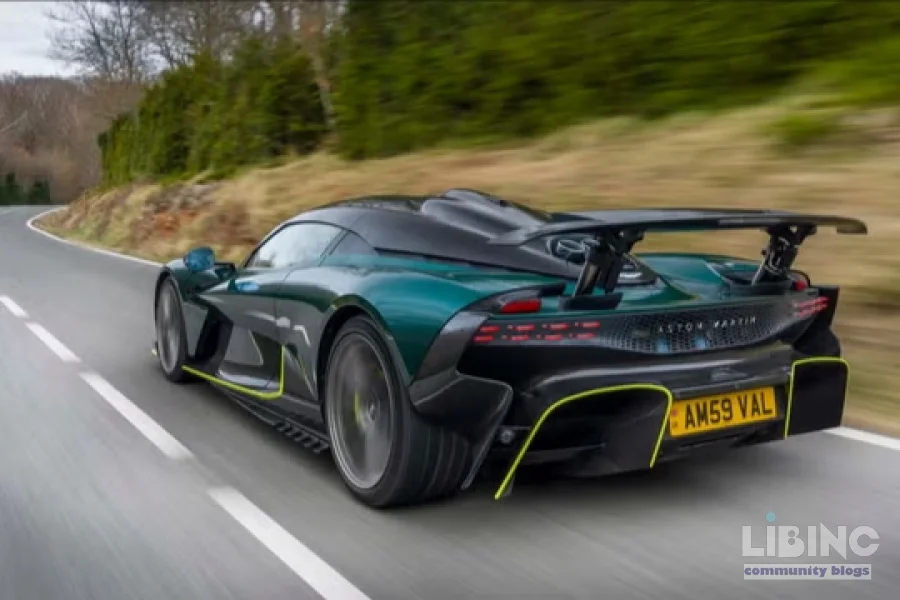
Aston Martin Valhalla: A 1064-hp hybrid that blends track fury with street livability
On paper, the Valhalla promises a brutal sprint and raw speed. Inside, a dilemma emerges: can a car with 1064 horsepower and a 217 mph ceiling feel natural to drive on a public road? The risk is locking the experience into track-day aggression, yet Aston Martin aims to keep it civilized. The real stakes go beyond numbers: drivers want a car that responds with intuition, not impulse from a software brain. The hidden conflict is the need to extract maximum aero and power while preserving steering feel and comfort. This analysis dissects how the Valhalla's hybrid architecture, aero management, and chassis tuning coalesce to deliver both raw magic and measured control. The result is a car that can bite hard yet listen when you ask it to turn.
Table of Contents
- Analytics: The architecture and the math behind the 1064-hp hybrid
- Contrast: Performance vs livability in daily driving and on track
- Cause and effect: How aero, weight, and power deployment shape behavior
- Expert reconstruction: What the Valhalla teaches about future Aston design
Analytics
The Valhalla’s powertrain reads like a compact manifesto: a dry-sump, twin-turbo 4.0-liter V-8 anchors the system at 817 hp, while three electric motors multiply intent across the chassis. Two front-axle units supply 161 hp each, and a single rear motor contributes 201 hp. Together with a 6-kWh lithium-ion pack, the combined output lands at 1064 hp and 811 lb-ft of torque, with an eight-speed dual-clutch transmission routing power to the wheels. This is not a straightforward combustion engine with a trivial hybrid overlay; it is a deliberately configured hybrid powertrain that injects electric torque precisely where it helps most, smoothing gaps in combustion and enabling nuanced handling at the limit.
The architecture’s core claim is efficiency through harmony. The hybrid powertrain is tuned to deliver torque with intent rather than surprise, enabling torque vectoring that feels natural instead of theatrical. The front traction motors spin up to 19,000 rpm, ensuring torque remains available into the upper rev range and helping keep steering feel communicative rather than masked by electricity. In practice, this means the Valhalla can deliver rapid acceleration without chopping steering feedback, preserving a driver’s sense of line and balance as you lean on the chassis through corners. This coupling of electric torque and mechanical grip is the central reason the car avoids an overbearing, twitchy personality in normal use.
The V-8 breathes through a roof snorkel, a setup that signals how Aston prioritized air management alongside performance. The front aero elements and a rear wing work in concert with a carbon-fiber tub to sculpt downforce without turning the car into a wind tunnel reflex. The downforce target—1345 pounds at 149 mph—feeds the chassis with stability while the system modulates beyond that speed to keep tire load in check. The result is a car that can dig into high-speed corners with confidence, yet remains predictable enough to survive a lap at a pace similar to more conventional performance coupes when tracking is not the plan for the day.
The aero package is integrated with the chassis rather than bolted on as a performance afterthought. TheValhalla’s optional magnesium wheels save weight (claimed 26 pounds total) and alter the suspension’s feel and balance, underscoring how even small mass reductions at the unsprung level can shift steering precision and the car’s response to midcorner bumps. By distributing load across the aero and structural elements, Aston ensures the springs and tires don’t have to compensate for excessive downforce at high speed, freeing the dampers to govern fidelity rather than trying to fight gravity itself.
Transmission and drive modes reinforce the analytical picture. The eight-speed DCT is not an afterthought; it’s paired with the hybrid’s energy strategy to preserve battery state during repeated lapping. In Race mode, the electric side yields power by up to 37 hp to keep the 6-kWh pack from overheating during extended sessions, while the interior remains pliable enough for daily commutes. The result is a system that can sprint with the best hypercars yet doesn’t demand sacrifice of long-term battery health for every lap. Power delivery is managed, not unleashed, and that management is what makes the Valhalla coherent as a driving tool rather than a one-trick aggregator of numbers.
On track, the Valhalla’s potential becomes even more apparent. The V-8’s flat-plane cross-country bark and the electric motors’ near-instantaneous torque combine to push the car toward redline with a sense of inevitability, yet the chassis discipline prevents the car from becoming unruly in exposed corners. The carbon-fiber tub, designed with input from the F1 team in Silverstone, provides a rigidity-to-weight ratio that underpins this predictability. The front suspension uses inboard springs and dampers that peek through the bodywork, giving a glimpse of how Aston reconciles aero load with ride quality. The result is a hypercar that communicates its intention clearly, without forcing the driver to wrestle with the machine in every corner.
The package is not merely fast; it is coherent. The Valhalla’s weight, pegged around 4,000 pounds, sits within the expected band for a carbon-intensive, AWD hybrid of this performance class. The weight distribution, aero balance, and drivetrain architecture work together to ensure the car remains controllable at the limit rather than unpredictable when pushed. In other words, the engineering logic is consistent: a high-power powertrain paired with an adaptive aero system that respects tires and chassis dynamics, producing a performance envelope that feels purposeful rather than opportunistic.
The chassis choices extend to the human side of the equation, where cockpit ergonomics and visibility matter when you’re chasing a lap time. The cabin accommodates aggressive seating without sacrificing access or comfort, aided by dihedral doors that ease ingress and egress. This is not a pure track animal that becomes intolerable at street speeds; it’s a machine designed to be manipulated with confidence and kept under control, even in less-than-ideal driving conditions. The Valhalla’s math is not just about raw numbers; it’s about delivering a vehicular feeling that aligns with a careful, deliberate driving style.
Contrast
If the analytics describe a machine that adds up cleanly on a spec sheet, the real question is whether that math translates into a memorable, livable experience. The Valhalla is not a brute-force specialist; it is designed to be enjoyable outside the track, with a ride that stays workable and steering feedback that remains meaningful. This is not a contrarian stance against track supremacy; it is a deliberate decision to avoid eliminating everyday usability from the design brief. The result is a car that can strike a balance between headlining performance and the responsibilities of daily driving.
In daily driving, the Valhalla’s powertrain remains tunable and predictable. Sport and Sport+ modes sharpen throttle and aero response, but even in these settings, the electric portion integrates with the V-8 rather than overshadowing it. The front-wheel-drive behavior in EV mode is not a gimmick; it’s a purposeful feature that helps reduce torque steer and improve low-speed balance when you’re negotiating a city street or a steep driveway. While the weight and stiffness remain, Aston’s drive modes modulate the experience to feel purposeful rather than punitive, making the car approachable in normal traffic while still capable of extreme performance on a closed track.
From the passenger perspective, ride compliance is a real virtue. The front-axle lift system helps navigate speed bumps and steep driveways without jarring the occupants, a reminder that livability was never abandoned in the name of speed. The choice of tires—Michelin Pilot Sport S5 or Pilot Sport Cup 2—speaks to a balance between dry grip and wet safety, reinforcing the idea that Aston designed the Valhalla to handle day-to-day scenarios with the same discipline it brings to circuit corners. In other words, the Valhalla can be an everyday car with a track personality rather than a one-note performance appliance.
Yet the car does not pretend to be ordinary. The price tag—over a million dollars—signals its limited audience and singular mission: to deliver extreme acceleration, precise steering, and a coherent, driver-focused experience. Compared with a straight-line dragster or a pure track-day weapon, the Valhalla emphasizes a more forgiving yet still uncompromising dynamic. Its balance between raw capability and restraint makes it a more versatile proposition, though it remains, inevitably, a specialist at its core. The headline takeaway is not simply raw power, but a car that can be both terrifyingly fast and scientifically predictable when you ask it to perform either task.
Consider the driving feel under heavy braking and midcorner acceleration. Active aero works with the chassis to keep front and rear tires loaded appropriately, restricting the kind of theatrics that can overwhelm a driver on a limited road course. The result is a car that communicates intent with a clarity that is rare in this class. A hypercar can be quick, but the Valhalla aims to be quick and composed, two traits that are not guaranteed to coexist but appear to cohere here through careful integration of aero, weight, and drivetrain control.
Lastly, the interior reinforces the two-track reality: it offers exotic performance with everyday usability. The dihedral doors, carbon-fiber seats, and instrument cluster are designed to inform, not overwhelm. The cockpit environment reinforces the sense that the Valhalla is a serious instrument of measurement as well as a capable road car, a claim that is essential in a world where hypercars risk becoming parlor tricks rather than tools for real driving.
Cause and Effect
The Valhalla’s engineering decisions propagate a cascade of outcomes that define its behavior under load. The hybrid layout distributes torque in a way that avoids sudden surges, especially in corner exit, while the front motors contribute to a steady steering response rather than a chaotic push. The result is a vehicle that feels proportionate to the driver’s inputs, allowing the driver to chase throttle through a corner with confidence rather than fear of wheelspin or unpredictable power transfer. In this sense, the decision to blend an electric front axle with a robust V-8 is not a cosmetic gesture; it is a functional choice that shapes how the car behaves at the limit.
Energy management in track mode illustrates another chain of cause and effect. Race mode tweaks down the electric output to preserve battery state, enabling longer session stability without accelerating the risk of battery depletion during a hot lap. The presence of a 6-kWh pack is a strategic constraint, but the way Aston engineers the system ensures the battery remains a facilitator of performance rather than a wall that cuts the lap short. In practice, this means you can push harder for longer and still have usable power later in the stint, a subtle but meaningful advantage over a purely conventional hybrid in this class.
The aero system also follows a clear causal path. The 1345 pounds of downforce at 149 mph is not an end in itself; it leads to more consistent tire load and more stable cornering. The active front and rear aero adjust with speed to prevent abrupt changes in downforce, which translates into a steadier steering feel and more predictable throttle response as you approach the apex. In other words, the downforce is not merely about speed; it is a tool for preserving pitch and roll behavior that would otherwise degrade cornering speed or driver confidence.
The wheels and mass distribution reinforce this chain of effects. Magnesium wheels save weight, but more importantly they alter the unsprung mass distribution, which improves feel at the contact patch. The carbon-fiber tub contributes to reduced inertia, allowing quicker chassis rotation and more precise steering feedback. Together, these choices reduce the dynamic penalties typically associated with a high-horsepower mid-engine layout, preserving agility even as the car tires toward its top-end capability.
The car’s ride quality also reflects the intended cause-and-effect loop. The suspension is tuned to absorb rutty pavement and speed-bump-induced excitations without sacrificing the precision needed for a track run. The front-axle lift system reduces impact harshness on steep approaches, preserving ride quality while still letting the aero do its heavy lifting at speed. In short, the engineering decisions produce predictable, repeatable, and communicative behavior, which is exactly what a driver needs to optimize lap times without compromising day-to-day usability.
Expert reconstruction
The Valhalla represents a deliberate intersection of Formula 1 thinking and modern hybrid performance. The carbon-fiber tub is a cornerstone, engineered to meet the torsional demands of a mid-engined hypercar while shaving weight where it matters most. This choice foreshadows a future Aston platform that uses similar light-stiffness strategies to broaden the performance envelope without sacrificing crash structure or NVH characteristics. If you consider the overall package, the Valhalla reads as a proof of concept that a modern hypercar can be both ferociously fast and pragmatically usable by a reasonably competent driver with adequate discipline.
The three electric motors are more than a novelty; they signal a new design direction for Aston Martin. By distributing electric traction across the front and tying one motor into the transmission, the company demonstrates how torque-vectoring logic can be tuned to preserve steering fidelity rather than override it with instantaneous shove. This approach is likely to influence future powertrain layouts, where the interface between electric torque and mechanical grip becomes a focal point of handling discipline rather than a mere performance lever.
Active aero is not a gimmick here; it is a central control element that decides the balance between stability and agility. The modular wing behavior, which adapts to speed, becomes a playground for aerodynamic strategy that other models can emulate. The result is a car that behaves less like a rigid, single-minded powerhouse and more like a living system that adapts to the driver’s intent, a quality that could reshape how Aston Martin designs its entire lineup in the coming years.
From a broader perspective, the Valhalla sets a blueprint for the brand’s future: a halo car that carries a true hybrid spirit into the era of electrification without sacrificing the tactile feedback and driver engagement that have defined Aston’s sports cars. The car’s blend of a high-revving V-8, electric traction, and an aero-tailored chassis is not accidental; it is a deliberate statement about how speed, control, and daily practicality can coexist under a single, cohesive architectural philosophy. If this framework succeeds in the Valhalla, it will likely inform future mid-engine and front-mid engine cars alike, guiding decisions about weight, stiffness, aero integration, and the kind of driver connection that defines a modern supercar.
In the end, the Valhalla’s elegance lies in its balance, not merely in its numbers. It is more than a sum of parts; it is a carefully orchestrated system in which every choice—from the battery pack size to the air-braking behavior—serves a singular objective: to deliver extreme performance with a sense of control and transparency that invites a real driver’s touch. If Aston can extend this philosophy to a broader fleet, the brand could redefine what a high-end performance car should be in the next decade: fast enough to thrill, but composed enough to be trusted at every turn.
Conclusion
The Valhalla exemplifies how a modern hypercar can fuse brute power with refined handling. Its hybrid powertrain, adaptive aero, and chassis tuning create a vehicle that is not only fast in a straight line but coherent through every corner and road condition. It is a reminder that speed, to be meaningful, must be controllable—and that control, in turn, makes speed compelling over the long haul.
Practical daily dynamics
In real-world use, the Valhalla’s hybrid strategy translates to a driver interface that rewards smooth input and precise line selection. On city streets, EV mode reduces abrupt throttle and keeps steering feedback clear, while the V-8 wakes gradually to deliver linear response. In everyday traffic, Sport and Sport+ sharpen throttle and aero response without delivering a jolt, and the chassis remains predictable thanks to measured mass distribution and adaptive aero work in tandem with the suspension.
Key performance data snapshot
| Parameter | Value | Unit | Notes |
|---|---|---|---|
| Total power | 1064 | hp | V-8 + electric motors |
| Torque | 811 | lb-ft | Combined figure |
| Downforce | 1345 | lb | At 149 mph |
| Weight | ~4000 | lb | Carbon tub & aero load |
| Battery | 6 | kWh | Hybrid pack |
| Wheels (magnesium) | −26 | lb | Unsprung mass saved |
Beyond the numbers, the behavior is what matters. In moderate speeds, front motors provide predictable steering feel, and the rear geometry adds balance through corners. The aero system modulates load with speed to keep grip linear, aiding confidence when appraisal or weather conditions demand calm control rather than pure aggression.
Performance snapshot
1064 hp total • 1345 lb downforce @ 149 mph • ~4000 lb curb weight
Two practical scenarios illustrate the balance: in heavy city traffic, EV and gentle hybrid torque keep responses calm and steerable; on a damp back road, adaptive aero and torque-vectoring front motors preserve grip and steering input fidelity. These are not mere tricks to impress; they are the result of deliberate tuning that makes a hypercar feel approachable rather than unpredictable.
Drive mode hierarchy
- Track/Race
- Electric torque managed precisely to sustain line and stability
- Torque vectoring tuned for immediate, linear response
- Sport
- Sharper throttle mapping; aero shifts to emphasize cornering grip
- GT/Comfort
- Ride comfort prioritized; NVH suppression and smoother power flow
- EV/Low-speed mode
- Balanced torque delivery to reduce wheelspin in town parking and slow ramps
In short, the Valhalla translates its performance into a driver tool that is both capable on a race pad and comfortable enough for daily routes. Its daily livability comes from a coherent architecture that respects tires, weight, and the driver's intent.
How does the Valhalla blend electric torque with the V-8 on public roads?
The Valhalla integrates electric torque with the V-8 to deliver smooth, linear acceleration rather than abrupt shove. In daily conditions, the system defaults to mild hybrid output and EV operation to maintain steering feel, while switching to more aggressive hybrids when needed. This approach ensures the car remains controllable and predictable rather than sudden and theatrical.
Beyond simplicity, this balance supports a wider driving envelope, allowing confident passing, highway merges, and confident cornering with a driver-friendly interface.
What roles do the three electric motors play in handling and torque vectoring?
Two front-axle motors contribute to steering feel and grip, while a rear motor supports traction and corner exit. This distribution enables nuanced torque vectoring that improves stability without overdamping feedback. The result is a car that turns with intention rather than being pushed by power alone.
In practice, that means smoother weight transfer through cornering and a more intuitive feel when you push for pace on a track or a back road.
How does the aero system contribute to ride comfort and cornering?
The adaptive aero modulates downforce with speed to keep tires loaded consistently, reducing pitch and yaw that would otherwise destabilize the chassis. This helps the steering remain communicative in midcorner and high-speed sweepers, improving both comfort and confidence for the driver.
In wet or damp conditions, the system dampens abrupt load changes, helping the tires maintain grip rather than stepping into unpredictable behavior.
Which drive modes optimize livability without sacrificing track capability?
GT/Comfort emphasizes ride comfort and NVH control for daily driving, while Sport and Race modes sharpen throttle, aero, and damper behavior for track-ready performance. The balance is designed to preserve steering feel and pedal feel while offering a clear path to higher pace on a closed course.
The system also considers battery temperature and state of charge, allowing longer sessions without unnecessary power degradation on track.
How does battery management affect track sessions and charging on the road?
Track mode tweaks electric output to limit thermal load and preserve battery health during repeated laps. The 6 kWh pack is managed to avoid overheating while still delivering useful electric torque for torque-vectoring and low-speed balance. On the road, charging and regeneration behavior keeps energy recovery predictable and gentle rather than abrupt.
What makes the Valhalla stand out among modern hypercars in terms of driver engagement?
The Valhalla combines a high-revving V-8 with a carefully tuned hybrid system and adaptive aero to deliver immediate, linear feedback across the full envelope. It avoids a single-trick persona by prioritizing driver intent and coherent chassis dynamics, making speed feel controllable rather than bludgeoning. This is the essence of its engagement: speed with clarity.






Add a comment
To comment, you need to register and authorize
Comments