

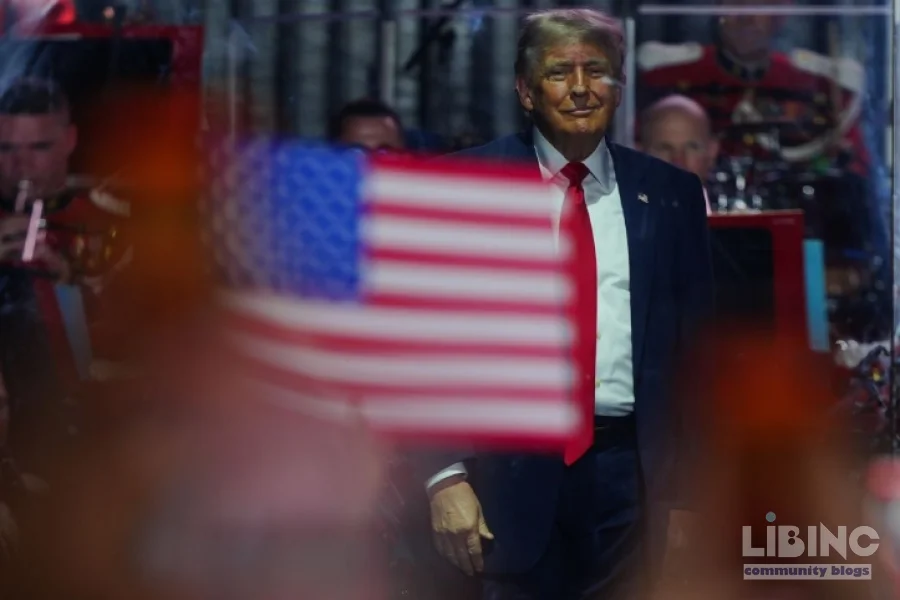
Presidential Wealth and Conflicts of Interest: An Analytics-Driven View on Trump's Finances in Office
Table of Contents
- Analytics Perspective
- Contrast with Historical Norms
- Cause-and-Effect Relationships
- Expert Reconstruction
Many Americans may be feeling the pinch as prices rise and real wages flatten, while the president’s personal balance sheet reports unprecedented wealth across crypto holdings, branding ventures, and property investments. The latest mandatory disclosures map an empire that extends beyond routine business into a portfolio built on tokens, licensing, and consumer goods. The spectacle of a new presidential jet as a gift from a foreign government compounds the anomaly: wealth that expands while affordability challenges persist. The problem is not merely a tally of assets; it is how such wealth interacts with governance and perception. The stakes are political legitimacy and the legitimacy of economic policy in a country where households face persistent cost pressures.
On the surface, the disclosure reads as a routine financial snapshot. But the hidden conflict is not about illegality; it is about optics and incentives. Ethics regulations for presidents may be sparse, but the standard remains rigorous in practice: public officials should avoid situations where personal wealth plausibly sways policy, or even appears to do so. The crypto regulatory environment looms large here, because policy shifts can materially alter token valuations and the fortunes tied to them. The question is not only what the numbers show, but what they imply for policy independence and political accountability.
Analytics Perspective
The disclosure compels a granular parsing of asset classes, revenue streams, and governance risk. The president’s cryptocurrency ventures yielded sizable returns, alongside licensing and branding royalties that transcend traditional property income. This is not incidental diversification; it represents a deliberate monetization architecture linking digital assets, consumer brands, and real estate. The analytic task is to map where value creation intersects with official power and political publicity.
Ethically, the central issue is fiduciary duty in office: public power carries a responsibility to avoid conflicts of interest and to minimize the impression that policy choices could be made for personal gain. The crypto dimension places the administration at the epicenter of a rapidly evolving regulatory regime, with proposed loosening of investor protections and growing debates about market manipulation and disclosure standards. The analysis must answer: are policy decisions shaped by capital networks, or are they genuinely aligned with the public interest in financial stability and innovation?
The numbers themselves are telling but incomplete without context. The president netted more than $526 million from sales of cryptocurrency tokens tied to World Liberty Financial LLC, a firm with partial family involvement. Separately, a licensing agreement for a Trump meme coin yielded roughly $635 million. Meanwhile, royalties from branded products—Trump Bibles, watches, fragrances, and sneakers—add another layer to the revenue mosaic. Taken together, these streams reflect a portfolio whose scale demands scrutiny about potential regulatory capture risk and reputational effects on governance credibility.
From a market-ethics standpoint, the key question is whether these financial entanglements could influence regulatory posture toward crypto, branding protections, or consumer-product policy. The phrasing of policy proposals, the pace of enforcement actions, and the emphasis on innovation versus consumer protection are all exposed to perception risks when large fortunes ride on policy outcomes. In other words, the financial architecture is not merely a backdrop; it is a lens through which the administration’s policy choices will be judged by investors, voters, and international partners alike.
The public visibility of wealth expansion also compounds reputational risk. The president’s on-air remarks during a cross-country trip, including statements about a rising 401(k) balance, appear to conflate personal success with broad prosperity. As an analytic matter, this conflation invites two distortions: first, a potential misalignment between the lived experiences of ordinary households and the wealth signals issued by the White House; second, an amplification of inequality narratives when the same leader benefits from assets that have performed exceptionally in a favorable fiscal backdrop. This dynamic highlights the need for transparent governance signals paired with a credible, independent ethics framework that can separate policy discussions from personal wealth trajectories.
To visualize the wealth dynamics and their potential governance implications, consider the following inline illustration of revenue composition (abstract, not scale-accurate):
Regardless of the numbers, the optics are clear: a presidency tethered to high-growth, highly liquid assets invites both admiration for entrepreneurship and concern about governance independence. The crypto dimension, in particular, intersects with an administration that has started shaping policy through an audience that values fast-moving regulatory signals. Critics argue that this dual track—governance and wealth—could erode the perceived fairness of policy processes even absent criminal wrongdoing. Supporters contend that market-savvy leadership can accelerate innovation and attract capital for an economy that already stores significant competitive advantage in technology and finance. The truth, however, lies in the tension between capability and credibility, and in whether the system can sustain rigorous ethics scrutiny without stifling legitimate wealth creation.
More than a ledger of transactions, the disclosures illuminate how branding and tokenization can become engines of value that are not easily compartmentalized from official duties. The images of a president profiting from crypto, licensing, and consumer goods exist alongside the narrative of a public servant expected to prioritize the common good. This juxtaposition is not merely anecdotal; it matters for policy institutions, for the functioning of markets, and for the public’s willingness to trust that government remains a neutral, protective, and stabilizing force in times of economic stress. The assessment, then, must weigh both the financial gains and the governance costs—the long arc of how wealth concentration interacts with democratic accountability and economic opportunity for ordinary citizens.
Key takeaways from the analytics lens
- Revenue intensity: crypto and licensing dominate the disclosed earnings, suggesting a contemporaneous shift toward digital asset monetization paired with consumer branding.
- Regulatory exposure: the crypto policy stance is a critical variable that could be swayed by wealth-linked interests, stressing the need for independent oversight.
- Perception risk: public trust hinges as much on optics and consistency as on legal compliance.
Contrast with Historical Norms
Historically, U.S. presidents have sought to minimize conflicts between personal wealth and public duties by separating wealth from the machinery of governance. Jimmy Carter’s blind trust on the eve of his term is the most emblematic case: a formalized effort to reduce the appearance of private influence. The underlying logic was simple: if wealth can be shielded from daily policy decisions, the legitimacy of executive choices improves. The strategy reflected a normative assumption about the moral architecture of the presidency as a public trust, not a personal fortune. This stance, coupled with transparency practices like tax disclosures, became a social script for governance integrity.
Trump’s approach, by contrast, has treated wealth not as something to obscure but as a portfolio that can coexist with presidential power. The branding engine—budgets poised around Bibles, watches, fragrances, and sneakers—exemplifies a business persona that seeks to monetize legitimacy by expanding the halo effect of the presidency into consumer culture. The resulting contrast is not only about assets but about the logic of governance: is leadership primarily a steward of public policy, or can it be a platform for commercial growth that signals national strength through branding and tokenized assets?
The divergence matters for governance legitimacy because the presidency has long carried a unique degree of insulation from ordinary market forces. When that insulation is perceived as porous, opponents leverage it to argue that policy could be compromised by private interests. Critics go further and suggest that a system of checks and balances risks becoming more theater than constraint if branding revenue, crypto valuations, and foreign gifts are read as soft levers of political influence. Proponents respond that wealth diversity among a modern leader is not inherently corrupt if processes remain transparent and if independent ethics enforcement remains robust. The point of contrast is a diagnostic: historical norms privileged separation; contemporary signals test whether separation can endure under high-velocity financial systems and globalized branding networks.
In this light, the Qatar-gifted Air Force One episode becomes a touchstone for analysis. The jet’s value, reported at roughly $400 million, sits at the boundary between diplomatic ceremony and potential influence economy. Skeptics view it as a vivid symbol of entangled interests; advocates consider it a normal state gift within established public protocol. The critical question remains: does the gift create a legitimate basis for concern about leverage or simply reflect a complex set of diplomatic arrangements that fall within permissible boundaries? The historical frame suggests caution, not prohibition, but the modern context demands rigorous scrutiny and a credible mechanism to separate official duties from private profit motives.
To ground this contrast in institutional behavior, one can compare the transparency expectations of past administrations with current disclosure norms and public expectations around crypto policy. The ethical baseline—minimizing opportunities for impropriety and maintaining public trust—has not changed, but the means to achieve it have evolved. The presence of a large, publicly visible wealth stream running parallel to policy debates requires a stronger, clearer, and more verifiable commitment to impartial decision-making. In an era of rapid financial innovation, the distinction between personal enterprise and public enterprise must be both explicit and auditable to preserve legitimacy and confidence in governance.
From a perception standpoint, the contrast foregrounds a central tension in modern political economy: wealth signals can become political signals. When a leader’s financial architecture mirrors a brand empire, questions about independence and objectivity intensify. The historical emphasis on restraints and transparency endures, but the modern observer also demands a new kind of governance: one that documents and explains the boundaries between personal wealth and official duties with precision and accountability. The lesson from Carter and other predecessors is not to eliminate wealth in government, but to constrain its influence through robust institutional guardrails and credible enforcement mechanisms.
Cause-and-Effect Relationships
The wealth disclosures do not simply map personal fortune; they are a potential driver of political and economic outcomes. On the policy side, the crypto dimension could influence regulatory posture, timing of enforcement, and the balance between innovation incentives and investor protections. If policymakers perceive that digital asset markets respond to official signaling, the risk is a governance channel where policy choices become priced into token valuations. This is not a claim about intentional manipulation; it is a concern about perception and legitimacy in a political economy keyed to fast-moving financial technologies.
From the vantage of public opinion, wealth signals can shape voters’ willingness to tolerate affordability challenges. When a president asserts national prosperity via stock-market highs and 401(k) gains while households struggle with everyday costs, the credibility gap widens. The narrative becomes less about macro performance and more about whether the government’s wealth creation aligns with the lived experiences of citizens. In political terms, this misalignment translates into vulnerability for incumbents in midterm cycles, where economic comfort is a decisive factor in electoral outcomes. The mechanism here is cognitive: perception of prosperity without distribution can erode political support, even when objective indicators show growth.
Economically, the wealth structure may influence investor confidence and capital flows. The crypto ventures, if perceived as a political signal, could attract speculative inflows or trigger volatility in related markets. The branding royalties create a steady revenue stream that is relatively insulated from typical real estate cycles, adding a diversification layer that can insulate the broader portfolio from single-market shocks. Yet this same diversification could complicate central-bank signaling and long-run macroeconomic planning if policy-makers must account for the wealth-driven feedback loops in asset prices. The causal chain thus runs from wealth disclosures to policy debates, to market expectations, to voters’ judgments of governance and competence.
Additionally, the governance framework around gifts from foreign governments remains a potent causal lever. The foreign gift act discussions, and the optics around the Qatari jet, illuminate how perceptions of influence can trigger political backlash, irrespective of any concrete legal breach. The causal chain here extends to legislative scrutiny and potential reforms of post-employment ethics rules, even if no new statutory violations are found. The takeaway is that even well-meaning policy divergence can be shadowed by questions about independence and accountability, which then reverberate through both political calculations and market sentiment.
In sum, the cause-and-effect logic connects wealth, policy choices, and public trust in a loop that tests the resilience of democratic institutions. If wealth signals are not neatly compartmentalized from governance signals, the system risks appearing as if policy is tethered to private gain. The practical implication for observers is to look beyond headlines and quantify the degree of independence between decision-making and personal wealth exposure. The greater the perceived entanglement, the more extensive the demands for transparency, independent oversight, and clear boundaries between official duties and private enterprise. This is not a verdict, but a diagnostic framework for evaluating the integrity of executive action in a wealth-concentrated political economy.
From an institutional perspective, one must examine how disclosure standards interact with political incentives. If the public understands that wealth trajectories could bear on political narratives, policymakers may face incentives to elevate disclosure, strengthen blind trusts, or constrain certain asset classes during tenure. The absence of reforms in these domains could yield a cumulative erosion of trust and a widening gap between the governing class and the governed. The cause-and-effect logic thus underscores the need for structural safeguards that preserve decision-making integrity while allowing wealth creation to occur within transparent, accountable channels.
In short, the chain from wealth to policy to perception to electoral dynamics is not linear, but it is consistent in its conclusion: governance credibility benefits from transparent boundaries, independent oversight, and a predictable regulatory framework that minimizes room for misinterpretation. The presence of high-visibility wealth within the presidency increases the magnitude of scrutiny, and with it the demand for rigorous application of ethics rules, clear lines of authority, and timely public reporting. If these guardrails hold, wealth can coexist with governance legitimacy; if they falter, the political price can rise quickly and unpredictably.
Moving from theory to policy implications, consider the following implications for reformers and watchdogs:
- Independent ethics enforcement: strengthen independent commissions with explicit authority over crypto ventures and branding assets held by officials or family members.
- Blind trusts and separation mechanisms: require robust blind-trust arrangements for leaders with cross-cutting business interests, paired with regular, verifiable disclosures.
- Transparent gift frameworks: tighten foreign gift guidelines, including automatic sunset clauses on large gifts that may influence decision-making.
Expert Reconstruction
Ethics scholars acknowledge that there is no proven illegality in the disclosed wealth, but they emphasize that legality is only one axis of accountability. The more consequential axis is the health of the political ecosystem: whether institutions can maintain independence from wealth-driven expectations and whether policy choices can be explained solely on the merits of the public good. In this frame, the central task is constructing an accountability architecture that is credible to the public, protects policy autonomy, and reduces the likelihood of perceived pay-to-play dynamics, regardless of legal findings.
Experts also note that the crypto regime is still maturing, and regulators face a high-stakes balancing act between innovation, consumer protection, and market integrity. The administration’s posture toward crypto—whether it tightens oversight or loosens scrutiny—will be a litmus test for how wealth-linked policy signals are perceived by investors and voters. The possibility of regulatory capture concerns grows when policy proposals align closely with the interests of asset-accumulating officials or their families. A robust answer requires explicit, transparent governance practices and third-party audits that can verify that policy outcomes reflect broad public welfare rather than private asset appreciation.
Legal scholars caution that the present framework may be insufficient to address evolving arrangements in which officials participate in business networks that extend to token economies and licensed goods. They argue for targeted reforms: disclosing not only holdings but also potential conflicts of interest across all related parties; clarifying the boundaries of permissible gifts; and ensuring that any compensation from private ventures does not create direct or indirect influence on policy outcomes. The overarching conclusion from this expert reconstruction is not punitive draconianism but calibrated reforms that preserve the integrity of governance while allowing legitimate wealth creation to occur with accountability and transparency as guardrails.
From a policy-design perspective, the path forward should combine three pillars: transparent, auditable disclosures; robust independent oversight with clear mandates; and a dynamic regulatory dialogue that accommodates rapid financial innovation without compromising public trust. In practical terms, this means codifying clearer separation rules for family-affiliated ventures, instituting pre-clearance requirements for policy proposals with wealth-linked interests, and establishing real-time monitoring of how asset valuations correlate with regulatory actions. Such reforms would not erase the potential for wealth generation; they would limit its ability to distort policy choices or erode public confidence. That balance is essential for sustaining a political system that can govern in a complex, rapidly changing economic environment.
Ultimately, the questions raised by the disclosures are about governance ethics as much as about assets. The significance lies in whether the government can demonstrate that policy decisions remain anchored in the public interest and not shaped by personal fortune, branding momentum, or token-market dynamics. The ethical yardstick is straightforward: does the system function with transparency, accountability, and independence even as wealth realigns around new technologies and business models? If yes, the United States can continue to innovate, invest, and grow without undermining the legitimacy of its institutions. If not, the political and economic costs could be steep and lasting, affecting both domestic sentiment and global confidence in the American economic model.
In closing, the current disclosures illuminate a central tension of contemporary governance: wealth can be a driver of dynamism, but only if coupled with credible guardrails. The path to preserving trust rests on explicit standards, consistent enforcement, and a public record that makes clear where personal wealth ends and public duty begins. The analytics, contrasts, causal analysis, and expert reconstructions all converge on this point: transparency is not a cosmetic feature; it is the operating principle that sustains the legitimacy of leadership in a high-stakes, innovation-driven economy.
Closing the gap with governance guardrails
The core gap is not illegality but the absence of auditable guardrails that keep personal wealth from steering public decisions. To restore credibility, here are concrete steps that can be adopted quickly and measured over time.
Recommended guardrails include a set of concrete mechanisms that can be adopted in weeks, audited quarterly, and reported annually. The elements are designed to preserve policy independence while allowing legitimate wealth creation to continue in a transparent frame.
- Independent ethics enforcement: empower a commission with clear jurisdiction over wealth-linked projects, including crypto ventures and family-affiliated brands.
- Blind trusts and separation: require robust blind-trust arrangements, with regular certifications and public disclosures.
- Transparent gift frameworks: sunset clauses on large foreign gifts and automatic review triggers for potential influence.
- Real-time disclosures and audits: live dashboards and annual third-party audits of holdings held by officials and immediate family.
- Policy proposal pre-clearance: mandatory pre-approval for any policy initiative that could materially affect wealth-linked assets.
Guardrail snapshot
| Guardrail | Purpose | Enforcement | Timeline |
|---|---|---|---|
| Independent ethics | Systemic checks | Commission oversight | Ongoing |
| Blind trusts | Wealth separation | Annual attestations | 90 days |
These guardrails are complemented by ongoing public reporting, and they must be designed with input from bipartisan ethics experts to ensure broad legitimacy.
With these measures, governance remains credible while permitting legitimate wealth creation under strict accountability.
What specific guardrails help ensure policy independence from personal wealth?
Independent ethics enforcement, reinforced by clear jurisdiction over wealth-linked activities, is the primary guardrail because it creates consequences and clarity without relying on voluntarism; adopting a dedicated ethics commission with explicit powers to review crypto ventures, licensing royalties, and potential conflicts arising from family assets makes enforceable standards tangible rather than aspirational, and it signals to the public that policy choices are evaluated on merit rather than personal gain; combined with mandatory blind trusts, pre-clearance for policy proposals, and sunset rules for sizable foreign gifts, this framework reduces ambiguity and strengthens accountability while allowing legitimate entrepreneurship. Regular public reporting and independent audits further reinforce credibility.
How would blind trusts work in practice for officials with family ventures?
Blind trusts place wealth into a trustee-managed arrangement where the official does not receive direct information about holdings; a certified auditor monitors compliance and reports to the ethics body, while family ventures can be placed under the same framework or divested to maintain separation; disclosures continue through annual summaries and mandated attestations. This structure minimizes conflicts by limiting access to wealth details that could influence decision-making, yet preserves the public record of overall responsibility and accountability.
What role does crypto regulation play in conflicts of interest?
Crypto regulation matters because policy shifts can change token valuations and corporate fortunes tied to wealth in digital assets; independent oversight ensures that holdings are managed within a framework that prioritizes investor protection and market integrity, not personal gain; pre-clearance for votes that affect crypto markets and independent risk assessments of related proposals help decouple policy impact from personal portfolios.
Why are sunset clauses on foreign gifts important?
Sunset clauses limit the duration a large foreign gift can influence decision-making and trigger automatic reviews when thresholds are crossed; this reduces perceived leverage and creates a built-in, time-bound check that aligns with standard ethics expectations, while maintaining diplomatic norms and transparency requirements.
How can disclosures be made more transparent for the public?
Public dashboards, real-time or near-real-time updates of holdings, and independent third-party audits improve transparency; standardized formats and frequent reporting reduce ambiguity and enable voters to assess potential conflicts of interest without sifting through disparate disclosures.
What does post-tenure recusal look like?
Post-tenure recusal involves continuing restrictions on policy decisions that could affect legacy wealth, with ongoing disclosures and clear transition plans to prevent resumption of influence; this protects the integrity of governance as leadership shifts and wealth profiles evolve over time.





Add a comment
To comment, you need to register and authorize
Comments