

US-Iran Detente: An Analytical View on the 14-Point MOU and Its Political-Economic Consequences
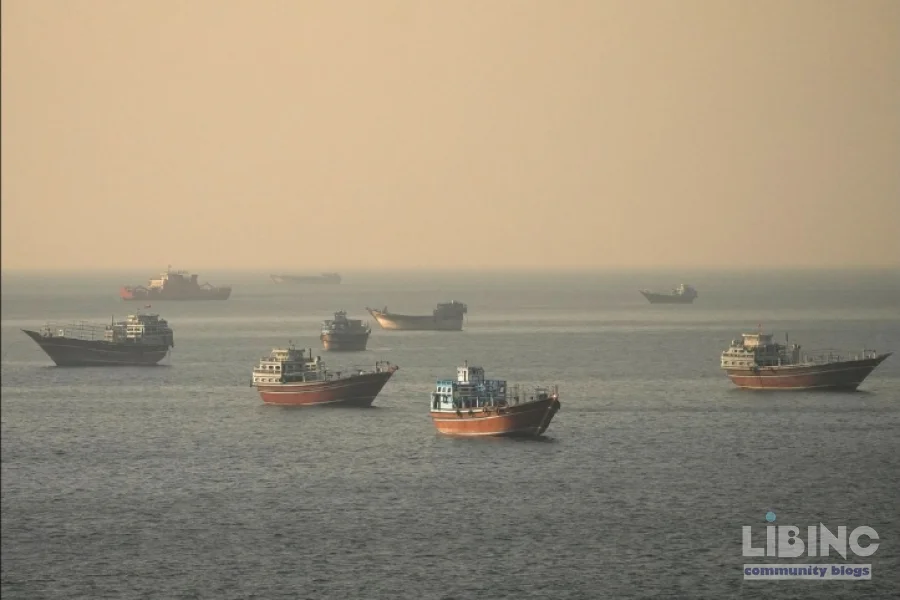
With the United States and Iran stepping back from open war, the immediate human and economic costs of renewed fighting have likely diminished. Washington and Tehran signed a memorandum of understanding in France that outlines a framework for talks toward a permanent peace. The pause, while welcome, rests on precarious ground: decades of enmity and a regional order built on proxies complicate any lasting settlement. The 14-point MOU acts as a procedural off-ramp, buying time while the hard political choices remain shelved for later. For Washington, the tangible gain is the reopening of the Strait of Hormuz to commercial traffic; for Tehran, a chance to monetize oil and attract investment without surrendering core leverage. The broader question is whether this détente endures or collapses under late-stage ambiguities.
Table of Contents
- Analytics: US-Iran détente as strategic recalibration
- Contrast: Competing interpretations and incentives
- Cause and effect: The off-ramp dynamics
- Expert reconstruction: What would a durable peace require?
- Synthesis and Outlook
Analytics: The US-Iran détente as strategic recalibration
In strategic terms, the US-Iran détente represents a recalibration rather than a transformation. The 14-point MOU provides a framework for staged talks that can defuse immediate risk without forcing either side to reveal red lines. The US calculates that continued conflict now carries prohibitive political costs at home and abroad; Tehran calculates that it can extract gains from a stabilized environment without fully conceding strategic depth. This is not peace as an endpoint but a tactical corridor that converts fear of escalation into incremental bargaining power for the next move. The practical signal to markets is twofold: oil flows may normalize gradually, and financial risk premiums could erode—if the off-ramp holds. The risk lies in verification and enforcement, not in intent alone.
Key drivers shaping the analytic reading include:
- Domestic political economy: Midterm pressures push toward restraint rather than reckless adventurism, making a cautious, reversible pact more appealing than a long war with uncertain domestic costs.
- Strategic incentives: Tehran seeks to preserve leverage in its proxy networks while reducing the probability of a costly confrontation with the United States.
- Oil and energy dynamics: Reopening the Hormuz Strait lowers the risk premium embedded in crude prices; buyers gain access to a resumption of flows that markets had priced out for months, yet the volume remains contingent on sanctions and shipping insurance.
- Verification and enforcement architecture: Without robust verification, credible enforcement remains the fulcrum of trust for both sides and the primary determinant of durability.
Crucially, the normalization of oil flows through the Strait of Hormuz hinges on credible verification of disarmament and sanctions relief, issues that remain unsettled and that are central to investor sentiment about the oil markets and supply resilience.
Contrast: Competing interpretations and incentives
From the US political vantage, the détente creates a breathing space that reduces the odds of a quick escalation before the midterms and potentially reopens the door to a more comprehensive deal later. Critics warn that the framework risks becoming a mirror of past deals—promises without enforceable penalties, incentives without discipline—and that the absence of clear, time-bound guarantees could leave a fragile pause vulnerable to bargaining pressure from hardliners on both sides.
From Tehran’s perspective, the opportunity to monetize frozen assets, unlock central bank liquidity, and restore energy revenues without surrendering core leverage signals a strategic victory of sorts, but not a complete one. Tehran must weigh the immediate economic gains against the risk that external actors will demand deeper concessions on its regional behavior, particularly in Lebanon and Yemen, before giving full relief. In this calculus, the MOU functions as a shield against renewed sanctions while still leaving room for incremental pressure to shape future concessions.
For Israel and other regional actors, the deal tests the balance between strategic restraint and coercive options. Israel worries that including Lebanon in the framework could soften the pressure against Iran’s proxy networks, potentially enabling Iranian-backed groups to recover some operational latitude in Lebanon and across the Levant. The risk is that an incomplete disengagement from the Lebanese front could invite miscalculation and a broader regional spiraling of responses if Tehran perceives weakness or if Hezbollah perceives a void in deterrence. The broader regional reading is shaped by uncertainty about whether the MOU binds actors beyond the signatories or merely signals a political opening that others may exploit or contest.
Global financial markets and energy consumers watch for clarity on timing and sequencing. If the 60-day toll-free crossing period translates into a credible, verifiable normalization of traffic and a staged sanctions relief, markets may price in a calmer energy outlook and a gradual reversion of the oil price premium that built during the crisis. If the verification regime falters or if sanctions relief proves limited, the same markets could shift to a risk-off posture, banking on a return to punitive leverage and a re-tightening of supply constraints.
Cause and effect: The off-ramp dynamics
The off-ramp created by the MOU generates a chain of identifiable effects, each contingent on credible enforcement and verifiable behavioral changes. The sequence below traces the most consequential causal links from the pause in warfare to potential long-run outcomes.
- Step 1 — Strategic recalibration: The pause reduces near-term escalation pressures, allowing both governments to avert a costly misstep while calibrating domestic political narratives for a broader audience.
- Step 2 — Strait of Hormuz traffic: Iran’s partial reopening of the strait enables increased vessel movements, signaling a normalization of energy routes and a potential easing of supply shocks that characterized the early months of the conflict.
- Step 3 — Oil markets response: With traffic resuming, crude shipments can stabilize gradually; the price volatility that accompanied the disruption should ease, assuming no sudden escalation or new sanctions shocks.
- Step 4 — Sanctions and asset flows: The MOU hints at a framework for unlocking frozen assets and rolling back sanctions, but timing and scope depend on a verification regime and political consent in Washington.
- Step 5 — Investment and reconstruction: If private capital can be mobilized under a transparent framework, Iran might access a broader pool of investors while maintaining scrutiny on how funds are deployed for economic stabilization rather than military buildup.
- Step 6 — Risks of misalignment: Should Tehran or Washington interpret a concession differently, a relapse into coercive bargaining becomes more likely, risking a new cycle of sanctions and forceful proxy actions in Lebanon or Yemen.
The most consequential layer remains the verification regime. A credible verification mechanism signals that both sides take the off-ramp seriously, reducing the likelihood that one side sacrifices its core leverage for a temporary gain. Absent strong verification, the positive feedback loop from oil flows could stall, and markets would reprice risk accordingly.
Expert reconstruction: What would a durable peace require?
Experts agree that a durable peace would demand more than a pause in hostilities. It requires a verifiable architecture that constrains both actors’ most destabilizing capabilities, aligns incentives with observable outcomes, and embeds a political horizon that both publics can accept. The following elements capture the core conditions for lasting stability.
- Robust verification and enforcement: A joint verification mechanism with prompt reporting, transparent inspections, and automatic escalation protocols makes violations costly and detectable in real time.
- Clear sanctions relief sequencing: A legally binding timetable for scalable sanctions relief tied to demonstrable compliance prevents the relief from becoming a hollow incentive.
- Comprehensive regional agreement: A broader framework addressing Lebanon, Yemen, Iraq, and Syria, with a clear role for international mediators, improves resilience against fragmentation and proxy mobilization.
- Private capital and credit lines: An investment framework that mobilizes private capital while maintaining strict compliance standards helps Iran rebuild without triggering new inflationary risks or corruption channels.
- Energy security and insurance: A credible plan for energy market stabilization, including insurance for shipping through the Strait of Hormuz and alternatives to single-route dependence, reduces systemic risk for global buyers.
- Domestic political settlement: A political bargain within each country that preserves key national interests while accepting incremental concessions reduces the likelihood of a policy reversal under electoral pressures.
In this reconstruction, the IAEA’s role remains pivotal. Any credible inspection regime must resolve debates about access, scope, and freedom of movement to visit suspected undeclared sites. The balance between sovereignty and nonproliferation obligations will determine whether inspections gain legitimacy or become a bargaining chip in future standoffs. The broader test is not simply technical compliance but whether verification translates into a credible deterrent against strategic violations that threaten regional stability.
Synthesis and Outlook
The current pause between the United States and Iran represents a tactical reprieve rather than a decisive strategic shift. The 14-point MOU creates a pathway to dialogues that might yield incremental gains without triggering a new cycle of escalation. The most tangible benefits to the United States lie in reopened sea lanes and a potential normalization of energy flows; for Iran, the prospect of monetizing assets and reaccessing global markets without surrendering essential influence provides a lengthy runway to consolidate gains. The durability of this arrangement, however, hinges on two stubborn determinants: credible enforcement and a credible economic path that does not rely on repeated concessions to secure ongoing concessions.
If the verification regime proves robust and if sanctions relief follows a credible timetable aligned with measurable milestones, the US-Iran détente could translate into a more predictable regional security order and a rebalanced energy market. If, by contrast, the framework collapses under disputes about inspections, or if Iran senses a window to reassert proxy power without meaningful penalties, risk will reemerge quickly across the region, threatening oil supplies and injecting instability back into the global economy. The next phase will reveal whether this is a strategic pause that buys time for both sides to recalibrate, or a preludeto a more permanent reconfiguration of the Middle East security landscape.
Concrete Pathways for Verification and Economic Normalization
The critical gap in the current framing is a clear, operational plan that translates political promises into verifiable steps and predictable economic outcomes. A practical path requires a tightly sequenced verification regime, transparent sanctions-relief milestones, and a credible mechanism to mobilize private capital while shielding it from misuse. The following structure offers a concise, actionable blueprint that complements the 14-point framework by linking incentives to observable behavior, reducing ambiguity, and lowering the chances of backsliding during electoral cycles or shifting regional pressures.
| Milestone | Description | Timeframe | Verification Level | Responsible Actor |
|---|---|---|---|---|
| Shipping transparency | Public registry for Hormuz traffic, ship-to-ship movements, and insurance coverage | 0-60 days | High | agreed authorities |
| Sanctions-relief sequencing | legally binding timetable tied to verifiable steps (proxy activity reductions, asset flows) | 60-120 days | High | Washington, Tehran |
| Private-capital framework | due-diligence standards, anti-corruption controls, and international credit lines | 120-180 days | Medium | multilateral banks, private investors |
| Regional accord scope | formal talks on Lebanon, Yemen, Iraq, Syria with regional mediators | 6-12 months | Medium | UN/mediators |
| Energy-security plan | shipping-insurance clarifications and alternative routes to reduce single-point risk | 3-9 months | Medium-High | IMO, insurers, IEA observers |
These steps create an auditable trail from pause to stable normalization. They translate political intent into concrete actions, and they prepare both sides for a durable compromise anchored in verifiable behavior rather than promises. Laying out explicit milestones helps markets price risk more accurately and reduces the likelihood that a future setback triggers rapid re-imposition of sanctions or escalatory moves by proxies.
Scenario planning illustrates two paths: (1) credible verification and phased relief unlock a smoother energy outlook and lower risk premiums; (2) verification gaps or slow relief unleash volatility and renewed sanctions pressure. The distinction rests on the transparency and speed of the off-ramp, not on rhetoric alone.
- Off-ramp sequencing
- Phase 1: verified cessation of high-risk proxy activity
- Phase 2: staged sanctions-relief milestones tied to demonstrable compliance
- Phase 3: private capital in controlled sectors with ongoing monitoring
End-state: a rebalanced regional order with verifiable behavior, predictable cash flows, and reduced incentives for abrupt escalation.
What does the 14-point MOU change for stabilizing energy flows through the Strait of Hormuz?
The arrangement signals a staged path toward stabilizing energy flows, but its credibility rests on concrete, verifiable steps that can be independently observed by third parties; in practical terms, a published timetable for sanctions relief tied to measurable compliance, a shipping-insurance framework, and transparent reporting on traffic and proxy activity are essential. This creates a credible off-ramp that reduces risk premiums and supports a gradual normalization of crude flows. Without robust verification, markets remain exposed to headline risk and sudden policy reversals.
Analytically, the key is aligning incentives with observable outcomes, so markets can price risk in a disciplined way. The emphasis on independent verification and public reporting reduces ambiguity and helps avoid misinterpretation by different actors in the region.
How would a verification regime operate in practice, and who would oversee it?
A practical regime would combine a joint inspection protocol, cross-border data sharing, and third-party audit capabilities with automatic escalation for violations. Oversight could involve a multilateral body with rotating membership, access to declared facilities, and day-by-day monitoring of shipping routes. The objective is to deter cheating while preserving sovereignty. In-depth reporting on inspections would be publicly summarized to prevent ambiguity and maintain regional trust. The effectiveness hinges on timely, credible reporting and the willingness of all parties to honor escalation protocols.
What are the main risks to the durability of the détente?
Durability risks include divergent domestic politics, misinterpreted signals, or a resurgence of proxy actions in Lebanon or Yemen. If sanctions relief is perceived as insufficient or erratically delivered, hardliners may seek to claw back concessions through pressure campaigns. Conversely, overly rapid relief without robust verification could encourage strategic misalignment and renewed escalation. A credible path requires disciplined sequencing, transparent milestones, and credible penalties for violations so that incentives remain aligned over time.
What role can private capital play in Iran’s economic recovery under the MOU?
Private capital can accelerate reconstruction and modernization if channeled through regulated channels with strict compliance and anti-corruption protections. A framework of due-diligence, proper credit facilities, and credible governance allows investors to fund energy, logistics, and essential infrastructure while avoiding undue leverage that fuels military or regional risks. The key is to separate economic activity from security concerns through independent oversight and clear sanctions-relief milestones tied to verifiable performance.
How might regional actors respond to the détente, especially Israel and Hezbollah?
Regional reactions will hinge on perceived changes in leverage. If Iran’s proxies face tighter restraints and greater economic normalization, some actors may recalibrate risk expectations, potentially reducing immediate coercive pressure. Others may intensify signaling or maintain deterrent postures to keep bargaining options open. A comprehensive regional framework that includes Lebanon, Syria, Iraq, and Yemen reduces fragmentation and lowers the chance of rapid escalations by providing clear rules of engagement and dispute-resolution mechanisms.
What would a durable peace look like in practical terms?
Practically, a durable peace combines verifiable disarmament incentives, a credible sanctions-relief timetable, and a broad regional agreement that integrates security, energy, and macroeconomic stability. It involves robust verification, a transparent macroeconomic plan to stabilize energy markets, and a political settlement that secures domestic legitimacy in both states. The outcome would be lower volatility in oil prices, fewer proxy confrontations, and a predictable environment for international investment and trade.




Add a comment
To comment, you need to register and authorize
Comments