

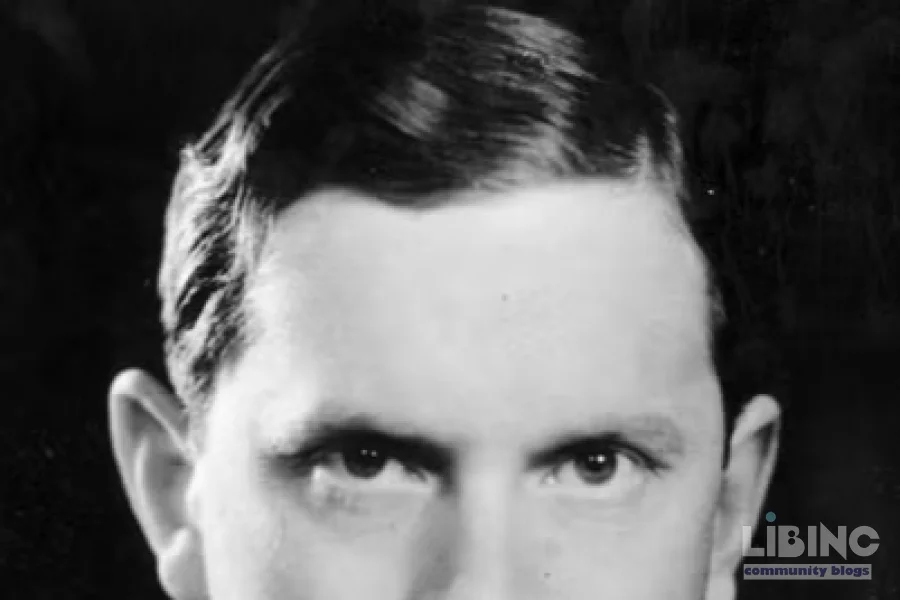
Evelyn Waugh: The arc from satire to monumental prose in Brideshead Revisited and beyond
Analytical frame: Evelyn Waugh's trajectory from satire to monumental prose
Reading Evelyn Waugh today demands attention to a career that begins with crisp, highly engineered satire and ends in a masterful, morally charged prose. He writes from a rare command of form: a writer who could turn a sentence into a precise instrument and a scene into a microcosm of social order. The arc is not a single ascent but a disciplined evolution shaped by travel, teaching, war, and religious awakening. The central claim of this piece is that Evelyn Waugh—the man, the craft, and the career—embodies a shift in 20th‑century British fiction: from the wry, needle‑sharp portraiture of social types to a serious exploration of faith, memory, and power in a postwar world. This is the lens through which we reread his major works and his enduring influence on prose technique and narrative architecture.
Evelyn Waugh emerges in the record as a relentlessly exacting craftsman. He spent periods as an art student and a schoolmaster, then dedicated himself to travel and writing. His pre‑1939 output is described as satirical and tightly wrought; his best‑remembered early novel, Decline and Fall (1928), marks a clear departure from mere anecdote toward a more compact, controlled ironist’s gaze. The life he led—Oxford, itinerant teaching, a blossoming but troubled marriage—fueled a sensibility keen on social structure, class performance, and the limits of human vanity. Yet the same engine of precision that powered his early work would later fuel a more expansive, morally charged narrative voice that would culminate in Brideshead Revisited. The central question, then: how did Waugh translate a talent for satire into a tradition of serious literary inquiry that could survive the upheavals of mid‑century Britain?
Evelyn Waugh was born on October 28, 1903, in London, the son of Catherine and Arthur Waugh. His father, a publisher with ties to the Dickens canon, helped ground him in a publishing milieu that would later intersect with his own writing life. The family dynamic—the closeness to his mother, the tension with his father, and the rivalries among siblings—shaped a young writer who learned to observe with a wedge of irony and a steady hand. His early stories, sketched in boyhood, reveal a sensory appetite for action and a distrust of sentimentality. The combination of intimate observation and formal rigor became the signature that would carry him through the social comedies of the 1920s and into the grave forms of postwar literature. This opening trajectory prepares the ground for the next stage: the transition from the prewar satirical register to postwar moral seriousness.
- Early life and formation: art studies, teaching, and a life of travel
- First major breakthrough: Decline and Fall (1928) as a landmark in satirical realism
- Oxford environment and the move from student life to a professional writer
- Editorial and publishing milieu: the Duckworth connection and Rossetti biography
Block 2 — Contrast: Satire before 1939 versus the weighty voice after 1945
The tonal pivot that defines Waugh’s career hinges on a deliberate shift from the crisp, social caricature of prewar fiction to the grave, expansive inquiry of the mid‑century. The work he produced in the 1930s, anchored in social satire and meticulous craft, stands as a high point of satirical realism. Yet the war and the moral questions it raised pressed him toward a more ambitious literary project, culminating in Brideshead Revisited (1945). This transition did not erase the wit that characterized his early novels; it refracted it through questions of faith, memory, and aristocratic belonging in a world reshaped by conflict. To read Waugh across these decades is to watch a master of language deploy the same technical deftness to different ends: from comic critique to elegiac examination of belief, privilege, and the fragility of moral order.
In the prewar period, Waugh’s prose emphasizes precise syntax, controlled irony, and a brisk narrative tempo. He dissects manners and institutions with a surgeon’s care, exposing the absurdities of social performance without wholly relinquishing humane sympathy. The later work, however, reframes satire as a vehicle for moral inquiry. Brideshead Revisited abandons the single‑pane portrait of a society to explore how memory, religion, and loyalty shape a life course across generations. The contrast is not merely tonal; it concerns the aims of fiction: is the writer primarily a chartographer of social surfaces, or a moral architect who tests beliefs against experience? Waugh answers with a blend of both: the surface remains lucid, but beneath lies a structural seriousness that anticipates postwar English novelistic sensibility.
Key contrasts in practice include:
- Prewar satire as social diagnosis, postwar narrative as a search for meaning
- Early focus on class and etiquette, later focus on faith, memory, and existential risk
- Compact, tightly wound chapters and sentences, versus expansive, reflective passages that sustain long moral arguments
- Public persona as social observer, private self as moral investigator
World War II fiction and the wartime milieu also force a reconfiguration of the reader’s orientation toward time, mortality, and the limits of human resilience. The result is a canon that remains formally innovative while expanding its ethical ambit. This block illuminates how Waugh’s craft endures because it adapts without surrendering its core strengths: linguistic exactness, controlled irony, and a rigorous sense of social form. The Brideshead years are not a retreat from satire but an intensification of its central question: what does it mean to belong—and to doubt—within a world that has been irrevocably altered by conflict?
- Prewar: satirical realism, social diagnosis, compact form
- Postwar: moral architecture, faith, memory, and meaning
- Continuity: linguistic precision and narrative control as constants
Block 3 — Cause and effect: War, religion, and health as forces shaping writing
Cause and effect runs through Waugh’s biography and handwriting like a hidden engine. The interwar years built a reputation for craft, but it was the war and the crisis of faith that redirected his trajectory. His service in the Royal Marines and the Royal Horse Guards, and his involvement in a British military mission to the Yugoslav Partisans in 1944, supplied his fiction with a seasoned sense of peril, risk, and human fallibility. The war’s moral ambiguities fed the deeper questions that would drive Brideshead Revisited and his later biographies. The rise of Catholicism in his life is not an appendage to his career but a structural determinant of the kinds of questions he asks about guilt, grace, and salvation. The conversion clarified his ethical compass and deepened the seriousness with which he approached character and situation.
Marriage and personal crisis also shape cause and effect. The collapse of his first marriage (to Evelyn Gardner, 1928–30) coincided with his conversion to Roman Catholicism, a turning point that infused his later work with spiritual inquiry. His second marriage, to Laura Herbert in 1937, produced seven children and anchored him within a postwar artistic and familial ecosystem that valued discipline, tradition, and depth of belief. Some sources note a life of intense self‑discipline, but the toll of alcohol, tobacco, and sedatives appears to have eroded his health in his later years, contributing to a sense of embitterment and a diminished public profile as tastes shifted. The decision to turn down a knighthood and the Easter Day death in 1966 further frame the arc as one of principled resistance to acclaim on the world’s terms, while the Latin Requiem in Westminster symbolically crowned a life devoted to form and faith.
- War service and wartime experience as a source for serious fiction
- Catholic conversion shaping moral inquiry in later works
- Personal life: marriage, family, and health as factors influencing output
- Public recognition and later reputation: decline in vogue, then revival
In the long view, the 1940s and 1950s reframe Waugh as a writer who used the pressures of modernity to recalibrate the aims of fiction. Brideshead Revisited, with its memory‑laden cast and estate politics, becomes a culminating demonstration of how war and faith redirected a linguistic virtuoso toward questions that outlived the immediate social satire of the 1920s and 1930s. The legacy is not merely a single novel; it is a method: the discipline to wield irony with moral seriousness, and the courage to let form serve a grander inquiry than social observation alone.
- Impact of war on thematic seriousness
- Religious conversion as a structural topos
- Health and habit shaping late‑career output
Block 4 — Expert reconstruction: Reassessing Waugh's influence on modern fiction
Expert reconstruction looks at Waugh’s enduring influence on literary craft and canon formation. The consensus among critics today is that he stands as a cornerstone of the British literary canon for his exacting craft, his architectural control over narrative, and his willingness to engage the moral horizons of his era without surrendering stylistic mastery. The 1980s revival of Brideshead Revisited on television and in film revived public interest in Waugh’s broader project, revealing how his tightly wound prose could carry a grand, elegiac mood without losing his characteristic irony. The New Yorker’s critique of Waugh’s family biography Fathers and Sons—describing it as witty in the Waugh manner yet poignantly honest about Arthur and his sons—underscores how the journalist’s eye and the novelist’s ear can converge in a way that broadens the scope of literary biography.
From an expert standpoint, Waugh’s prose represents a peak in controlled narrative voice and dense, allusive texture. His capacity to blend satirical diagnostic skills with historical and moral seriousness marks him as a model for writers who view form as a social instrument. The craftsman’s discipline—editing to the bone, choosing words with surgical precision, shaping scenes as compact laboratories of human behavior—yields prose that remains legible across decades. This is not nostalgia for a bygone era; it is a demonstration of how a writer’s formal constraints can illuminate the complexities of class, faith, and memory in a world changed by war and modernization. His work invites contemporary readers and scholars to reexamine the balance between wit and seriousness in 20th‑century fiction.
- Canon status and postwar reevaluation
- Craft and voice: precision, irony, and moral inquiry as enduring standards
- Influence on later British and international fiction
- Representative works: from Decline and Fall to Brideshead Revisited as a throughline
In sum, Evelyn Waugh’s career embodies a paradox that proves durable for readers and critics alike: the same ardor for form that made his early satires so sharply observed also enables him to sustain a long, morally searching relationship with faith, family, and history. The result is a body of work that remains indispensable for understanding how postwar British fiction negotiated the delicate balance between social critique and spiritual inquiry. If the goal of literature is to tell truth about a culture while preserving the beauty and exactness of language, Waugh’s career offers a remarkably robust model for how to do both, with elegance and without compromise.
Table of Contents
Critical synthesis: Craft, faith, and readerly meaning
A persistent gap in analyses is showing how Waugh’s exact sentence-work underpins moral weight when the focus shifts from social portraits to spiritual and memory-driven inquiry. The key is rhythm and precision: a sentence can cut vanity or cradle a memory with equal discipline. In Decline and Fall the brisk ironies diagnose a social world; in Brideshead Revisited that same discipline carries weighty questions about grace, belonging, and duty. The following compact comparison (with visuals) demonstrates how the craft translates into enduring meaning for readers across decades.
| Aspect | Prewar Satire | Postwar Moral Architecture | Representative Example |
|---|---|---|---|
| Sentence length | Short, brisk | Longer, varied cadence | Decline and Fall vs Brideshead Revisited |
| Irony | Sharp social diagnosis | Irony yoked to moral inquiry | Early scenes vs memory sequences |
| Focus | Social types, manners | Belief, grace, memory | Parodiac portraits vs elegiac scenes |
| Structure | Compact chapters | Interwoven memories with focal pivots | Portraits of Oxford life; estate politics |
Practical application: authors and editors can map cadence, turn points, and moral pivots across scenes, then test whether longer segments better sustain ethical questions without losing lucidity.
Illustrated synthesis: rhythm and meaning in pages
Question 1: What marks the shift from satire to moral inquiry in Evelyn Waugh's work?
The shift begins when the narrative slows to examine belief, memory, and grace rather than only social types. In Decline and Fall the pace and irony diagnose vanity; in Brideshead Revisited the same craft sustains long meditations on belonging, faith, and duty. This move is less a change of topic than a recalibration of purpose, where form becomes a tool for ethical inquiry. The transition is felt in the way scenes accumulate meaning rather than merely advance plot.
Question 2: How does Brideshead Revisited restructure memory and faith within the narrative?
Brideshead Revisited builds memory as a living archive that shapes character choice and loyalty. The narrative alternates between present scenes and recollected episodes, a structure that mirrors how faith and memory accumulate, rather than simply accumulate plot. This esthetic yields a deep, elegiac mood that keeps questions of grace in focus.
Question 3: What role does Catholic conversion play in Waugh's narrative technique?
Conversion anchors Waugh's ethical framework, recalibrating voice, imagery, and the portrayal of moral conflict. It redirects irony toward examination of guilt and salvation while preserving linguistic precision and satirical restraint. The effect is a style that can carry solemn inquiry without surrendering craft.
Question 4: What are the defining features of Waugh's prose across his career?
Across Decline and Fall to Brideshead, Waugh's prose combines exact syntax, controlled irony, and a knack for turning scenes into microcosms of social and moral order. The evolution keeps language lean yet deep, balancing surface wit with spiritual seriousness.
Question 5: How has Waugh influenced later fiction?
Waugh's insistence on form as a social instrument and a moral tool informed later British fiction, encouraging writers to fuse rigorous craft with large ethical questions. His influence appears in novels that treat memory, belief, and class with similar architectural discipline.





Add a comment
To comment, you need to register and authorize
Comments