

Initiative for New Manufacturing at MIT: An Analytical Review of INM's First Year and Industry Transformation
Lead
The Initiative for New Manufacturing (INM) at MIT launched with a simple premise: strengthening the industrial base requires a coordinated, cross-domain response that unites research, industry, and workforce development. As INM marks its first anniversary, MIT Manufacturing Week showcased a growing appetite for change—from students to chief executives—that is both real and urgent. The challenge is not merely to hype AI on factory floors or to fund clever lab ideas, but to stitch together a scalable pipeline that moves ideas from the lab to real-world production while addressing the nation’s persistent worker shortages and supply-chain fragility.
The stakes are high: incremental shifts will not close the gap between academic discovery and industrial deployment. The hidden friction lies in aligning different incentives—university risk tolerance, corporate timelines, and public policy—so that a unified manufacturing agenda can endure beyond a single event or leadership cycle. This article traces INM’s first year through an analytical lens, identifies what worked, what didn’t, and what must come next to turn a moment of excitement into lasting capability.
At the heart of this analysis is the question of how INM translates talk into transfer: how a consortium model, seed-stage funding, a growing student ecosystem, and cross-border collaboration can catalyze a nationwide modernization of manufacturing practice. The direction is clear, but the path is contingent on disciplined execution, measurable impact, and continuous learning as new technologies, from AI agents to digital twins, reshape production systems and labor roles.
Viewed through this lens, MIT Manufacturing Week is not merely a celebration of progress; it is a diagnostic of the collaborative mechanics required to accelerate manufacturing innovation. It tests whether a university-led initiative can scale from a regional ecosystem to a national platform, while maintaining technical rigor, workforce relevance, and startup vigor. The following sections unpack the analytically relevant dimensions that determine whether INM’s first year becomes a durable accelerator for American manufacturing.
Analytical framing: what the numbers reveal about INM’s execution and impact
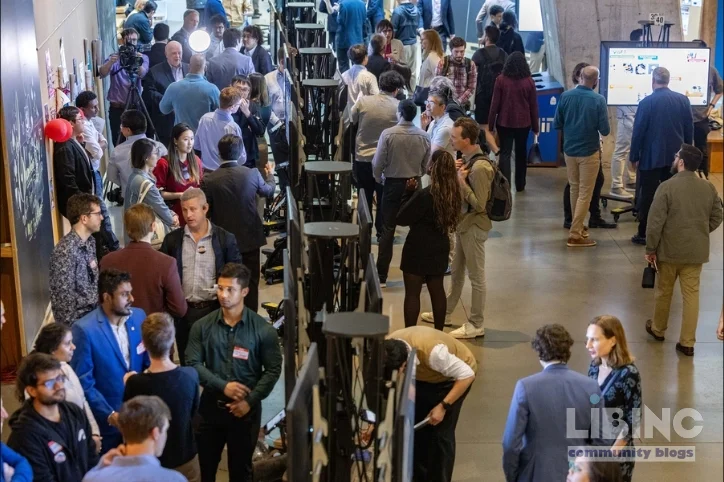
INM’s first anniversary coincided with MIT Manufacturing Week, a sequence of events that drew more than 800 registrants across students, faculty, industry leaders, investors, entrepreneurs, and public officials. This concentration of participants signals an unusual convergence: when a research institution coordinates with industry and government to tackle manufacturing’s grand challenges, participation grows beyond academic circles. The attendance level is not a mere attendance metric; it is a proxy for demand for structured collaboration on productivity, resilience, and workforce transformation, as well as for the credibility of MIT as a convener of multi-industry action.
- Industry and public engagement: Weeklong programming opened with a cybersecurity workshop co-led with Google Cloud, then featured the MIT MIMO symposium on deploying AI on factory floors, plus workforce development discussions and a regional research showcase that drew 140+ graduate students and postdocs from across New England.
- Seed-stage research momentum: INM issued a call for proposals focused on artificial intelligence and automation and funded eight seed research projects. This is a notable throughput for a single year, indicating a deliberate strategy to translate ideas into early-stage demonstrations and to seed a broader research portfolio.
- Entrepreneurship and translation: The inaugural manufacturing research showcase, supported by the Cheng Wu Foundation, highlighted a clear pivot toward entrepreneurship as a translational engine—moving ideas toward startups and new companies that can scale manufacturing innovations.
- Education and workforce development: TechAMP (Technologist Advanced Manufacturing Program) was launched to cultivate shop-floor leadership across six New England sites, including three community colleges, signaling a deliberate attempt to embed a new generation of technologists into the manufacturing labor pipeline.
Beyond Week, INM’s traction is reflected in its expanding industry membership—the addition of First Solar as the eighth member alongside Amgen, Autodesk, GE Vernova, Flex, PTC, Sanofi, and Siemens. This growth is not incidental; it embodies a broader recognition that modern manufacturing challenges—supply-chain resilience, workforce transformation, and global competitiveness—require cross-sector collaboration and shared platforms for problem-solving. The membership expansion also demonstrates the model’s attractiveness to a broader set of firms seeking early exposure to MIT-scale research, access to student talent, and a pathway to commercialization that aligns with corporate innovation objectives.
Contrast: INM’s multi-layered approach versus traditional manufacturing initiatives
INM’s design emphasizes several contrasts with conventional research-industry partnerships. First, its multi-industry scope—ranging from automotive and electronics to biomanufacturing and semiconductors—breaks down silos that typically limit cross-pollination of ideas. Second, the emphasis on entrepreneurship and translation—through programs like I-Corps Spark and the manufacturing showcase—bridges the frequently wide gulf between laboratory ideas and market-ready products. Third, the integration of workforce development with research and industry strategy—via TechAMP and on-campus student initiatives—aligns talent pipelines with the skills demanded by next-generation manufacturing platforms.
The result is a consortium model that is simultaneously broader in stakeholder reach and more integrated in outcomes than many regional partnerships. As Rick Locke, dean of MIT Sloan and INM co-chair, notes, this kind of multi-industry engagement is unusual and powerful. The distinctiveness lies in pushing for ambition without sacrificing operational discipline: research agendas crafted with industry foresight, educational programs designed to be implementable on the shop floor, and a pathway to startup formation that remains tethered to real production needs.
This approach also creates a visible tension: the speed of industry adoption versus the time required to perform rigorous, field-relevant research. INM manages this by curating a portfolio that includes rapid prototyping (seed projects), discovery work (I-Corps Spark), and longer-horizon investments in workforce infrastructure (TechAMP). The contrast with slower, traditional grant cycles is purposeful. The initiative seeks to compress timelines without sacrificing impact, betting that accelerated experimentation can generate credible, scalable models for national manufacturing modernization.
Cause-and-effect relationships: how INM’s actions translate into tangible outcomes
The architecture of INM creates explicit causal pathways from activity to impact. Each major program element is designed to trigger downstream benefits in research translation, workforce readiness, and startup formation, while reinforcing the ability of industry to adopt new capabilities at scale.
- Seed research funding: The eight seed projects funded in response to the AI and automation call lay the groundwork for demonstrators that can validate new theories in real settings. These demonstrators are prerequisites for attracting follow-on funding from public sources, private investors, and corporate partners who want evidence of practical value.
- I-Corps Spark collaboration: The I-Corps Spark initiative connected 13 early-stage teams with customer discovery, accelerating market validation and reducing the risk of misalignment between lab capabilities and customer needs. This is a critical step toward credible commercialization or licensing opportunities.
- Manufacturing showcase outcomes: The regional showcase provided mentorship and visibility for 40 finalist teams, eight of which won $50,000 in prize funding. This funding leg acts as a seed for prototypes and pilot deployments that can be embedded in industry workflows.
- TechAMP workforce development: By creating a pipeline of technologists positioned as shop-floor leaders at multiple sites, TechAMP addresses a chronic obstacle—the mismatch between advanced manufacturing capabilities and the current workforce's readiness to operate them. The program’s scale across New England signals a replicable model for regional labor ecosystems.
- Cross-border and global reach: Collaboration with NAMTECH in Ahmedabad demonstrates a pathway for adapting MIT’s manufacturing education and research to international contexts, enlarging the talent pool and exposing collaborators to diverse manufacturing ecosystems. This expansion strengthens INM’s proposition as a national, then global platform for manufacturing innovation.
Aggregate effect: a more dynamic pipeline from lab to market. The combination of seed funding, customer discovery, and talent development increases the probability that ideas reach production, thereby strengthening domestic manufacturing capacity, diversifying the startup ecosystem, and accelerating the diffusion of AI-enabled and digitally powered production methods across industries.
Expert reconstruction: interpreting INM’s trajectory through practitioner and academic lenses
Experts converge on a core insight: INM’s integrated framework is essential for turning MIT’s research strengths into scalable industrial impact. John Hart, INM’s faculty co-director, emphasizes entrepreneurship as the transformative pathway—“Entrepreneurship is a transformative pathway to take research to market, and to drive faster innovation and scale-up.” The emphasis on translation reflects a disciplined recognition that ideas must leave the lab with a clear value proposition and a pathway to adoption.
Paula T. Hammond, dean of MIT’s School of Engineering and INM steering-co-chair, stresses leadership accountability: the initiative exists to help the industrial base respond coherently to modern challenges and to position MIT as a national catalyst. Rick Locke, Sloan dean and co-chair, highlights the unusual breadth of stakeholder engagement as a powerful signal that manufacturing’s modernization is both necessary and feasible when cross-sector collaboration is sustained over time.
From the operational side, INM’s leadership articulates a practical, incremental growth plan: broaden industry membership, deepen research and education programs, scale TechAMP regionally, and explore national deployment of the TechAMP model. The emphasis on regional laboratory-to-market translation aligns with MIT’s PIE (Production in the Innovation Economy) lineage, which argued that proximity between production and innovation accelerates adoption. INM’s roadmap thus builds on this historical insight while expanding it to contemporary issues like AI governance, cybersecurity, and digital twins in manufacturing.
In short, expert reconstruction sees INM not as a one-off event but as a structured, evolving platform—one that requires deliberate governance, robust industry participation, and sustained investment in people and capabilities. The year’s victories—new industry members, seed projects, and workforce programs—are not standalone wins but the first feedstock for a longer, national program aimed at retooling U.S. manufacturing for the AI-enabled age.
Closing synthesis: what to watch next for INM and MIT Manufacturing Week’s momentum
The next phase for INM involves scaling active programs, deepening research-to-product translation, and expanding the workforce development envelope. The initiative’s narrative will hinge on whether the early signals—strong event turnout, robust seed funding, expanding membership, and the TechAMP deployment—translate into durable capabilities that can be deployed widely. A national rollout of TechAMP, ongoing expansion into biomanufacturing and semiconductor manufacturing, and deeper ties with education partners are among the concrete milestones to monitor. If INM can sustain its momentum, its model may crystallize into a nationwide platform that integrates research, entrepreneurship, and workforce readiness around manufacturing’s most urgent opportunities.
The overarching implication is strategic: manufacturing modernization cannot rely on isolated labs or single-sector solutions. INM’s alliance approach—unifying researchers, startups, students, and industry incumbents around shared problems—offers a template for governance and execution that can be replicated in other sectors and geographies. As the nation contends with supply-chain resilience and a looming workforce gap, INM’s trajectory will test whether a university-led ecosystem can deliver credible, scalable modernization in the real world.
Table of Contents
- Lead
- Analytical framing: what the numbers reveal
- Contrast: INM’s multi-layered approach
- Cause-and-effect relationships
- Expert reconstruction
- Closing synthesis
Bridging the translation gap: operationalizing scale
In the first year, the energy from MIT Manufacturing Week must become durable capability. A practical path blends structured pilots, shared metrics, and a governance cadence that keeps stakeholders aligned while moving ideas toward real deployment. For electronics and automotive lines, a six‑month demonstrator can pair a digital twin with a customer-discovery sprint to produce a clear value proposition and a deployment plan. In biomanufacturing, a seed-to-scale frame aligns cybersecurity, batch traceability, and operator training into a single demonstrator with an explicit credential and a repeatable rollout. In semiconductors, sandboxed simulations across partner sites reveal deployment time reductions and yield improvements, building evidence for broader investment. This is how lab ideas become production with milestones and accountable owners.
Key indicators
| Indicator | Value | Notes |
|---|---|---|
| Registrants | 800+ | MIT Manufacturing Week audience |
| Seed projects | 8 | AI & automation focus |
| Members | 8 | Industry partners |
| TechAMP sites | 6 | New England |
| Graduate participants | 140+ | NE-wide |
| Finalists | 40 | Mentored to winners |
Structured pilots, shared metrics, and a cadence of review create a measurable path from concept to adoption. By documenting milestones in a single dashboard, teams can anticipate scaling needs, talent requirements, and deployment risks before they arise.
The practical path also centers on a clear governance rhythm. Quarterly reviews with industry and academic leaders, coupled with transparent funding decisions, prevent scope drift and ensure that every pilot builds toward a scalable, national platform. This disciplined approach turns ambitious ideas into repeatable outcomes across industries.
| 0-6 mo | Pilot setup | Electronics, AI |
| 6-12 mo | Deployment planning | Auto/Semiconductors |
| 12-24 mo | National rollout | Platform expansion |
What drives INM's early momentum toward nationwide manufacturing modernization?
INM blends seed funding, customer discovery, and workforce development to produce demonstrators that can be adopted in real production settings. This creates a credible path from lab ideas to scalable production. More important, it connects people, processes, and technology in a way that reduces the time from concept to impact. The result is a practical blueprint for turning research into durable capabilities that strengthen the industrial base.
How does TechAMP support shop-floor leadership and workforce readiness?
TechAMP builds a regional talent pipeline by pairing hands-on manufacturing leadership roles with targeted education across six New England sites. This program aligns shop-floor skills with advanced manufacturing platforms and digital tools, creating a workforce prepared to operate next‑generation systems and contribute to productivity gains.
Why is cross-border collaboration important for INM's model?
Global collaborations, such as NAMTECH in Ahmedabad, expose teams to diverse manufacturing ecosystems, expanding the talent pool and accelerating the transfer of best practices, curricula, and partnerships. This international exposure strengthens the national platform by incorporating varied production realities and standards.
What signals show progress from pilot to scale?
Progress signals include demonstrators validated in real settings, broader industry participation, and a reproducible pilot-to-scale playbook that works across multiple sites and sectors. These milestones reduce risk and attract further investment from public and private sources.
How is governance structured to maintain momentum?
A shared dashboard tracks readiness, adoption, and workforce outcomes, with quarterly governance reviews among MIT, industry partners, and policymakers. This cadence keeps initiatives aligned with national manufacturing priorities and budgetary realities.
What are the main risk mitigations in INM's approach?
Risk is managed through staged funding, clearly defined milestones, and a governance mechanism capable of re-prioritizing projects as needed. This resilience supports sustained progress even as technologies and markets evolve.





Add a comment
To comment, you need to register and authorize
Comments