

AI Governance in the 21st Century: Who Controls the Infrastructure, and What It Means for Democratic Accountability
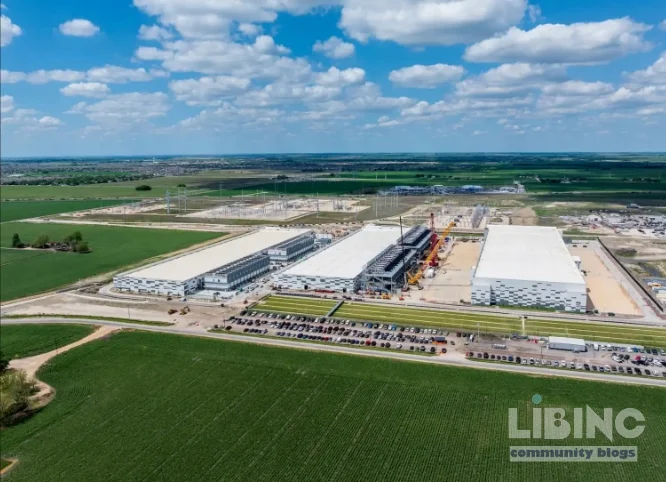
For a technology that moves as quickly as AI, the real question is not whether the systems work, but who will decide how they work within AI governance. The flashpoint is data centers—the sprawling power hubs that train models, store data, and determine the scale of the AI economy. In early 2026, local opposition blocked or delayed 75 projects valued at roughly $130 billion, a figure that mirrors all of 2025, according to Data Center Watch. This is not merely a zoning quarrel; it is a proxy war about sovereignty over the infrastructure of the twenty-first century and about whether democratic institutions will govern AI or whether a small cadre of private actors will capture its levers of power.
The stakes reach beyond land use and energy bills. AI governance touches the labor market, privacy norms, and the daily life of workers, small businesses, and communities. The public senses that decisions about automated cognition are being made in boardrooms and by investors, not in town halls. The data-center confrontation, then, becomes a litmus test for public trust in an increasingly automated economy and for the resilience of democratic processes against concentrated power.
As AI shifts from a technical achievement to a political project, the central conflict becomes clear: who controls AI governance, and under what rules? The early digital era concentrated power among a few platforms; in the AI era, those same dynamics threaten to reappear at the infrastructure level. The forthcoming analysis treats AI governance as a systemic problem of power, and asks what a democratic approach to infrastructure governance would require in practice.
Analytics perspective on AI governance
The data-center surge reveals a straightforward analytics problem: scale accelerates capability while magnifying risk. The same facilities that speed up AI training also centralize control of data flows, compute cycles, and model lifecycles. In policy terms, whoever controls the infrastructure can influence what AI can and cannot do, for whom, and at what social cost. This is not a theoretical concern; it translates into tangible differences in job opportunities, regional development, and the accountability spectrum for public agencies.
Two dimensions drive the analysis: physical scale and economic incentives. The first defines who can set the pace of AI deployment; the second defines who benefits and who pays. In both, AI governance hinges on the distribution of capital, data access, and regulatory authority. Data centers are not neutral hardware; they are political nodes with energy contracts, permitting timelines, and strategic relationships with suppliers and governments. Without a governance layer that democratizes access to these nodes, AI policy risks becoming an elite project with little vent for public input.
Concentration of control: data centers as nerve centers
With the cost of entry rising, a small set of players dominates the physical fabric of AI. This concentration creates a cascade of governance effects, from energy pricing to siting approvals and emergency planning. The result is a feedback loop: more capital enables more capacity, which attracts more policy attention, which in turn rewards the same players. The infrastructure endgame is a new form of techno-politics where capital, data, and decision rights converge in a few corporate hands.
- Economic leverage — land value, construction pipelines, and tax incentives translate into disproportionate regional influence.
- Policy leverage — access to capex and data access can shape procurement, standards, and regulatory preferences.
- Public trust erosion — opacity around siting, ownership, and energy use fuels citizen pushback and calls for local control.
Labor markets and the buffering effect of governance
The AI disruption to labor markets is not monolithic; it varies by sector and region. Yet the common thread is adaptation friction—requiring retraining, relocation, and income support. Governance structures that coordinate workforce transitions with infrastructure decisions can soften shocks and turn AI deployment into local opportunities rather than social strain. Without this integration, AI governance becomes a politics of distribution rather than a policy of progress.
LSI: AI governance, labor-market disruption, retraining programs, local governance capacity, workforce transition, public-interest alignment.
Contrasting governance models: democratic accountability vs private autocracy
Today’s AI landscape blends technological prowess with political risk. The firms that design and scale cognitive systems control not only products but the rule-making around them. The question is whether democratic accountability can—through law, regulation, and public participation—set guardrails that preserve privacy, fair competition, and worker dignity. The alternative path is one of private autocracy: a handful of companies with deep pockets, proprietary datasets, and influence over media, markets, and even public opinion.
Two contrasting visions frame the debate:
- Public-interest governance — shared rules, transparent auditing, and public consultation integrated into AI decision-making and infrastructure management.
- Private-actor sovereignty — speed, secrecy, and profits prioritized by investor-led governance and self-imposed standards.
To move beyond rhetoric, several practical questions arise. How should data centers be permitted, taxed, and regulated? What level of transparency is required for model development, data provenance, and energy consumption? How can communities participate meaningfully in siting and procurement decisions? In this arena, the debate over land use blurs into a broader question: what does it mean for AI to be governed in a way that serves the public interest and preserves democratic legitimacy?
Guardrails and incentives
- Independent audits of data handling, model risk, and compliance with safety standards.
- Public-interest procurement that prioritizes local economic development, energy efficiency, and job quality.
- Transparent funding disclosures for AI research and deployment projects to prevent opaque influence on policy.
Public voices and worker advocacy groups argue that a responsible AI era requires guardrails rather than unfettered private experimentation. This stance is not anti-innovation; it reframes innovation as sustainable and inclusive, with accountability built into the design of the infrastructure that enables cognitive systems.
Causes and effects connecting data centers, AI policy, and democracy
The causal map begins with the expansion of data centers as the physical backbone of AI. The more compute power is centralized, the greater the leverage of the operators who own and manage that capacity. This leads to a cascade of policy and social effects that are not inevitable but highly likely if governance remains under-specified.
- Cause: Data-center expansion and energy demand. Effect: Local energy markets bend to the needs of hyperscale operators and municipalities seeking tax revenue.
- Cause: Data access concentration. Effect: Model development and training become more opaque to outsiders, intensifying privacy and competitive concerns.
- Cause: Investor-led AI policy shaping. Effect: Public policy tilts toward speed and scale at the expense of accountability and worker protections.
- Cause: Citizen activism around land use. Effect: A possible shift toward governance mechanisms that formalize community input into siting and permitting.
What follows from these causal links is a political economy of AI governance: a system where capital, data, and policy intersect in ways that can marginalize everyday voices unless countervailing rules are embedded into the infrastructure itself. In practice, this means designing governance that integrates community representation, independent oversight, and meaningful workforce transition programs with the economics of data centers and AI deployment.
Public interest as a governance variable
Anticipating future policy requires treating public interest as an explicit variable in the economics of AI infrastructure. When guardrails are weak, investment flows toward unregulated expansion and consumer data becomes the raw material of a few firms’ profits. When guardrails are strong, investment can still be robust but must align with labor standards, privacy norms, environmental targets, and regional development goals. The difference is not a trade-off between growth and safety; it is a reconfiguration of growth around accountability itself.
Expert reconstruction: plausible governance frameworks for AI infrastructure
Inventive policy proposals already exist in practical forms. The drift from private-centrally governed AI toward an infrastructure that serves the public interest can be supported by four complementary ideas: robust guardrails, federated oversight, transparent energy and data flows, and inclusive decision-making processes that empower communities to shape siting and deployment.
Guardrails that bind the architecture to the public
- Independent regulatory body with jurisdiction over data-center siting, energy contracts, and safety compliance.
- Algorithmic transparency requirements that include data provenance, model cards, and risk assessments for high-stakes deployments.
These measures do not stifle innovation; they shift it toward a sustainable equilibrium where efficiency and equity reinforce each other. The aim is to avoid a future where AI governance is captured by a few corporate actors and investor elites, leaving communities with little recourse.
Federated oversight and shared accountability
- Regional compacts combining city and state authorities, utility providers, and labor representatives to oversee AI infrastructure decisions.
- Public-interest audits conducted by independent consortia, with findings publicly released and enforceable timelines for corrective action.
Federated oversight distributes risk and authority, preventing any single jurisdiction from wielding unchecked power. It also builds legitimacy by ensuring voices from diverse communities influence how AI is deployed and governed.
Transparency of energy and data flows
- Open data on energy usage by data centers, with clear disclosure of sources and efficiency targets.
- Data-flow disclosures that reveal who can access datasets and how they’re used to train models across sectors.
In practical terms, transparency practices reduce information asymmetries between operators, regulators, and the public. They help translate the abstract goals of AI governance into measurable performance indicators, a prerequisite for democratic accountability.
Inclusive decision-making: community voice in siting
- Participatory zoning that includes labor unions, small businesses, and environmental groups in the permitting process.
- Community-benefit agreements tying project milestones to local hiring, training, and infrastructure investments.
The expert reconstruction does not pretend to replace industry expertise with populist sentiment. It proposes a coherent framework in which expertise and public legitimacy reinforce each other, ensuring AI infrastructure serves broad societal interests rather than narrow corporate goals.
The governance of AI infrastructure will decide whether the benefits of automation reach communities or concentrate with a few firms. By treating AI governance as a shared responsibility—through transparent data flows, independent oversight, and inclusive siting—democratic institutions can retain legitimacy while preserving innovation. The path forward is not a retreat from technology but a redefinition of progress around accountability, protection of workers, and the public interest.
Practical governance architecture for democratic AI infrastructure
Translating public values into operational rules requires a concrete framework linking siting, energy, and data to outcomes. The aim is democratic accountability: clear responsibilities, measurable performance, and public participation. A four-layer blueprint offers a usable path from principles to practice, ensuring data centers serve broad society and not only investors. The approach treats energy contracts, data access, and model lifecycles as policy levers that must be jointly governed.
| Dimension | Stakeholders | Governance Mechanism | Cadence | KPI |
|---|---|---|---|---|
| Independent regulator | Government, utility, civil society | Rules on siting, safety, and data handling | Annual | Audit completion rate |
| Federated oversight | City, state, utilities | Regional compacts and public-interest audits | Semi-annual | Public findings released |
| Transparency of flows | Regulators, operators, workers | Energy disclosures, data provenance, model cards | Quarterly | Disclosure completeness |
| Community voice | Labor unions, residents, small business | Participatory zoning, benefit agreements | Per project | Local employment metrics |
| Independent funding | Public agencies, grant bodies | Open procurement and disclosure | Ongoing | Procurement transparency |
The matrix translates principles into daily practice. It anchors decisions in measurable data, clarifies who is accountable, and creates predictable timelines for action. The result is improved trust, steadier investment, and a clearer path for AI to deliver public benefits, not private advantage.
To operationalize this framework, policymakers should adopt four concrete steps. First, establish a regional AI infrastructure board with cross-sector representation. Second, publish energy contracts and data-flow maps in machine-readable formats. Third, require binding community-benefit agreements tied to jobs and training. Fourth, mandate independent audits with public dashboards and timely corrective actions.
- Regional AI infrastructure board
- Membership from government, utilities, workers, and local groups
- Clear charter and meeting cadence
- Public disclosures
- Energy sourcing, efficiency targets, and data access matrix
- Open-data portals with API access
- Community benefit agreements
- Local hiring quotas and apprenticeship pathways
- Infrastructure investments aligned with regional needs
- Independent audits
- Annual independent reviews with public summaries
- Sanctions for non-compliance and remediation timelines
Ultimately, these measures create an ecosystem where AI-enabled progress proceeds with accountability, participation, and tangible public gains.
What is the role of data centers in AI governance?
Data centers shape what AI can do by determining energy use, data access, and deployment pace. A robust governance framework assigns clear responsibilities to regulators, utilities, and communities, requiring transparent disclosures and regular independent audits. This structure makes outcomes legible to the public while preserving space for innovation. In practice, it means open energy data, accessible data-provenance records, and published timelines for addressing issues.
Analytically, this alignment reduces information asymmetry and ties technical deployment to shared objectives, creating a trackable path from policy to impact.
How can communities participate in siting and procurement decisions?
Communities participate through participatory zoning, public hearings, and community-benefit agreements that bind operators to local hiring, training, and infrastructure commitments. A formal process with defined roles for labor, environmental groups, and neighborhood associations ensures voices are weighed alongside technical assessments. Practically, this means pre-approved criteria for siting, transparent scoring, and a published appeal mechanism.
Analytically, inclusive processes build legitimacy, reduce conflict, and align project economics with regional development goals.
What is federated oversight and why is it important?
Federated oversight distributes authority across regional compacts that include city, state, utilities, and labor representatives. This structure prevents single jurisdictions from wielding unchecked power and enables cross-border coordination on energy, data governance, and workforce transitions. In practice, regular joint sessions, shared dashboards, and enforceable timelines keep decisions transparent and accountable.
Analytically, federated oversight enhances resilience and legitimacy by reflecting diverse interests in AI infrastructure decisions.
What metrics indicate progress toward democratic accountability in AI infrastructure?
Key metrics include energy-disclosure cadence, data-flow transparency, and the rate of independent audit findings with timely remediation. Additional indicators are local employment impacts, procurement openness, and the frequency of community-benefit agreements executed. In practice, dashboards should be machine-readable and publicly searchable to let citizens verify progress.
Analytically, measurable signals turn abstract principles into concrete governance performance.
How do independent audits improve transparency and accountability?
Independent audits assess data-handling, security, and model risk with publicly available summaries. They create benchmarks, verify compliance with energy and data standards, and trigger corrective actions when gaps appear. In practice, audit findings should map to a remediation timeline and be incorporated into annual public reports for ongoing accountability.
Analytically, audits reduce information asymmetry and create a credible feedback loop between regulators, operators, and the public.
What is a Community Benefit Agreement and how does it work?
A Community Benefit Agreement is a binding contract that ties project milestones to local benefits such as jobs, apprenticeships, and infrastructure upgrades. It ensures communities receive tangible, predictable value from AI infrastructure. In practice, agreements specify targets, monitoring roles, and dispute resolution paths, with regular reporting to all stakeholders.
Analytically, these agreements align corporate incentives with community development and provide accountability mechanisms for deployment timelines.








Add a comment
To comment, you need to register and authorize
Comments