

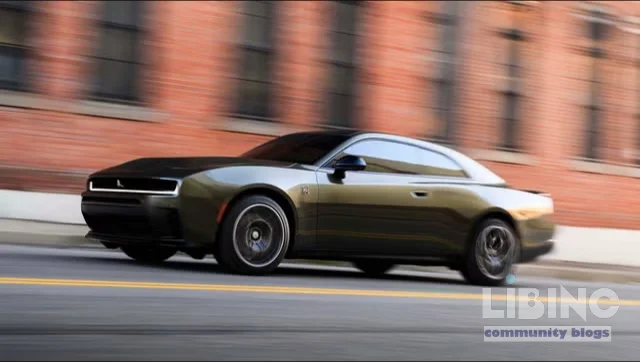
The 2026 Dodge Charger Scat Pack: Recalibrating a Straight-Line Icon for Real-World Agility
Table of contents
Rethinking a brand icon, the 2026 Dodge Charger Scat Pack tests more than horsepower; it tests whether Dodge can balance heritage with modern handling. The stakes are clear: preserve the Charger persona while delivering a track-capable chassis on a large, heavy coupe. The hidden conflict: can an ICE Charger of this size behave with the precision demanded by a world that now measures performance on grip, rotation, and corner speed rather than straight-line pace alone? This analysis navigates four lenses—Analytical view, Contrasts, Causes and effects, and Expert reconstruction—to evaluate how the Scat Pack stacks up, and what its choices mean for Dodge's future performance strategy.
Table of contents:
- Analytical view
- Contrasts and expectations
- Cause-and-effect relationships
- Expert reconstruction
Analytical view
The 2026 Dodge Charger Scat Pack centers on a compact but intense powertrain package inside a full-size, front-engine hatchback framework. Dodge sticks with the 3.0-liter twin-turbocharged inline-six Hurricane—an engine architecture already familiar from the modern Dodge and Ram ecosystem—paired to an eight-speed automatic and standard all-wheel drive. The result is a deliberate shift: more torque potential, more traction, and a platform that can be tuned for both straight-line yank and confident midcorner rotation. The drivetrain dynamics hinge on a few critical values that define how this car behaves on real roads and on the Dragon’s dragon-back curves. The inline-six is rated at 550 horsepower and 531 lb-ft of torque on 91-octane, with peak torque arriving around 3,500 rpm. This broad torque curve helps the car recover from midcorner exits and push a heavy car toward speed, even when the throttle is eased. The powertrain packaging also reflects a strategic compromise: the turbocharged six keeps energy density high enough for drag-strip credibility while preserving packaging that allows a heavier, tunnel-resonant sedan to feel more nimble than its mass would suggest.
- The engine is a 3.0L twin-turbo inline-six with direct injection; 550 hp @ 6200 rpm; 531 lb-ft @ 3500 rpm. This is a torque-rich setup designed to mitigate the mass penalty of a 4,850-pound curb weight.
- Transmission and drivetrain: 8-speed automatic; standard all-wheel drive. Normal mode splits torque 50/50; Sport mode biases toward the rear with roughly 60/40 front-to-rear.
- Weight vs. handling: curb weight around 4850 lb positions this Charger as heavy but with a tuned chassis that can leverage AWD to maintain composure in high-load corners.
- Brakes and tires: six-piston Brembo front brakes; tire sizes 275/40ZR-20 standard, 305/35ZR-20 optional. The square tire setup simplifies rotation and provides balanced contact with the road under aggressive driving.
- Performance targets and current results: C/D-estimated 0–60 mph in 3.5 seconds, 1/4 mile around 11.7 seconds, top speed ~177 mph; skidpad around 0.96 g, signaling high lateral grip for a car of this weight.
From a drivetrain perspective, the Hurricane’s turbocharged torque band is the lever that lets a heavy two-door hatchback feel unexpectedly agile on a twisty road. The all-wheel drive, even with a rear-bias on Sport, provides a buffer against understeer without erasing the visceral feel of rear-wheel dynamics. That duality—traction and drive feel—underpins the Charger Scat Pack’s on-road personality and sets the stage for the Bridging role it plays between legacy power and modern handling realism. The car’s wide stance (79.8 inches) and the multilink suspension are not cosmetic: they contribute to a more stable midcorner platform that can maintain rotation without inviting late-stage instability.
Contrasts and expectations
Against the old Charger playbook, the 2026 Scat Pack confronts several contrasts that force a re-evaluation of what a performance Dodge can be. The most obvious is the juxtaposition with the Charger Daytona EV that preceded it. The Daytona EV is remarkable in its own right, but its identity — a performance car shaped around electric propulsion and a heavier, battery-laden chassis — places it at odds with the more traditional Dodge audience. The Scat Pack’s combustion-powered thrust, lighter curb weight relative to the EV, and a handling philosophy built around mechanical grip deliver a different kind of thrill. The market overlap for Dodge’s traditional Charger audience—enthusiasts who crave straight-line acceleration and a simple, loud exhaust note—finds a more interesting compromise in the Scat Pack: more usable road dynamics with still-ambitious power levels.
- Weight trade-off: Daytona EV weighs roughly 5,900+ pounds, while the Scat Pack sits around 4,850 pounds—an advantage in both agility and braking feel on winding roads.
- Propulsion philosophy: the inline-six with turbocharging preserves engine music and throttle response that an internal-combustion enthusiast expects, contrasting with the electric torque delivery of the Daytona EV.
- Brand positioning: the Scat Pack speaks to the customers who want a modern Dodge with familiar, visceral sound and a more traditional hierarchy of performance signals—sound, heft, and grip—without leaning on battery-centric performance.
- Packaging and practicality: the Charger remains a hatchback with a generous rear cargo area, enabling storage for wheels and tires, a nod to real-world use that a pure sports coupe might forgo.
The exhaust note, while augmented by the audio system, remains a crucial signal of the Scat Pack’s identity. The car’s soundtrack is less a marketing flourish and more a functional cue that pairs with the engine’s torque delivery to communicate intent to the driver. The car’s width and stance add a visual aggression that mirrors its performance ambition, bridging the gap between a family-friendly hatchback and a legitimate track toy. This blend of traits helps the Scat Pack avoid the fate of some modern performance cars that lose their soul in the name of efficiency or electrification, while still embracing a contemporary drivetrain strategy that Dodge is likely to refine in future iterations.
Cause-and-effect relationships
The 2026 Charger Scat Pack’s performance is not accidental; it emerges from deliberate choices that create a measurable chain of cause and effect on the road. The AWD system, even with its dynamic front-end disengagement in light-throttle situations, establishes a robust stability envelope that lets the chassis absorb abrupt inputs and exit corners with more confidence than a pure rear-driver would. The effect is a broader envelope of usable grip, which in turn enables higher corner speeds on variable surfaces. The rear-drive bias mode in Sport increases the likelihood of a controlled slip angle, giving a disciplined sense of oversteer that can be exploited with timing and throttle control rather than luck.
- Suspension geometry: multi-link front and rear suspensions tune immediate responsiveness (on-center feel) and reduce understeer; the system delivers about 36% better on-center response and 43% less understeer compared with prior Charger setups, according to Dodge’s statements and test data.
- Torque management: the 50/50 split in normal mode yields balanced handling; the rear-biased 60/40 in Sport mode invites a more neutral to slightly tail-happy dynamic, which the driver can manage with the throttle and steering inputs.
- Weight distribution: even with heavy mass, the high-traction AWD spread and the limited-slip differential help the car rotate predictably in mid-corner, turning what could be a drift-prone profile into a controllable performance attribute.
- Power delivery and braking: the 6-piston Brembo brakes provide ample stopping power that matches the high-energy accelerative capabilities, preventing fade in repeated high-load stops typical on mountain passes or long scenic runs.
In practice, this cause-and-effect chain translates to a car that can be quick in a straight line while remaining composed and predictable through mid-corner sequences. The result is a tangible sense of confidence: the Scat Pack feels more like a well-balanced road car than a raw dragster, especially when negotiating the Dragon’s 318 corners. The engine’s redline at 6200 rpm constrains peak revs, but the midrange torque and turbo response make up for it, delivering punch where it matters most for real-world driving and track-like sessions.
Expert reconstruction
From an engineering and brand-strategy perspective, the 2026 Charger Scat Pack represents a deliberate pivot: it preserves Dodge’s core identity—loud, fast, and unapologetic—while retooling the vehicle for versatility, handling discipline, and everyday usability. The Scat Pack’s package, with a grossly practical wheelbase for a 2-door hatchback and a wide track to improve cornering stability, suggests a mid-cycle refinement that prioritizes driver feedback, torque-rich acceleration, and predictable behavior across diverse road conditions. The car’s size and weight are not merely constraints; they become opportunities for a more deliberate balance between grip and throttle, allowing a broader set of drivers to enjoy high-performance dynamics without requiring track-day-level skill every time they leave the driveway.
- Brand trajectory: Dodge is bridging its combustion-era performance heritage with a modern suspension and driveline strategy that can adapt to both ICE and potential future electrified variants without diluting the Charger’s DNA.
- Market implications: a base price of $56,990 for Scat Pack and $61,985 for Scat Pack Plus signals a compelling value proposition in the performance-sedan category, especially given the AWD performance and the tire/brake hardware involved.
- Future variants: the platform could support V-8 variants or higher-performance powertrains down the road, aligning with the brand’s approach to offer multiple powertrains within a familiar chassis architecture while preserving value and performance parity across trims.
- Real-world usability: the car doubles as a practical daily driver with capable storage and four-seat ergonomics, which broadens its appeal beyond a narrow race-focused audience while still delivering track-ready dynamics.
Overall, the 2026 Dodge Charger Scat Pack embodies a balanced engineering reframe: punchy torque, advanced chassis tuning, and an AWD system that allows for more controlled energy management at the limit. It isn’t a reboot of the old Hemi-era straight-line heroism, but a respectful modernization that keeps the Charger relevant in a market increasingly defined by handling fidelity and electrified powertrains. If Dodge maintains this direction, the Scat Pack could anchor a family of performance models that combine the best of classic Dodge attitude with a more mature approach to dynamics, potentially easing the transition into a future with electrification while preserving the brand’s high-performance core.
Notes: Vehicle type and performance figures cited reflect the press materials and dyno-style estimates from Car and Driver, with the understanding that real-world numbers vary with road, weather, and configuration. Ezra Dyer, the author cited in the source material, remains a source of perspective on the Charger’s evolving identity and its place in the broader performance-car landscape.
The 2026 Dodge Charger Scat Pack, in short, is a carefully calibrated argument: keep the Dodge personality intact while adopting a chassis and powertrain strategy that makes the car usable, confident, and lively wherever the road takes it. It is a promising approach to a brand that cannot rest on its laurels, and a signal that performance can be maintained without sacrificing the practical realities of daily driving.
Closing the practical gap: real-world driving guidance
At a performance benchmark, the Charger Scat Pack looks superb on paper, but owners care about how torque, AWD, and chassis translate to grip, confidence, and predictability in daily use and on back roads. This section closes that gap with concrete driving cues and scenarios that show how to exploit the car’s strengths without overshooting the limit.
| Model | Power | Torque | Weight | 0–60 |
|---|---|---|---|---|
| Charger Scat Pack | 550 hp | 531 lb-ft | 4,850 lb | 3.5 s |
| Mustang GT | 480 hp | 415 lb-ft | 3,900 lb | 4.1 s |
| Camaro SS | 455 hp | 455 lb-ft | 3,860 lb | 4.0 s |
| Daytona EV | EV power | EV torque | ~5,900 lb | — |
Key guidance to convert that performance into real driving benefits: keep it in throttle windows where turbo response is immediate (roughly 2,000–4,000 rpm), use Sport mode to bias torque rearward in light-load sections, and choose wide tires to maximize grip in corners.
- Scenario A: Mountain pass Brake early, trail brake into the apex, feed in gentle throttle to maintain rotation without overwhelming the tires.
- Scenario B: Wet highway merge Start with milder input, let AWD distribute torque smoothly to avoid wheelspin, then progressively power out as grip increases.
- Scenario C: Dry track-day session Use line and throttle discipline to manage heat buildup; the six-piston Brembo brakes remain strong with careful cadence.
- Grip first, then go: ensure the wheels are loaded with traction before applying full throttle.
- Brake pressure matters: moderate cadence reduces weight transfer that can unsettle the car.
- Body balance: steer with a light touch to maintain rotation without inducing oversteer.
| Wheelbase | 120.3 in |
| Track (F/R) | 63.8 in / 63.9 in |
| Suspension | Multi-link front/rear |
| Brakes | 6-piston Brembo, 15 in rotors |
How does all-wheel drive affect the Charger Scat Pack's handling on twisty roads?
The all-wheel-drive system in the Charger Scat Pack distributes torque between the front and rear axles in real time to maximize contact with the pavement, creating a more predictable mid-corner balance than a traditional rear-drive setup. This means you can carry higher entry speeds through curves with confidence, especially when Sport mode biases toward the rear, helping rotation without sacrificing overall grip. In wet or uneven surfaces, the drivetrain acts as a safety net by reducing wheelspin and stabilizing throttle response, which translates to smoother, more controllable laps or commutes.
This direct control over traction translates into practical benefits for daily driving and occasional track use by reducing the likelihood of snap oversteer and understeer, enabling drivers to focus on line and comfort rather than fighting the car at the limit.
What are the main powertrain specifications for the Scat Pack?
The 3.0-liter twin-turbo Hurricane engine delivers 550 horsepower and 531 lb-ft of torque, paired with an 8-speed automatic and standard all-wheel drive. Peak torque appears around 3,500 rpm, which gives broad midrange punch suitable for confident acceleration from mid-speed rolls. The combination is designed to balance straight-line performance with composed handling, even when the car is carrying its substantial curb weight. Transmission calibration emphasizes quick, smooth shifts to sustain momentum through corners and exits while preserving drivability in daily use.
How does Sport mode alter dynamics and driver feel?
Sport mode adjusts torque split toward the rear, sharpening throttle response and increasing steering weight to emphasize a more dynamic, agile feel. The result is a more direct connection between pedal input and chassis reaction, enabling a driver to exploit rotation through mid-corner transitions. However, this mode also raises the potential for oversteer if grip is marginal, so throttle and steering discipline become essential. In wet or low-traction conditions, Sport mode requires careful input to avoid overpowering the rear tires and triggering unintended slides.
Can the Scat Pack be used as a practical daily driver?
Yes. The Scat Pack blends high performance with everyday usability through a roomy hatchback layout, AWD stability, and a roomy interior. Real-world ownership emphasizes predictable traction in rain and snow, a comfortable ride quality for daily commutes, and sufficient cargo space for daily errands and weekend wheels. Tire choice and brake wear are key factors for long-term ownership, as is maintaining optimal tire pressures and brake fluid health to preserve stopping power during repeated high-load drives.
How does it compare to the Daytona EV in performance signals?
Where the Daytona EV prioritizes raw acceleration and electric torque delivery with a heavy, battery-laden chassis, the Scat Pack emphasizes torque-rich ICE power, mechanical grip, and a more traditional driving character. The Scat Pack offers a lighter hardware package relative to the EV and a different sound experience, which many enthusiasts associate with Dodge’s heritage. In practical terms, the Scat Pack provides more predictable handling dynamics on dry pavement and a more approachable entry into track-like driving for drivers who prefer a familiar interior and audible feedback from the engine and exhaust.
What future variants could Dodge explore on this platform?
Dodge could extend this chassis family with higher-output ICE variants, plug-in hybrid configurations, or even a battery-assisted performance model that preserves the familiar Dodge attitude while improving efficiency and emissions footprint. The platform’s ability to accommodate different powertrains without sacrificing chassis balance or usability creates a path for incremental performance upgrades, greater electro-mechanical integration, and a broader range of price and feature combinations that can appeal to a wider audience while maintaining a clear Charger identity.







Add a comment
To comment, you need to register and authorize
Comments
This is aided by the chassis fundamentals: a widened stance, a capable multi link suspension, and tires sized for both grip and daily practicality. The AWD system contributes more than traction; it imposes a stability envelope that protects against abrupt inputs while still communicating rearward intent through steering and throttle. The braking system and tire package are part of a coherent package that resists fade and maintains confidence when push comes to shove. The result is a modern interpretation of a Charger persona: a car that can feel at home on a mountain road as easily as at a drag strip, delivering a sure-footed, midrange thrust that helps compensate for mass.
The exhaust and the engine soundtrack matter more than marketing blurbs suggest, because sound signals the car's intent and helps the driver modulate torque and steering with confidence. If Dodge can keep that signal honest while refining structural stiffness and aero balance, the Scat Pack could become a practical daily driver that remains capable enough for occasional track sessions. In short, the Scat Pack seems to aim for a coherent, driver friendly balance rather than a one dimensional thrill ride. What do you think about the way the powertrain and chassis choices shape real world handling, and where would you push the envelope first if you owned one?