

Table of Contents
The round-of-16 duel between Egypt and Argentina in Atlanta became the tournament’s most controversial event and a revealing case of how sport intersects with global politics. Egypt took the lead and pressed, but a second goal was ruled out and a request for a VAR review on an Argentina goal was denied, provoking cries of unfairness and uneven application of the rules. Beyond the scoreboard, the match unfolded as a public theater for political fault lines that extend far beyond the pitch. This analysis treats the game as a lens on Palestine in football, examining how political symbolism, fan mobilization, and governance intersect with outcomes on the field.
The stakes are not only about who advances but about how authority, visibility, and legitimacy travel across continents under the banner of neutral sport. The discussion centers on Palestine in football as a contested frame: does sport reinforce a rules-based order, or does it reveal how power structures shape whether that order is perceived as legitimate? This lead outlines the path: we will analyze the match through analytics, contrast, causal relationships, and expert reconstruction to illuminate how a single game can become a political benchmark.
Analytical perspective: the match as a lens on Palestine in football
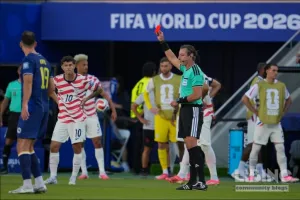
From a tactical standpoint, Egypt opened with intent and briefly held the advantage, signaling a potential upset against the defending champions. The disallowed second goal and missed opportunities for a VAR check intensified questions about officiating consistency and the role of technology in fairness. In this analytic frame, the controversy is not merely about a single decision but about how decision-making processes unfold under pressure and scrutiny. Palestine in football emerges as a test case for whether refereeing can be insulated from political interpretation when stakes are high and media attention is relentless.
VAR protocols and officiating transparency became the central axis of public debate. Critics argued that the video review process was applied unevenly, raising concerns about whether neutral rules still translate into neutral outcomes. Proponents contended that the system simply did not deliver clear, decisive guidance in a fog of near-misses and ambiguous angles. In both camps, the core question remains the same: when institutional credibility is under fire, how robust is the architecture that claims to be apolitical? The language of fairness becomes the battleground for legitimacy in Palestine in football.
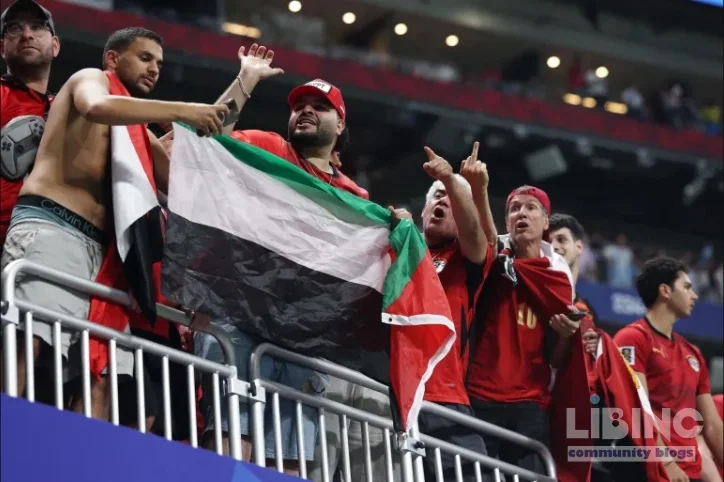
Fans and observers noted symbolic signals that extended the game’s significance beyond football metrics. Palestinian supporters in Gaza waved Egyptian flags and joined the emotional arc surrounding the Egyptian victory, while on the opposite end, fans in the stadium displayed flags and slogans that reframed the match as much more than a knockout game. This is not simply about national pride; it is about how spectators interpret the event through a political lens and assign greater meaning to decisions that resonate with broader grievances. In this context, the match becomes a study in how officiating, media narratives, and symbolic acts combine to shape the perceived fairness of the sport.
Contrasts and signaling: narratives, flags, and power
The pregame and postgame rhetoric exposed a spectrum of signaling that transcends football. Egypt’s leadership used the occasion to foreground the Palestinian cause, and the post-match press conference featured statements tying the victory to suffering and resilience in Palestine. This is not a ceremonial handshake with a neutral sporting event; it is a deliberate narrative act that registers the match within a global debate about justice, inequality, and the rules that govern international competition. The contrast is stark: on one side, political solidarity becomes a moral compass; on the other, the symbolism of victory enters a wider conversation about who gets to set the terms of legitimacy at the world’s biggest football stage.
Fan signaling also mirrored broader geopolitical currents. Palestinians in Gaza waving Egyptian flags created a visible, on-site tableau of solidarity, while some Argentinian supporters displayed an Israeli flag during the match, signaling how domestic politics can travel into stadium spaces. These visual cues illustrate how national narratives are mobilized at mega-events and how such acts are understood as acts of moral positioning, not merely as color or flair. The contrast underscores that football arenas have become theaters where international relations, public opinion, and national identity collide in real time.
Another layer concerns the public posture of national leaders and governments. In Argentina, the government’s perceived alignment with Israel, contrasted with a public that has shown critical views toward Israeli policy, created a political backdrop that colors how the match is interpreted. Whether that alignment influences sporting governance is a separate question, but the signaling effect is undeniable: sport becomes a proxy for the larger moral and political order in which a country operates. Palestine in football thus morphs from a cause into a language of legitimacy and credibility in the public sphere.
Causes and effects: politics, governance, and legitimacy
The match did not occur in a vacuum. Pre-game rhetoric by Hossam Hassan, including public references to Palestinian suffering and explicit moral judgments, reframed the game as part of a broader political discourse. While these statements aimed to draw attention to humanitarian concerns, they also fed perceptions that decisions on the field are entangled with external advocacy, which complicates the notion of refereeing impartiality. The causal chain here runs from political content to audience interpretation to institutional legitimacy in Palestine in football, illustrating how messaging can amplify or distort perceptions of fair play.
Several overlapping factors shaped the consequential arc. The broader geopolitical environment—genocide cases at international courts, global condemnation of Israel by various communities, and widespread support for Palestinian rights—created a fertile ground for sport to be read as a political barometer. In turn, FIFA’s governance and its relationship with powerful member associations came under renewed scrutiny. Even if there is no direct evidence of manipulation, the perception that power and influence travel through the corridors of football organizations remains potent. The match therefore functions as a case study in how political capital and sporting rules interact to produce legitimacy or loss thereof in Palestine in football.
Fan experiences, too, influence the causal story. The presence of national flags, the intensity of chants, and the social media ecosystem around the game shape how the public weighs fairness. If a significant portion of fans believes that the rules apply differently to different teams, trust in neutral institutions erodes. This erosion matters because it feeds a self-reinforcing narrative: if people doubt the neutrality of sport’s governing bodies, the symbolic authority of football as a universal language weakens, and Palestine in football becomes a reference point for broader questions about power and accountability.
On the governance side, commentators have argued for stronger, more transparent protocols to isolate football decisions from political machinations. The call is not to politicize sport but to fortify the systems that claim neutrality. The endgame is clear: when people suspect bias, even well-intentioned decisions lose moral weight. The Egypt–Argentina episode thus contributes to a broader demand for reforms that reinforce legitimacy in Palestine in football and ensure that the rules function consistently across contexts and conflicts.
Expert reconstruction: reforms for Palestine in football
Experts propose a menu of reforms aimed at preserving credibility while recognizing sport’s inherently political nature. The first pillar is governance integrity: establish independent oversight of refereeing decisions and VAR usage, with cross-border representation and transparent criteria for when reviews occur. This reduces the perception that outcomes tilt toward particular political narratives or powerful actors, strengthening Palestine in football as a focal point for trust in sport’s neutrality.
Second, implement public, auditable decision trails. A real-time, publicly accessible log of critical choices, including VAR inquiries and referee judgments, would enhance accountability and clarity. Such a dashboard would help decouple political signaling from on-field outcomes and allow fans to follow the logical steps that lead to decisions. Palestine in football benefits when the process is legible and contestable rather than opaque and unchallengeable.
Third, harmonize VAR protocols across confederations to minimize inconsistent applications. Uniform standards, objective criteria for offside calls, and standardized communication with fans and media would reduce room for divergent interpretations that feed perceptions of bias. A consistent system is essential for maintaining confidence that decisions serve the sport rather than political interests, a prerequisite for sustainable Palestine in football narratives.
Fourth, develop clear rules about political expressions in stadiums and on the field. While athletes and fans should not be silenced, governing bodies must delineate boundaries and consequences for actions that threaten safety or undermine the competition’s integrity. The aim is to preserve the political voice within sport without compromising fairness or security, ensuring Palestine in football remains a legitimate platform for advocacy rather than a battleground of legitimacy per se.
Fifth, invest in education and ethics programs for officials, players, and fans to cultivate a shared understanding of neutrality, fairness, and accountability. A culture of ethical vigilance helps prevent rationalizations that justify biased decisions in moments of pressure. For Palestine in football, humility in governance and rigor in process are the practical antidotes to perceived inequities during high-stakes matches.
Finally, foster international collaboration that aligns football governance with broader human-rights and humanitarian standards. When sport aligns with universal norms, Palestine in football can gain moral traction without becoming a proxy for political disputes. The path forward combines rigorous process with principled purpose, allowing football to reaffirm its role as a platform for merit on the field and legitimacy off it.
In sum, the Egypt–Argentina encounter reveals how a single game can act as a microcosm of sport’s global politics. The proposed reforms aim to preserve the integrity of football while acknowledging that political symbolism will persist. If implemented with discipline and transparency, these changes can reinforce Palestine in football as a meaningful, credible component of the sport's governance, rather than a recurring flashpoint in a larger drama of power and influence.
As the discourse around Palestine in football evolves, the key takeaway is that credibility in sport requires more than fair refereeing; it requires a governance ecosystem that can withstand political pressure without compromising the universality of the game. The Egyptian–Argentinian fixture thus becomes a valuable study in how to build that ecosystem, keeping the sport honest while honoring the legitimate aspirations of fans and communities that see football as a stage for justice and solidarity.
Through analytical scrutiny, contrasting signals, causal reasoning, and expert-guided reforms, the Palestine in football paradigm can move from a controversy to a constructive framework for how international sport handles politics without surrendering its core commitments to fairness, transparency, and universal access to the game.
Ultimately, Tuesday’s game should be read not only for its on-field moments but for what it reveals about the relationship between power, credibility, and the global rules that govern the beautiful game. The future of Palestine in football hinges on robust governance, consistent application of the rules, and a shared commitment to keeping sport a credible arena for merit, not merely a stage for political theater.
Shortly, the episode underscores a persistent truth: sport is at once a competition and a political institution. The challenge is to preserve the purity of competition while allowing legitimate expressions of conscience and solidarity. That balance will determine whether Palestine in football can be understood as a legitimate voice within the sport’s global community, or whether it will remain a symbol tethered to controversy rather than to fair play.
Concluding this reconstruction, the path forward blends procedural reforms with a recommitment to the ethical values that have long defined international sport. If these steps are adopted, the narrative around Palestine in football can shift from controversy to credibility, turning the Egypt–Argentina moment into a milestone for improved governance and legitimate, inclusive discourse.
Practical governance pathway for Palestine in football
Translating debate into measurable progress hinges on auditable processes that keep officiating decisions separate from external signaling. A public dashboard would publish VAR inquiries, referee notes, and the decision criteria in real time, with independent review accessible to fans and federations. This transparency improves trust that rules are applied consistently across confederations and reduces the sense that politics can tilt outcomes. Consider these scenarios: a VAR decision trail at a World Cup stage, a cross-border refereeing panel, and pre-match publication of offside criteria.
| Reform Area | Current Practice | Proposed Change | Expected Impact | Timeline |
|---|---|---|---|---|
| VAR transparency | Decisions explained selectively | Public, real-time VAR log with independent audit | Improved perceived neutrality | 2025–2027 |
| Independent oversight | Referee assignments by confed committees | Independent Referee Council with cross-border representation | Reduces perceived bias | 2025 |
| Public audit trail | Not published; limited media access | Real-time public log of decisions | Increases accountability | 2025–2026 |
| Uniform VAR protocols | Rules vary by region | Global standardization and cross-confed testing | Consistent calls | 2026 |
| Stadium expressions | Strict rules, enforcement uneven | Clear policy on expressions with safety safeguards | Maintains safety while enabling advocacy | 2024–2025 |
| Education and ethics | Occasional training | Ongoing ethics program for officials, players, and fans | Builds neutrality culture | 2025–2027 |
Beyond the table, a simple metric anchors progress: sustained neutrality in on-field calls across major tournaments. This is not a single event but a pattern of decisions that fans can verify through a public log, independent reviews, and consistent training. A small, practical example is a World Cup stage where every VAR inquiry and outcome is timestamped and publicly explained, with a visible link to the decision criteria used.
Implementation steps
- Establish an independent oversight body with cross-border representation
- Publish real-time audit trails of VAR and referee decisions
- Harmonize VAR protocols and training across confederations
- Clarify stadium expression rules that balance safety and advocacy
- Institute ongoing ethics education for officials, players, and fans
These measures create a durable governance framework that preserves the universality of the game while allowing legitimate expressions of conscience and solidarity. The path is incremental but auditable, with success measured by consistency of calls, public trust, and fan engagement.
- 2024–2025: policy drafts and independent body charter
- 2025–2026: pilot audit trails and training reforms
- 2026–2027: full cross-confederation protocol adoption
In sum, these steps help anchor Palestine in football within a governance framework that foregrounds fairness, transparency, and universal access to the game.
What concrete reforms ensure neutrality in Palestine in football governance?
Concrete reforms center on independent, cross-border oversight, publicly auditable decision data, and harmonized rules across confederations. The first steps are to establish an independent governance body with diverse regional representation, publish a real-time log of VAR inquiries and referee notes, and implement unified training and ethics standards for officials. Clear policies on political expressions in stadiums should protect safety while allowing peaceful advocacy. Implemented together, these changes create a credible, neutral environment that supports merit on the field while maintaining legitimacy off it.
The approach also requires transparent timelines and measurable outcomes, such as higher consistency in rulings and increased fan trust, which can be tracked through public dashboards and regular reviews.
How would a public audit trail work in practice?
The audit trail would record every VAR inquiry, the criteria cited, and the final decision, with a timestamp and official commentary accessible to federations and fans. This creates traceability and accountability, making it harder for external signals to influence outcomes. Over time, a pattern of transparent reviews builds legitimacy and reduces perceptions of bias across confederations.
In practice, fans could compare pre-match expectations with post-decision rationales, promoting a data-driven culture in officiating. This also provides a clear basis for learning and improvement, rather than ad hoc judgments.
What role do fans and players play in neutrality?
Their role is to uphold ethics, report concerns, and engage in constructive dialogue about standards. A formal ethics curriculum for players, officials, and volunteers reinforces shared norms and reduces the space for ad hoc interpretations of neutrality. Active fan input, through moderated channels, helps identify perceived inconsistencies early, enabling timely corrective actions.
By participating respectfully in governance conversations, the football community reinforces a culture where merit and fairness guide outcomes.
How should political expressions in stadiums be governed?
Rules should balance safety and fair competition with freedom of expression. Clear guidelines on permitted messages, signage, and demonstrations—along with penalties for safety breaches—help avoid escalations while preserving the moral voice of supporters. Enforcement must be consistent across venues to prevent the perception that politics selectively influences outcomes.
Consistent governance reinforces the sport’s universality while recognizing the legitimate desire for solidarity messages.
What timeline and indicators show progress?
Progress is indicated by a reduction in controversial officiating decisions deemed inconsistent across regions, stronger public dashboards, and higher confidence levels in neutral governance, measured through surveys and stakeholder feedback. A staged rollout with annual reviews helps maintain momentum and accountability.
Success should be visible in both on-field outcomes and off-field legitimacy, demonstrating that reform translates to fair play and credible governance.
How does this framework affect Palestine’s standing in world football?
The framework enhances credibility by tying Palestine in football to transparent rules, consistent practice, and ethical governance. It reduces the risk that politics alone shapes perception, while preserving space for advocacy within a structured, accountable system. Over time, this can elevate Palestine’s voice in global sport as a model of governance alongside merit on the field.




Add a comment
To comment, you need to register and authorize
Comments