

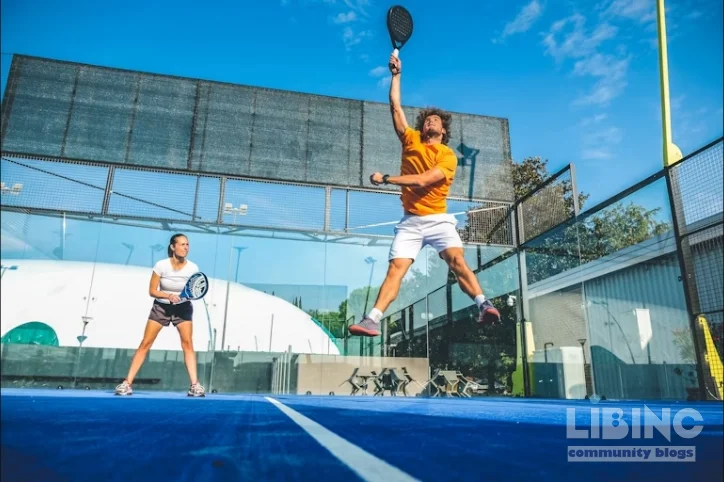
Padel in Britain: Growth, Culture and the Club Strategy for Coexistence
Table of contents
Padel has stormed into Britain's sporting consciousness. Played on compact netted courts, enclosed by glass walls, the sport blends elements of tennis and squash with a social, accessible ethos. Growth has leaped from roughly 15,000 players in 2019 to around 1 million by 2026—a trajectory that threatens to reconfigure club schedules, revenue models, and the very meaning of grassroots sport. The stakes are real: clubs risk crowding courts and diminishing exposure for traditional tennis, while purists fear a competitive displacement that could erode the sport's longer-term health. This article maps the terrain, asks why padel has surged, and outlines a path for coexistence that strengthens both games rather than pits them against each other.
Amid the triumph, a quiet tension persists. Critics warn that padel's fast start could cannibalize participation, not just court time. Proponents argue that the sport expands the overall racket ecosystem and builds audiences for club life. The direction of analysis is simple: identify growth drivers, examine cultural fault lines, and propose governance steps that let padel flourish without sacrificing lawn tennis' foundations.
Analytics: Growth, structure and revenue potential
In Britain, padel's local population exploded from about 15,000 players in 2019 to roughly 1 million by May 2026, according to the Lawn Tennis Association (LTA). That scale shift presses clubs to rethink scheduling, maintenance, and staffing, because the throughput of matches—and the consequent revenue opportunities—now far outstrips late-20th-century norms for racket facilities. The overlap with lawn tennis—nearly two-thirds of padel players also playing tennis—adds complexity to planning: clubs must build shared-lane calendars that honor both sports without creating dead time. The result is a new efficiency problem for facilities managers, who must optimize throughput while maintaining sport-specific identity.
Globally, padel sits inside a 35 million-player ecosystem with around 100 national federations across five continents. The sport's unit economics have matured: courts and rinks take less space than a full tennis court and deliver short-format, high-frequency play that suits modern leisure patterns. North Atlantic clubs now view padel not as a niche add-on but as a core revenue stream with potential for year-round participation, child and adult programs, and social events that can fill evenings and weekends. Britain may be a late entrant, but the international data suggest a durable, scalable model when integrated with existing racket-sport ecosystems rather than treated as an either/or choice.
- Low entry barrier — quick skill acquisition fuels beginner participation and social retention.
- Social capital — informal court culture, music, and social spaces create durable engagement and word-of-mouth growth.
- Space efficiency — one tennis court can be repurposed into three or more padel courts, improving land-use metrics.
- Cross-sport synergies — a shared player base with tennis creates bundled memberships and cross-promotional opportunities.
- Global momentum — padel's expansion complements broader racket-sport ecosystems and investment cycles.
Key structural features matter. Padel prioritizes net play and wall-based attacks, which reduces the need for raw power and accelerates the development of tactical skill. The walls are not mere obstacles; they are strategic partners that extend rally opportunities and create new angles of attack. This design yields a distinct learning curve from tennis, one that rewards anticipation, placement, and teamwork as much as power. The consequence is a sport that scales quickly in clubs while demanding careful coaching to avoid the drift toward mere social recreation or casual doubles play.
From a governance perspective, Britain can leverage padel to diversify participation without sacrificing the core of lawn tennis. The LTA reports that 1 million Britons now play padel, and the two-thirds overlap with tennis suggests a natural alignment if supported by club-level programming, coaching pipelines, and infrastructure planning. Yet this is not a fait accompli; it requires deliberate policy design to ensure that padel growth complements rather than competes with tennis lives on the club circuit.
The question of Olympics exposure also colors ambition. Padels global footprint—35 million players and 100 federations—means that success in Britain could be read as part of a broader international narrative. If the sport earns a place in Brisbane 2032, clubs will need to institutionalize padel within a long-term development plan that accommodates youth pathways, elite competition, and community access. That means building a strategic balance between professional circuits and amateur participation, so that growth translates into inclusivity and skill development for all ages.
To translate growth into durable outcomes, clubs must operate with a coherent business logic. They should map padel investment to demand signals, integrate coaching and officiating pipelines, and design flexible scheduling that respects tennis programs while maximizing daily court density. The economics of padel are not simply about more balls on walls; they hinge on disciplined programming, member retention efforts, and a shared sense of purpose among players, coaches, and club managers.
One crucial implication concerns facilities planning. A single conversion decision—whether to turn a tennis court into padel courts—has ripple effects on maintenance costs, staffing, and youth pathways. The most resilient models pair padel with tennis in seasonal calendars, while ensuring that padel courts receive appropriate lighting, surface maintenance, and social spaces that reinforce positive club culture. In other words, padel's economic value emerges not just from court density but from a holistic club strategy that binds sport, community, and business into a single operating framework.
Five structural features behind padel's appeal
- Informality and inclusivity — casual atmospheres lower barriers to participation and retention, a key factor for grassroots growth. net-based play and social courtside culture reinforce broad appeal.
- Wall-based tactics — the ability to use walls to attack and defend expands tactical vocabulary beyond conventional tennis shots.
- Short-format rounds — rapid match cycles enable more participants to try, learn, and compete in a single session.
- Low equipment costs — minimal gear lowers startup friction for clubs to add padel alongside tennis.
- Court-sharing flexibility — modular court layouts allow efficient use of space and time, boosting utilization rates.
Contrast: Padel culture versus traditional tennis culture
The cultural clash between padel and lawn tennis is not purely aesthetic. Padel courts tend to host social events, with music and relaxed dress codes, while traditional tennis often adheres to established etiquette and formal settings. This contrast shapes who could be attracted to each sport and how they participate. Padel's informality makes it easier to recruit beginners and convert spectators into players, but it also invites scrutiny from purists who worry about a dilution of tradition. The real question is not whether padel should emulate tennis, but what it takes for both sports to co-create a vibrant club life that uses shared facilities without stalling either sport's core development.
To move beyond rhetoric, clubs should map the cross-pollination that padel enables. When two-thirds of padel players also play tennis, the potential for cross-promotional programming becomes compelling. It offers a way to funnel beginner tennis players into padel clinics and to expose padel players to tennis foundations, thereby expanding the overall racket-sport ecosystem. Yet the overlap also imposes discipline: clubs must ensure that coaching standards, etiquette, and competition structures for both sports reinforce mutual respect and shared goals rather than foster turf wars. The result is not a zero-sum game but a reframed, integrated sporting environment that respects both traditions.
Historically, lawn tennis sits inside a longer lineage—real tennis predated modern lawn tennis by centuries, with a tradition of playing over walls and nets. Padel can be seen as a modern continuation of that wall-centric play, even as it borrows from tennis for its serve-and-volley rhythm. Traditionalists might resist, but the argument for coexistence rests on preserving the essential challenge of meeting a ball over a net while exploiting walls as strategic elements. In this sense, padel does not merely imitate tennis; it offers a renewed articulation of the net-and-wall challenge that real tennis exemplified centuries ago, repackaged for contemporary club life and social participation.
Another layer of tension concerns club governance. Some critics worry that padel could push tennis out of small clubs where space is finite. Proponents counter that padel can expand the overall activity level by attracting casual players and families who would not otherwise join a tennis club. The truth lies in the middle: padel magnifies club density, but only if facility planning aligns with youth pathways, coaching development, and inclusive programming. The path to success requires careful sequencing—launch padel with targeted programs, then scale up with sustainable coaching and competition structures that help both sports thrive in a shared environment.
Even the economics deserves scrutiny. Djokovic’s argument about court conversion underscores a real incentive: three padel courts can generate more revenue per footprint than a single tennis court. Yet revenue is not the sole metric; community vitality, player retention, and skill development matter equally. A club that plants the seeds for double-sport participation may yield deeper engagement and longer membership tenures, but only if it preserves the identity and quality of each sport and avoids a superficial density push that degrades the playing experience.
Expert reconstruction: policies for coexistence
The path to productive coexistence rests on intelligent policy design, not sentimental defense. Clubs should adopt a phased approach to padel integration that prioritizes coaching quality, youth pathways, and clear competition structures. The goal is to create a coherent ecosystem where padel and tennis reinforce each other rather than compete for the same resources in a zero-sum fashion. Below are practical blueprint elements that clubs and governing bodies can implement to unlock sustainable growth while protecting tennis traditions.
- Strategic courtyard planning — map court density, daylight, and maintenance cycles to support both sports with minimal frictions.
- Coaching pipelines — invest in certified padel and tennis coaches; run joint clinics and cross-sport development tracks for youth and adults.
- Shared yet distinct programming — create schedules and leagues that honor each sport's unique norms while enabling joint social events and family-friendly activity blocks.
- Facility operational clarity — implement clear usage rules, court assignment protocols, and maintenance budgets to prevent conflicts and ensure high playing standards.
- Governance alignment — ensure national and local associations coordinate on standards, officiating, and safety protocols to foster a united racket-sport ecosystem.
From a broader perspective, the debate around padel should be reframed as a question of sport-system resilience. A well-structured coexistence model can deepen grass-roots participation, diversify club audiences, and create a resilient revenue base that supports both padel and tennis across generations. The key is to shift from a binary narrative—padel versus tennis—to a federation-level strategy that treats racket sports as a shared public good with complementary growth trajectories. When clubs execute with discipline and vision, padel becomes a catalyst for renewed interest in all racket sports, not a threat to the traditional games they host.
In sum, padel's British expansion is not a footnote to tennis; it's a signal that club life is evolving toward more inclusive, flexible, and space-efficient models. The responsible response combines data-driven facility planning, robust coaching ecosystems, and governance that harmonizes two distinct but compatible traditions. If done well, padel can enrich the club experience, broaden access to sport, and preserve the enduring appeal of lawn tennis while inviting new generations to enjoy the full spectrum of racket sport culture.
At the frontier of this evolution sits a crucial insight: growth does not erase tradition; it reframes it. The most successful clubs will treat padel as an opportunity to expand their social reach while elevating the competitive standards of tennis. That synthesis, rather than fear, offers the strongest guarantee that British clubs remain relevant and resilient in an increasingly dynamic global sports landscape.
Ultimately, padel's rise provides a rare test case for modern sport governance. It asks: can we design systems that preserve heritage while embracing innovation? The answer lies in proactive programming, disciplined facility management, and a shared ambition to keep recreational sport affordable, accessible, and compelling for generations to come.
Coexistence playbook: actionable steps for clubs
To translate Britain's padel surge into durable club life, implement a practical, phased rollout that bundles coaching, scheduling and governance into a single plan. The aim is to grow participation without diminishing the core tennis experience, using data-driven pilots to elevate coaching, facility management, and member engagement across both sports.
Table: Space, throughput and revenue potential
| Format | Typical footprint (sqm) | Daily throughput | Revenue per court/day | Maintenance index | Notes |
|---|---|---|---|---|---|
| Tennis court | 260 | 4-6 hours | £110-£180 | High | Traditional core sport |
| Padel court (singles) | 200 | 6-8 hours | £180-£320 | Medium | High density and speed |
| Padel, 2 courts | 400 | 12-16 hours | £360-£640 | Medium | Better density per footprint |
| Padel, 3 courts | 600 | 18-24 hours | £540-£960 | Medium | Best density per footprint |
Source: club benchmarks
Analysis: Padel density is higher than tennis per footprint; to convert interest into sustained participation, pair court density with structured programming and clear usage rules.
Key metrics snapshot
Governance and rollout framework
- Phase 1 — pilot two padel courts, train 2 coaches, create junior clinics.
- Phase 2 — expand to 4 courts; implement shared schedules; introduce social leagues.
- Phase 3 — scale to 6+ courts; formal coach and referee development; review pricing and memberships.
The aim is a resilient racket-sport ecosystem that grows participation, strengthens club life, and preserves the quality and culture of traditional tennis while embracing padel's social energy and space efficiency. This framework translates growth into durable routines rather than a one-off expansion.
1) What drives padel growth in Britain?
Padel's growth in Britain is driven by a convergence of accessibility, social appeal, and space-efficient courts that fit into existing club footprints while delivering high throughput and quick skill progression; a short learning curve invites newcomers, families, and casual players, while the sport's informal court culture encourages spontaneous play and word-of-mouth growth. The momentum is amplified by improved coaching networks, bundled memberships that pair padel with tennis, and growing media coverage that positions padel as a community activity with year-round appeal. This combination makes padel a compelling upgrade for clubs seeking renewal rather than a disruption of tennis. This growth is easier to sustain where clubs pilot with clear access paths and supported youth programs.
2) How can clubs balance padel and tennis to maximize participation and preserve tradition?
Clubs can balance padel and tennis by implementing a deliberately shared but differentiated calendar, with distinct peak times for each sport, explicit etiquette that preserves tradition while inviting casual players, and a coaching ecosystem that elevates skills in both games through cross-training and joint clinics. The approach rewards flexibility, not rigidity: padel blocks in early evenings for families and social play, tennis blocks on weekend mornings for competitive use, and a common member framework that offers both sports at a bundled price. Ongoing monitoring of court utilization, member retention, and revenue per participant guides adjustments to ensure neither sport crowds out the other. This fosters a cohesive club culture rather than turf wars.
3) What are typical costs and steps to add padel to a facility?
Typical costs depend on site constraints and finish options, but the main budget items are courts, walls or glazing, fencing, lighting, and coaching; a two-court installation often costs less and completes faster than adding extra tennis courts because of the smaller footprint and simpler construction. The steps include a feasibility check, design and procurement, phased build, and a rollout of coaching and leagues to drive early usage. For clubs, the payoff comes from higher daily court turnover and the ability to offer year‑round programming with lower marginal space requirements.
4) How many people currently play padel in Britain?
Britain's padel community has grown to about 1 million players by May 2026, according to LTA estimates, with roughly two‑thirds overlapping with tennis participation. This scale signals substantial demand for clubs to reimagine scheduling, coaching pipelines, and family-friendly activity blocks. It also implies a broader cross-promotional opportunity that can attract new demographics into club life while maintaining tennis as the core sport. Sustained growth depends on structured pathways and accessible facilities that keep new players engaged.
5) What governance steps support sustainable coexistence?
Governance steps include aligning national and local associations on standards, creating joint coaching and officiating pipelines, and establishing clear usage policies and reporting frameworks. Clubs should adopt phased implementation, pilots, and performance dashboards to monitor progress, while ensuring safety, etiquette, and quality across both sports. A coordinated governance model reduces duplication of effort, enables data sharing, and builds a coherent racket-sport ecosystem that benefits members and communities over the long term.
6) How does padel affect youth development and club retention?
Integrating padel with tennis broadens youth pathways by offering a social, low-barrier entry into racket sports, which can boost early development and retention if paired with clear progression routes into tennis coaching. A well‑designed program that emphasizes skill development, competition structure, and family-friendly events can improve retention by appealing to younger players and their families while preserving tennis’ competitive standards. The result is deeper engagement, broader audience reach, and a more resilient club community that sustains participation across generations.





Add a comment
To comment, you need to register and authorize
Comments
A productive approach treats padel as a platform for broader club engagement rather than a separate product. With a sizable overlap—two thirds of padel players also playing tennis—there is clear potential for bundled memberships, cross promotional programming, and family oriented activity blocks. Bundling must come with guardrails: coaching standards that span both sports, competition frameworks that preserve tennis pathways, and a pricing model that rewards shared growth rather than privileging one side. The governance question is how to design a light, scalable framework clubs can implement incrementally, for example through joint coaching pipelines, unified scheduling tools, and agreed maintenance norms that recognise the specific needs of each surface.
The cultural element matters as well. Padel’s informal social vibe can be a powerful magnet for participation among beginners and families who might not engage with tennis in a traditional setting. Yet the enduring appeal of lawn tennis rests on etiquette, competitive structure, and a sense of historical continuity. Clubs could explore social blocks and kid friendly evenings that blend both sports while ensuring that the rhythm of courts, coaching tempo, and competition calendars respects the dignity of long standing tennis programs. A practical question for discussion is whether clubs should adopt a lightweight cross sport charter that codifies etiquette, scheduling norms, and safety standards without stifling spontaneity. What outcomes matter most to members, and how can clubs measure them in a way that guides investment decisions rather than chasing fads? The dialogue will need to balance speed and quality, density and diversity, novelty and tradition. To keep momentum healthy, clubs could also establish a simple progress dashboard that tracks wait times, cross sport participation, and coaching coverage, and share it with members on a quarterly basis to build trust and guide investments.