

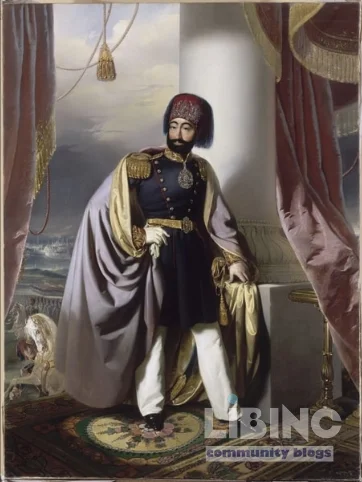
Mahmud II reforms: Building a modern Ottoman state through revolutionary change
Table of contents
- Lead
- Analytical perspective: why Mahmud II's reforms took shape
- Reforms in contrast: Selim III and the Janissaries
- Causes and effects: from crisis to centralized reform
- Expert reconstruction: assessing legacy and counterfactuals
The Ottoman Empire entered the early 1800s as a state stretched thin by economic strain, military defeats, and provincial fragmentation. Mahmud II inherited a crisis that would force a choice between nostalgia for a stronger past and a forward-looking restructuring. He chose the latter, launching a system-wide program that dissolved a centuries-old military and bureaucratic order, replaced it with European-style institutions, and sought to forge a common administrative identity across diverse subjects. The path was perilous: reformers faced an entrenched resistance from the Janissaries and the ulema, while Western powers watched closely. The consequence was a prolonged, high-stakes project whose techniques, institutions, and rhetoric would anchor the modern Ottoman state—and influence the trajectory of the Turkish Republic that would follow. This article analyzes why Mahmud II pursued these reforms, how the architecture of the modern state emerged, and what the enduring implications were for empire and successor state alike.
Analytical perspective: why Mahmud II's reforms took shape
Mahmud II faced a confluence of threats that demanded more than incremental tweaks. The empire suffered from military obsolescence, revenue shortfalls, and a governance vacuum across its provinces. The analytical question is not merely what changes occurred, but why they were chosen as a systemic response rather than a patchwork of Band-Aid solutions. The central answer lies in the logic of state survival: external rivals pressed from the east and west, internal factions drained resources, and provincial powerholders asserted autonomy as the center weakened. In this environment, piecemeal reforms failed to stop the rot; what was needed was a deliberate redesign of the state’s core levers: the army, the ministries, the information regime, and the administrative culture that underpinned them.
- Military restructuring as the catalyst: replacing the Janissaries with a European-style army created a clean slate for loyalty based on service to a centralized state rather than hereditary prestige.
- Administrative centralization: ministries took over the functions once distributed among diverse officials, reducing the room for independent power centers to resist the sultan’s command.
- Information and legitimacy: the Takvim-i Vekayi formalized the state’s communications with subjects, signaling transparency and standardization across the empire.
- Quantification and governance: the first census provided data-driven baselines for taxation, conscription, and service obligations, anchoring governance in measurable metrics.
- Education as leverage: a secularized school system and outward-facing language training produced a new cadre able to implement reforms and defend them against radical opposition.
- Identity engineering: the aim to cultivate an Ottoman citizen capable of transcending sectarian and ethnic distinctions under a shared administrative identity.
Key drivers of reform
The reform program did not emerge from an abstract ideology. It grew from practical imperatives: the expense of maintaining obsolete military structures, the risk of losing provinces under pressure from Russia and Austria, and the need to restore fiscal solvency. Each reform instrument reinforced the others, producing a coherent system rather than a series of isolated measures. The result was a framework that could absorb shocks, reallocate loyalties, and present the empire as a modern state capable of equal treatment under law.
Reforms in contrast: Selim III and the Janissaries
The Mahmud II project did not arise in isolation. It must be understood through the juxtaposition with Selim III, who briefly attempted a parallel modernization program but sparked a brutal, fatal clash with the Janissaries. Selim’s plan to create a separate, European-style army—Nizam-ı Cedid—threatened the core interest of the traditional elite. His execution failed because he underestimated the political capacity of the Janissaries to mobilize, and because he overestimated the sultan’s ability to command without an enabling base of support. In contrast, Mahmud II executed his reformist strategy with longer preparation and greater patience. He avoided openly confronting the Janissaries before the decisive moment and instead engineered a premeditated, internal reconfiguration that left the old guard exposed before they could mobilize effectively.
- Strategic timing: Selim III rushed reforms and paid with his throne; Mahmud II waited for a moment when the old order would reveal its vulnerabilities, then acted decisively.
- Internal consolidation: Mahmud built a loyal internal network and used a controlled faction (the Eşkinci) to neutralize opposition within the palace and army, avoiding a frontal clash until the moment of maximum leverage.
- Symbolic modernity: while Selim’s reforms aimed at wholesale external parallels, Mahmud emphasized a restoration of centralized control, with a pragmatic adoption of Western models in service of a uniquely Ottoman administrative project.
The result was not merely a military transformation but a reimagining of sovereignty itself. The abolition of the Janissaries, the introduction of the fez, modern attire, and new bureaucratic codes signified a shift from aristocratic privilege to centralized state authority. The contrast illuminates a central question: how to modernize without surrendering sovereignty to a reformist aristocracy or to external powers. Mahmud II chose a path that fused internal consolidation with selective external imitation, creating a durable if contested system that would outlive him and lay groundwork for the Tanzimat era that followed.
Causes and effects: from crisis to centralized reform
The chain of causation behind Mahmud II’s reforms is a sequence of pressure points that forced a hard pivot. External wars with Russia and Austria strained finances and exposed the empire’s fragility. Nationalist stirrings in the Balkans and the Greek revolt tested the state’s capacity to project authority over distant provinces. Within Constantinople, the Janissaries and the ulema held veto power over policy, blocking modernization when it threatened their privilege. The decisive move—Auspicious Event of 1826—arranged a controlled sequence of eliminations, creating a new political economy where the state could operate with centralized authority and professional administration. The aftermath of this pivot produced a state architecture that could absorb further reforms, culminating in a broader, more structured modernization program across education, law, taxation, and governance.
- Military transition: dissolution of the Janissaries and establishment of the Asakir-i Mansure-i Muhammediye created a loyal, centralized military force aligned with the sultan’s authority rather than hereditary prestige.
- Administrative revolution: the creation of ministries—Interior, Foreign Affairs, Justice, Finance—and the Council of Ministers shifted power from autonomous officials to a centralized cabinet model.
- Legal and information regime: Takvim-i Vekayi institutionalized official communication and reduced information asymmetries between the state and subjects.
- Civic identity and education: compulsory primary education and a secular curriculum produced a new generation capable of sustaining reform and keeping pace with European models.
The consequences extended beyond governance mechanics. The reforms redefined loyalty and legitimacy, producing a new type of state subject—the Ottoman citizen—whose status was defined by law and service rather than lineage or faith. This reframing of identity underpinned the bureaucratic posture that would enable the empire to implement further restructurings in the Tanzimat era and beyond, even as resistance to centralized reform persisted in various regions.
Expert reconstruction: assessing legacy and counterfactuals
Historians debate whether Mahmud II’s reforms saved the empire or merely extended its survival by a generation. The evidence suggests a complex verdict: the reforms created durable institutions that later reformers could reuse, yet they provoked backlash that strained the empire’s social fabric. The state’s modernization came at the expense of broad popular consent, and the sultan’s autonomy depended on a delicate balance of coercion and co-optation. The portrait of Mahmud II as a radical reformer who restructured both army and administration remains compelling, but it also invites scrutiny of the costs: loss of traditional authority, disruption of local governance, and the emergence of a sovereign state apparatus that could outgrow the imperial framework that produced it.
- Institutional foundations: the ministries and the formal gazette created an enduring template for governance that outlived the sultanate and supported later constitutional reforms.
- Economic and social trade-offs: centralization improved fiscal and administrative capacity but undermined provincial elites and traditional social hierarchies.
- Path dependence: the early modern state’s architecture made later Tanzimat and constitutional reforms possible, shaping the trajectory toward a modern administrative state.
Counterfactual thought experiments sharpen the claim. If Mahmud II had delayed action or pursued a more aggressive frontal assault on traditional power, the state might have collapsed into regional fragmentation or external occupation. If he had embraced a more inclusive reform that shared power with the janissaries and ulema, the empire might have retained broader legitimacy but at the cost of slower modernization. Instead, his calibrated, insider-driven approach produced a reform program that, while imperfect, supplied the institutional skeleton for the modern Turkish state and the republic that followed.
In sum, Mahmud II’s reforms did more than alter the Ottoman state’s appearance—they reengineered its operating logic. The abolition of the Janissaries, the establishment of ministries, the introduction of a modern census, and the codification of a centralized administrative ethos created a framework that could reorganize the empire’s vast diversity around a shared, bureaucratic core. The result was a durable, if contested, trajectory toward modern statehood that subsequent reforms—Tanzimat and beyond—could build upon. For all its controversy, the Mahmud II reform program remains a watershed moment in the transition from imperial governance to modern state administration, marking his place among the era’s most consequential rulers.
Closing the governance gap: from centralization to enduring legitimacy
The most critical gap in the existing analysis lies in how legitimacy was built across a diverse empire, not merely how power was centralized. Mahmud II’s reforms blended coercion with careful co‑optation, using appointments, data, and symbols to turn centralized authority into a widely accepted operating logic. The shift from aristocratic loyalty to service-based loyalty required more than a reform of tools; it demanded a new social contract at provincial and urban levels. The new ministries, census, and education system supplied a shared frame for regular taxation, conscription, and adjudication, while the fez and modern attire signaled a recognizable Ottoman modernity that could coexist with local identities when anchored to law and procedure. In provinces such as Aydın, Thessaloniki, and Smyrna, local elites engaged with the reform program through administrative roles and fiscal compliance, illustrating how modernization could be both top‑down and domestically legitimate. Yet the process remained contested, as ulema networks and traditional elites sought to defend privilege and jurisdiction, shaping the tempo and texture of change. The enduring lesson is that durable reform depended on converting potential resistance into compliance via data-driven governance, public signaling, and incremental permission for local adaptation within a centralized framework.
Military modernization timeline
| Phase | Focus | Outcome |
|---|---|---|
| Pre-1830 | Traditional units | Rivalry with central authority |
| 1826 | Auspicious Incident | Janissaries dissolved |
| 1830s | New army formation | Loyalty to sultan |
| End of century | European-style corps | Centralized command |
Source: reform chronology
The census enabled data-driven decisions for tax rounds and service obligations, linking provincial performance to central targets and reducing information gaps that fed resistance.
Reform stages (hierarchy)
- Consolidation of ministries
- Interior
- Finance
- Justice
- Military reorganization
- Abolition of Janissaries
- Creation of loyal regiments
- Public communications
- Takvim-i Vekayi
- Civic education programs
What were the Mahmud II reforms?
The reforms were a deliberate, state-centered modernization program that dissolved the old military and aristocratic networks, created centralized ministries, replaced hereditary loyalty with service-based loyalty, and adopted a data-driven information regime to align provinces with imperial policy.
This shift enabled the empire to project centralized authority, manage provincial governance through a formal cabinet, and seed the administrative culture later echoed in the Tanzimat era. The reforms also introduced the census and Takvim-i Vekayi as standard mechanisms for policy transparency and accountability, while promoting secular education to train a new bureaucratic class essential for sustained modernization.
Why did Mahmud II abolish the Janissaries?
The abolition was driven by the need to remove a hereditary and autonomous guard that obstructed centralized control and resisted modernization. A strong, loyal, state-centered military was required to support reform across a sprawling empire. The decisive action aimed to prevent a coalition between old elite military interests and provincial resistance that could derail the project.
By dissolving the Janissaries and replacing them with a centralized, service-oriented army, Mahmud II created a predictable balance of power that could be steered from Constantinople, enabling reforms to reach provincial governors and provincial elites through a common framework of command and accountability.
How did Takvim-i Vekayi change governance?
Takvim-i Vekayi formalized the state’s communications and reduced information asymmetry between rulers and subjects. It created a regular channel for disseminating laws, edicts, and administrative instructions, which helped standardize governance across diverse provinces. This transparency reassured some reform supporters while exposing opponents to public scrutiny of practices and performance metrics.
In practice, the gazette helped securitize policy, offering a public record that could be referenced by provincial officials, tax collectors, and judges, thereby strengthening central accountability and enabling more coherent Tanzimat-era policy implementation.
What role did the census and education play in reforming loyalty?
The census provided a reliable baseline for taxation, conscription, and service obligations, anchoring governance in data rather than kinship or privilege. It helped coordinate revenue across provinces and reduced the scope for regional rent-seeking. Secular education created a cadre capable of implementing reforms and defending them against cohesion of opposition groups. Together, these instruments helped reframe loyalty—from lineage to state service—laying the groundwork for a modern administrative state.
What is the legacy of Mahmud II for the modern Turkish state?
Mahmud II’s reforms established durable institutional templates—ministries, a centralized cabinet, a formal information regime, and a census-driven administrative culture—that later reformers could reuse. The approach influenced Tanzimat policy, constitutional debates, and the long arc from imperial governance to modern state administration. While opposition and disruption persisted, the innovation seeded a centralized, rule-based governance model that outlived the era’s political volatility and shaped the trajectory toward a modern Turkish republic.





Add a comment
To comment, you need to register and authorize
Comments
The piece’s emphasis on the abolition of the old guard and the creation of a centralized army underscores a classic dilemma: to stabilize the state, you must break the power of traditional elites, yet you must avoid erasing the legitimacy that ties the state to its subjects. The Takvim-i Vekayi, as an instrument of transparent communication, did more than disseminate policy; it signaled a new social contract in which information symmetry could legitimize central authority. The census, even when its measurement was imperfect, anchored taxation and service obligations in data rather than inherited privilege. And education, described as secular and outward-facing, offered a pipeline of administrators who could interpret and apply European models while preserving the empire's broader identity.
The article also invites a meditation on identity. The aim of “identity engineering” — to produce an Ottoman citizen who could transcend sects and ethnic loyalties — poses a lasting question about the price of nationalism-before-nationhood. If the endeavor succeeded, it would reduce the brittleness of provincial loyalties and create a unified state functioning under a legal logic rather than a hierarchy of privileges. If it failed, the empire might fracture under competing loyalties or slip into an unsustainable centralization that quashed local governance. This tension between universalizing reform and respecting local particularisms remains central to any assessment of Mahmud II’s legacy.
Moreover, the article’s framing helps us connect the dots between long-term state-building and the lived experiences of diverse communities. Centralized taxation, secular schooling, and a standardized legal-administrative vocabulary did not simply replace old hierarchies; they redefined who could participate in governance, who owed service, and whose grievances could be heard within a formal bureaucracy. That shift, while stabilizing at the imperial level, remade provincial politics by elevating new actors into the center and diminishing traditional ones. Reading this material prompts us to consider how durable such a reordering is once reformers are gone, and whether the system’s resilience rests on coercive power, strategic negotiation, or a genuine, albeit contested, social consensus around a shared administrative identity.