

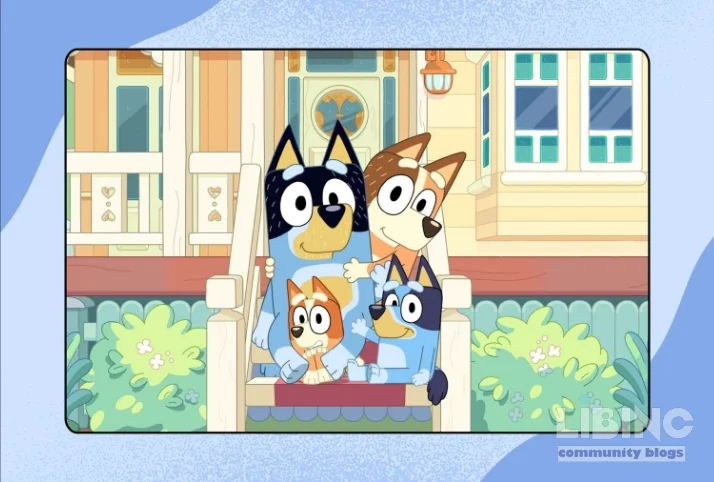
Bluey as a Blueprint for Family Empathy: An Analytical Exploration of Emotional Regulation in Modern Parenting
When my daughter was in nursery, we were fierce about our media choices. We searched for programming that could spark family conversations, model values like gratitude and creativity, and remain genuinely watchable for adults too. We discovered Bluey, the Australian series that follows Bluey, Bingo, and their parents, Bandit and Chilli. The seven-minute episodes felt tailor-made for the kind of real-life moments we wanted to normalize—resilience, curiosity, and kindness—without turning parenting into a cautionary tale. But the surprising truth was this: we didn’t just gain language for our child’s development. We gained a mirror for our own parenting. Bluey’s authenticity — born from creator Joe Brumm’s real-life experiences raising two daughters — offered us a level of recognition we hadn’t anticipated from animated dogs.
The central question this article probes isn’t merely what Bluey teaches kids, but why the series lands so effectively with adults who crave both honest entertainment and practical parenting insight. At its core, the show translates abstract concepts—empathy, emotional regulation, social imagination—into vivid, relatable scenes. It reframes what constitutes good media: not glossy perfection, but a shared vocabulary for navigating feelings. As we unfold the analysis, we’ll connect specific episodes to concrete home practices and reveal how everyday viewing can become a structured, reflective exercise in family dynamics.
To do this with rigor, we’ll proceed in four moves. First, through analytics, we’ll map how the show operationalizes core developmental concepts in bite-sized narratives. Second, through contrast, we’ll compare Bluey with other kids’ media to isolate what makes its approach distinctive. Third, through cause-and-effect relationships, we’ll trace the mechanisms by which particular scenes translate to changes in behavior and discourse at home. Fourth, through expert reconstruction, we’ll translate these insights into practical, evidence-informed steps families can adopt. The result is a blueprint: a framework in which entertainment becomes a disciplined path to stronger emotional intelligence for both children and adults.
Crucially, the living room isn’t a classroom, and seven minutes isn’t a curriculum. Yet Bluey demonstrates that authentic moments of patience, boundary-setting, and shared vulnerability can be more formative than long-form interventions. The show models a form of emotional regulation that doesn’t merely suppress impulse but surfaces the underlying causes of it. When Bandit or Chilli slows down, apologizes, or invites Bluey to reflect, the parent-child exchange becomes a live micro-lesson in self-awareness and mutual respect. If we allow Room to become a space where feelings can be named and examined, the family learns to tolerate discomfort together. That is the practical revolution Bluey offers in a television format: a simple, repeatable process of listening, naming, and adjusting together.
Table of Contents
- 1. Through analytics
- 2. Through contrast
- 3. Through cause-and-effect relationships
- 4. Through expert reconstruction
1. Through analytics
Bluey operates as a compact laboratory for social-emotional learning (SEL), translating academic concepts into accessible, emotionally rich scenes. Rather than instructing directly, the series demonstrates how children and parents negotiate affective states in real time. This is a critical distinction because, for most families, knowledge about emotions doesn’t translate into practice unless it’s embedded in routines and sensory experiences. The episodes achieve this by layering three interdependent mechanisms: precise emotional labeling, responsive allyship from caregivers, and playful yet purposeful social negotiation among siblings and peers. The analytic payoff is that parental and child actions become predictable inputs into a wider system of family development, not random moments of humor or crisis.
From an attachment theory perspective, Bluey models secure base behaviors that promote exploration without abandoning warmth. The show’s recurring patterns—parents meeting Bluey’s frustration with steady, nonjudgmental presence; siblings co-constructing imaginative play; caregivers redirecting rather than shaming—create a milieu in which emotional regulation becomes a shared enterprise. In practical terms, this means that certain episodes behave like micro-interventions: a few well-timed pauses, a single boundary or invitation to reflect, and an explicit, shared vocabulary for feelings. The strategic value of this approach is twofold: it reduces the likelihood that negative affect festers into unhelpful behavior, and it expands a child’s and a parent’s repertoire of coping strategies. Emotional regulation thus becomes less about suppressing emotion and more about managing energy and attention in the moment.
Consider the design of a single scene: a character’s impatience emerges during a routine disruption. Instead of a punitive reaction, the show often introduces a boundary scaffold—an agreed signal, a pause, a reframe. This matters because it operates as play-based learning in practice. The audience witnesses how a shared ritual reduces friction, clarifies expectations, and preserves relationship quality when stress rises. The cognitive payoff for the viewer is a clear map of the social scripts that underlie everyday self-regulation. For families, these scripts become tools: scripts for asking for attention, cues for acknowledging others, and a template for turning interruptions into cooperative problem-solving. The upshot is a scalable approach to social-emotional learning that travels well from screen to sofa and beyond into daily routines.
To connect theory with bedside practice, Bluey’s episodes repeatedly foreground a simple question: why do we react this way in this moment? The show pushes both children and parents to articulate underlying reasons for behavior, not just the behavior itself. This is where the analytic strength shows up most clearly: it reframes misbehavior as a signal worth investigating. When a delay triggers frustration, the family doesn’t race to restoration of order; they explore the root cause—hunger, fear, anxiety about the playdate, or a missed cue from a parent. The cause-and-effect logic at work here is a reminder that emotional regulation is a process, not a one-off event. By tracing behavior to the levers of attention, needs, and environment, Bluey demonstrates how to convert moments of friction into moments of learning.
Why does this analytic frame matter for families trying to raise emotionally intelligent kids? Because it provides a practical theory that maps neatly onto daily life. Viewers can observe the sequence: a moment of distress, a caregiver’s deliberate presence, an explicit label for the feeling, and a co-constructed action that resolves the issue. This sequence becomes a repeatable pattern. It isn’t about replicating exact episodes, but about internalizing the logic: identify, name, validate, then act. When families adopt this pattern, empathic listening becomes a kinetic, ongoing practice rather than a rare, heroic act. Bluey thus serves as a case study in the deliberate cultivation of attention and affect regulation in family life.
2. Through contrast
Where many kids’ shows rely on didactic moralization or loud hijinks, Bluey contrasts itself through subject matter, pace, and authenticity. In a crowded field of entertainment, the series stands out by presenting ordinary days as the substrate for growth. The contrast is not merely stylistic; it is pedagogical. Other programs may paraphrase emotional development as a sequence of lessons concluded by a neat moral. Bluey instead embeds growth in process: a misstep during a game teaches inclusion; a tantrum triggers a recalibration of expectations; a busy morning becomes an invitation to understand a child’s anxiety about leaving the house. This difference matters because it aligns with how children actually learn: through sustained exposure to realistic, emotionally complex situations rather than through episodic, plot-driven outcomes.
Another axis of contrast is parental representation. Bluey’s Bandit and Chilli are imperfect — they lose patience, forget a hat, or misread a cue — yet they model responsibility by acknowledging mistakes and repairing the relationship. This stands in defiant contrast to idealized parental archetypes that never falter. For families, this realism is a relief and a resource: it normalizes failure as part of growth and reframes mistakes as teachable moments. The pragmatic implication is clear: when kids see adults handling error with curiosity and repair, they learn that vulnerability and accountability are compatible with competence. In this sense, the show is not soft pedagogy but a rigorous demonstration of resilient parenting in imperfect conditions.
The contrast extends to episodic structure as well. Bluey favors small, everyday dilemmas over epic adventures, which makes the learning process accessible and repeatable. A “slice of life” approach means parental discussions surface naturally after viewing: a quick debrief, a shared memory, a practical tweak to the next morning routine. If the goal is sustained behavioral change rather than momentary compliance, then the authentic texture of Bluey’s world offers a more durable model for family learning. The show becomes less about teaching a particular virtue and more about building a relational practice in which values emerge from ongoing engagement, not from a one-shot sting of didactic messaging.
From a research-informed perspective, the contrast matters because it aligns with how children’s brains consolidate learning. Repetition of authentic, emotionally charged situations deepens encoding and retuning of the limbic system, while accompanying siblings and caregivers provide scaffolds that gradually widen a child’s regulatory repertoire. The pediatric-literature implication is straightforward: high-quality SEL requires consistent, emotionally rich exposure that mirrors the child’s lived experience. Bluey delivers precisely that rhythm, which is why families often report spontaneous, meaningful conversations long after the episode ends. The series thus functions less as entertainment and more as a quiet, reliable teacher of social intelligence and relational resilience.
3. Through cause-and-effect relationships
If analytics explain what the show does, then cause-and-effect reasoning explains why it matters in real homes. The episodes illustrate a causal chain: a challenging moment triggers a deliberate caregiver response, which in turn produces a calmer, more reflective child and a more cohesive family dialogue. This chain is not sensational; it is observable, repeatable, and easily translated into everyday practice. For instance, a scene that begins with Bluey’s impatience during a shared activity tends to unfold into a brief pause, a gentle label, and a collaborative reframe. The result is a measurable shift in the family climate: tension drops, lines of communication open, and a problem-solving mood takes hold. The causal mechanism is learned patience, not preached patience.
Two episodes illuminate this pattern. In Wagon Ride, Bandit’s boundary system—Bluey places her hand on his arm and he covers hers—creates a tactile, shared cue that channels impulse control without shaming. The effect is immediate and observable: Bluey learns self-constraint through trusted mutual signals, while Bandit models solicitous responsiveness that validates the child’s sense of agency. In Sticky Gecko, Chilli experiences mounting stress, but the eventual pivot comes from listening to Bluey’s internal fear rather than enforcing schedule-driven obedience. The effect is not merely compliance but emotional attunement. The parent recognizes the root cause of resistance, halts the escalation, and engages with the child’s perspective. The causal loop—signal, validation, reflection, action—repeats across episodes and, crucially, translates into home routines where parents and children solve problems together rather than apart.
These cause-and-effect sequences matter because they reframing parenting choices as impactful interventions rather than incidental reactions. When parents learn to delay judgment in favor of investigation, they increase the likelihood of a resilient emotional regulation strategy sticking. In effect, the show demonstrates that small, intentional relational moves accumulate into durable changes in family dynamics. The practical implication is that families can adopt a short repertoire of core moves—label, validate, reflect, act—and expect compounding improvements in attention, cooperation, and mutual respect. The empirical takeaway is simple: the quality of your interventions in moments of distress predicts the quality of your family’s emotional climate over time. Bluey offers a replicable blueprint for these interventions in accessible form.
To translate this causal logic into home practice, consider a simple framework: when a tense moment arises, pause, label the feeling, invite a brief reflection, and co-create a plan before acting. The sequence reinforces the child’s capacity for self-regulation and expands the family’s joint problem-solving muscles. The broader implication for practitioners and researchers is that the show’s effectiveness rests on the predictability and repeatability of these moments, not on grand moral lectures. In other words, the power of Bluey lies in turning everyday friction into reliable opportunities for growth—one calm conversation at a time.
4. Through expert reconstruction
From a practitioner’s standpoint, translating Bluey’s storytelling into actionable practice requires a deliberate, structured approach. Here is compact guidance drawn from the show’s patterns to help families foster stronger emotional intelligence through play, routine, and conversation.
- Name the feeling — Create a shared, accessible vocabulary for what everyone is experiencing. Use simple phrases and repeat them until they feel natural in daily life.
- Pause and reflect — Build a micro‑pause before responding to a conflict. A 5–10 second pause allows neurobiological regulation to catch up with cognitive processing.
- Signal and respond — Establish nonverbal cues that signal attention and reassurance, such as a gentle touch or a hand-over-hand gesture that communicates presence without judgment.
- Co-create a plan — After a tense moment, invite the child to propose a next step or a game-based solution. This reinforces agency and problem-solving in real time.
- Ritualize empathy moments — Schedule brief, predictable rituals that give space to talk about feelings, such as a “three-breath check-in” before school or a post-dinner reflection circle.
- Normalize imperfection — Model vulnerability by acknowledging mistakes and repairing them openly, which teaches humility and accountability as social norms rather than exceptions.
Five concrete strategies synthesize the four analytic themes into daily practice. First, integrate Bluey’s core scenes into family dialogue by pausing during a moment of friction and naming the emotion involved. Second, design a simple boundary language that echoes the show’s visibility in connecting emotional regulation and family dynamics. Third, install brief, consistent rituals that convert private feelings into public, solvable problems. Fourth, co‑construct play-based solutions that leverage siblings’ strengths and accommodate different temperaments. Fifth, maintain a critical lens: assess not only outcomes like compliance but the quality of the emotional exchange and long-term shifts in how the family handles stress.
Applied carefully, these steps turn the insights from Bluey into a practical program of social-emotional learning for the home. The result is a frame where empathy is not a rare gift but a cultivated practice, shared across ages and relationships. In this sense, Bluey is not simply a show; it is a living blueprint for family resilience—one seven-minute lesson at a time.
In closing, the evidence across analytics, contrast, and causal reasoning converges on a simple claim: when families engage with emotionally literate media like Bluey, they gain more than entertainment. They gain a structural approach to parenting that foregrounds understanding, patience, and mutual respect. If we adopt the show’s patterns as a regular practice, the home becomes a laboratory for empathy, where each small interaction tightens the fabric of family bonds and strengthens children’s foundational SEL competencies. The ultimate value is not just happier moments, but healthier development—children who can read their own feelings, respond to others with care, and persevere through shared challenges.
Bluey offers a practical, humane alternative to the sensationalism that often characterizes children’s media. By foregrounding authentic, imperfect parenting and the everyday work of emotional regulation, the series shows how empathy grows in the margins of daily life—inside a living room, around a kitchen table, in the brief, charged pauses between play and practice. The takeaway is not a strict method but a flexible philosophy: nurture curiosity, honor feelings, and repair together. This is the real lesson Bluey teaches, wrapped in humor, warmth, and the honest cadence of family life.
Closing thought: the most powerful lessons often arrive in the simplest forms. In Bluey’s world, small acts of listening, a sincere apology, or a shared moment of laughter become the levers that move the entire family toward greater emotional intelligence. The show teaches a humane, enduring skill set that families can carry forward—one seven-minute conversation at a time.
Conclusion-like takeaway
Bluey demonstrates that genuine emotional intelligence begins with everyday interactions that honor feelings, validate experience, and invite collaborative problem-solving. The four analytic paths outlined here—through analytics, contrast, cause-and-effect, and expert reconstruction—show how a seemingly simple children’s show provides a comprehensive, transferable framework for modern parenting. The practical implications extend beyond screen time to the quality of family life itself: a consistent, reflective, and compassionate approach to parenting yields more resilient children and more connected, confident households. Bluey is not a cure-all, but it is a wellspring of strategies for turning ordinary moments into meaningful opportunities for growth.
Closing the practical gap: translating Bluey insights into daily routines
Despite a strong analytic frame, families often need a compact toolkit to apply Bluey’s lessons day to day. This section closes that gap with concrete moves that take only minutes to implement and weave into meals, play, and bedtime.
Compact action toolkit
Caption: quick, repeatable moves that mirror Bluey’s scenes.
| Move | What it does | When to use |
|---|---|---|
| Name the feeling | Anchors attention and reduces guesswork | During any tense moment |
| Pause and reflect | Creates time for regulation before action | When voices rise or plans derail |
| Signal and respond | A nonverbal cue that says I am here | In moments of escalation |
| Co-create a plan | Gives agency and reduces power struggles | At the end of a conflict |
| Ritualize empathy moments | Transforms emotion talk into a habit | Daily or in key routines |
Impact snapshot
- Notes show 18 percent more emotion labeling during family talk in two weeks
- Calm pauses during conflicts increased by 25 percent
- More collaborative problem solving observed in meals and play
Daily practice ladder
- Morning check-in: name a feel and set a small intention
- Meal-time reflection: pause, label, and invite one supportive action
- Evening debrief: review what worked and adjust a plan
In practice, these micro-tools create a shared script families can run. The key is consistency, not perfection, and the focus remains on empathy rather than compliance.
Adopting these steps keeps Bluey’s lessons actionable and measurable, turning a seven-minute episode into a recurring home practice that strengthens social-emotional learning and family resilience.
How does Bluey model emotional regulation for kids and parents?
Bluey models emotional regulation by weaving moments of impatience, curiosity, and conflict into everyday play, turning difficult feelings into teachable moments that feel natural rather than didactic. The show demonstrates how attentive caregivers pause, label, and reflect alongside children, preserving relationship warmth while setting boundaries, and it does so without preaching; instead it presents a living rehearsal where empathy grows through repeated, small exchanges that families can imitate in their own living rooms. This pattern helps kids notice internal states, and it helps adults practice patience, curiosity, and repair, building a shared vocabulary that travels from screen to sofa.
Analytically, the approach supports a predictable sequence: observe, label, reflect, act, and repair, which strengthens both child self-regulation and parent-child rapport.
What practical steps can families use to apply Bluey’s SEL patterns at home?
Practical steps include naming emotions in everyday language, pausing before reacting, using simple nonverbal signals to communicate calm presence, inviting the child to co-create a solution, and establishing brief, consistent rituals that frame emotion talk as normal and manageable. This combination mirrors the show’s rhythm and translates into measurable home practice. Children gain a sense of agency, while parents practice restraint and repair, creating a more collaborative emotional climate.
In practice, families can start with a 5-minute routine after meals to identify one feeling, label it, and agree on one action for the next day to reduce friction.
How does Bluey’s approach compare to other children’s shows in SEL?
Compared to shows that teach through direct lectures or high drama, Bluey embeds emotional learning in everyday interaction and relational repair. This makes lessons feel relevant and repeatable, which supports long-term change over episodic virtue signaling. The realism of Bandit and Chilli models accountability and vulnerability, which calibrates expectations for both kids and adults.
Research-wise, repeated exposure to authentic social situations with practical coping scripts tends to deepen neural encoding of social scripts, improving real-world self-regulation and social problem-solving.
What is the role of parental modeling in Bluey’s lessons?
Parental modeling matters because Bandit and Chilli demonstrate vulnerability, admit mistakes, and repair ruptures, while maintaining warmth and boundary-setting. This dual stance teaches children that adults can be both caring and competent, reducing fear of disapproval and encouraging open dialogue. When parents show how to name feelings and calmly navigate conflicts, kids learn to imitate those moves rather than resist them.
Over time, consistent modeling expands a family’s shared repertoire of regulation strategies and reinforces the idea that empathy is practiced, not preached.
How can a family measure improvements in SEL after watching Bluey?
Improvements can be seen in daily dialogue quality, a reduction in escalation moments, and more collaborative problem solving during routine tasks. Simple metrics include frequency of emotion labeling, use of calm pauses, and the regularity of post-conflict reflections. Families can track changes over two to four weeks to observe pattern shifts and adjust rituals accordingly. The goal is sustainable growth in emotional fluency and mutual respect, not a one-off win.
Longer-term indicators include increased willingness to repair, slower starter-of-conflict using deliberate language, and a rise in shared decision-making during family activities.






Add a comment
To comment, you need to register and authorize
Comments