

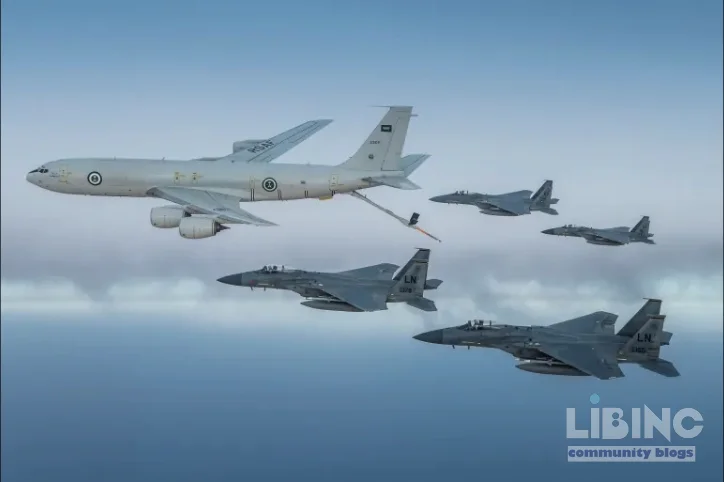
Saudi Strategic Patience Under Pressure: Houthi Threats, Iranian Proxies, and Global Energy Security
Saudi Arabia's restraint has shaped regional stability for a decade, but the latest Houthi threats to blockade Red Sea shipping and vessels bound for Saudi ports test Riyadh's patience. Tehran wields the Houthis as a regional lever to raise the costs of Saudi economic transformation without forcing a decisive clash. The stakes extend far beyond Yemen: disruption to energy exports, inflated shipping insurance, and shaken investor confidence would ripple through global energy markets and international trade. The hidden conflict is Iran's preference for coercion over conventional warfare, betting that Saudi caution will crack first. This analysis traces how Saudi resilience, a deeply integrated Joint Forces Command, and a modern C6ISR architecture recalibrate the risk calculus, and what triggers could push Riyadh toward a decisive response. The direction is to unpack the logic, identify the fault lines, and outline plausible outcomes of continued escalation.
1. Analytical scrutiny: strategic calculus
What makes the Houthi threat more than theatre is the deliberate integration of maritime coercion with economic signaling. By targeting the Bab al-Mandeb and the Strait of Hormuz, Tehran presses two critical chokepoints that feed into the global energy supply chain. This is not a one-off strike; it is a pattern designed to erode investor confidence and to force a recalibration of Saudi or allied risk tolerance. The objective is economic disruption rather than battlefield victory: disrupt logistics, complicate insurance underwriting, and elevate the perceived risk premium on regional energy shipments. In this logic, the maritime dimension becomes a lever for strategic signaling, not a battlefield endpoint.
Saudi strategic patience rests on a calculated belief that a mature, technology-enabled force can deter coercion without triggering a costly regional escalation. The cornerstone is a Joint Forces Command (JFC) that binds more than 650,000 personnel from Saudi Arabia and allied partners into a single, integrated decision-making loop. The fusion of intelligence, surveillance, reconnaissance, precision targeting, air defense, cyber operations, and rapid maneuver enables what many analysts call a compressed tempo—the ability to observe, decide, and act with minimal delay. In practice, this means the kingdom can deny Iran the luxury of time to recalibrate proxies or build a more autonomous logistical spine in Yemen. The transition from a compartmentalized force to a fused C2 architecture has been gradual but decisive; it translates strategic patience into a constant, credible threat posture across multiple domains.
From Tehran's vantage, the Houthis offer an asymmetric instrument to test Riyadh's resolve while avoiding direct confrontation that could invite regional or global escalation. The key miscalculation here is underestimating the depth of Saudi adaptive capacity. Years of combat experience in Yemen have yielded a layered defense in depth, persistent ISR, and electronic warfare capabilities that turn a maritime dispute into a problem of command-and-control disruption for the attacker. The broader implication is that each escalation raises the political and operational costs for Iran and its proxies, not just for Saudi Arabia but for all actors embedded in the regional security architecture. This is why the ongoing chess game cannot be reduced to a single theater; it implicates global shipping lanes, insurance markets, and energy price stability.
To grasp the strategic stakes, one must connect the dots between disruption at sea and the global energy ecosystem. Saudi Arabia remains the world's largest crude exporter and a linchpin in OPEC's supply management. A sustained period of export disruption would ripple through tanker markets, influence risk premia, and feed into inflation in economies already sensitive to energy prices. The question is not only whether the Houthis can cause short-term disruption but whether they can sustain any effect long enough to alter investor behavior. The preliminary conclusion is that the price of disruption grows faster than the price of a soft-pedaled confrontation, and that Saudi preparedness reduces the likelihood that Tehran can convert coercion into lasting strategic gains.
2. Contrast: stability versus coercion
The contrast between Saudi stability-first governance and Iran's coercive proxy strategy is sharper when viewed through the lens of capability, risk, and time horizon. Riyadh's economic transformation—its plans for diversification, non-oil growth, and investment in tomorrow's industries—depends on predictable energy and port flows. Coercive acts threaten that trajectory, not merely a single shipment. The Saudi choice is to defend stability even at risk of short-term setbacks, because the economic payoff of uninterrupted growth dwarfs the gains from punitive escalation. In this framing, stability is a strategic asset, not a passive condition.
Iran's approach—deploy proxies, extend leverage via maritime coercion, and weaponize economic intimidation—appears designed to outlast conventional military superiority. The Houthis capably threaten shipping in two seas that link East and West: the Strait of Hormuz to the Persian Gulf, and Bab al-Mandeb to the Red Sea. The dual-axis pressure aims to produce a double delta of risk: raising the cost of movement for Saudi energy exports in the east and threatening trade and energy supplies in the west. The difference matters because it binds Riyadh to a higher standard of resilience while inviting allies to participate in a broader deterrence framework. The Pakistan-brokered ceasefire, although momentary, signals that a mature deterrence regime can emerge when a coalition architecture achieves operational cohesiveness and escalates costs for aggression.
Houthis and Tehran exploit the asymmetry between their force projection and Saudi capacity to project power regionally. The Houthis' assets—missiles, drones, and limited maritime incursions—are not trivial; they are designed to alter risk calculus, not merely to destroy infrastructure. Yet the gulf between capability and sustainability remains large. A prolonged campaign would require Tehran to sustain a logistics and intelligence network across Yemen, Iraq, and Iran itself, with risk of attrition and political backlash at home. Saudi forces have grown into an integrated, multi-domain system that presents a single decision point for escalating action. The strategic contrast, therefore, lies in the durability of the deterrent and the willingness to push through short-term costs for long-term stability.
In this framework, the broader deterrence equation is not merely about who can strike first; it is about who can absorb the cost and maintain the economic imperative of a reformist agenda. The message from Riyadh—consistent, precise, and centralized—has been that restraint remains the preferred option, but only up to the point where the costs of inaction become untenable for the national economy. The emergent deterrence architecture, reinforced by coalition partners and a robust cyber and air defense posture, expands the space within which Saudi policymakers can operate without inviting a collapse of regional order. The question remains: will Tehran recognize the increasing cost of coercion before Riyadh implements a more assertive strategy?
3. Cause-and-effect map
To illuminate the chain of consequences, it helps to lay out the sequence from catalyst to outcome. The following map highlights the principal causal links driving the current dynamics.
- Catalyst: Iran's decision to deploy proxies to threaten maritime routes and economic lifelines in order to complicate Saudi growth and deter investment. The intent is to shift risk perception, not to deliver a decisive military blow.
- Immediate effect: Disruption to shipping schedules, increased insurance premia, and heightened security expenditures for international carriers operating in the Red Sea and Hormuz corridors.
- Medium-term effect: Elevated global energy price volatility, potential re-pricing of risk in commodity markets, and a re-ordering of protectionist measures by energy-importing economies.
- Strategic effect: A recalibration of regional deterrence, with Saudi resilience and coalition-driven defense posture shaping a more robust architecture for long-term stability.
In practice, the disruption narrative feeds back into financial markets as insurers and shipowners seek higher cushions against risk. The ripple effects extend to liquidity constraints for energy exporters and the cost of capital for infrastructure projects tied to the Saudi economic transformation. The strategic logic is self-reinforcing: higher risk premiums slow down investment, which can, in turn, slow the pace of diversification away from oil dependency. The critical question is whether Riyadh can sustain its stability-first approach long enough for the market signals to re-anchor expectations around reliable energy supply and regional order.
From the Iranian side, the calculation hinges on cost-benefit analysis under uncertainty. If the escalation yields a meaningful squeeze on Saudi export capacity without triggering a broad war, Tehran could perceive a net gain in regional leverage with limited downside. If, however, the costs escalate quickly through coalition action or domestic backlash, Iran risks a strategic misalignment between its proxy instruments and the desired political outcomes. In either case, the domain of decision remains multi-player and multi-dimensional, where maritime security intertwines with cyber and political signaling in a way that makes a single decisive action increasingly unlikely to suffice for either side.
4. Expert reconstruction and outlook
The expert view is that the Houthis are not capable of sustaining a long, full-spectrum confrontation against a coalition with an advanced C6ISR-driven combat ensemble. They are, instead, a force multiplier whose most potent leverage lies in signaling and disruption. If Tehran continues to rely on the Houthis, Saudi authorities will likely respond with a calibrated mix of deterrence, escalation control, and economic resilience measures. That does not imply a throwback to the Yemen wars of the past; it signals a modernized conflict vector defined by integrated intelligence, precision targeting, and centralized escalation control. The result could be a prolonged but constrained confrontation that tests the boundaries of international law, coalition solidarity, and the political will to bear risk for deterrence.
What would a broader campaign look like beyond Yemen? A plausible scenario involves intensified naval and air dominance across sensitive maritime routes, coupled with persistent cyber operations against adversary command nodes. The aim would be to degrade the Houthis' ability to synchronize missiles, drones, and maritime actions while preserving the essential economic lifelines that allow Saudi Arabia to maintain its reform trajectory. In practical terms, this means greater interoperability with regional partners, accelerated intelligence sharing, and a more assertive posture on sanctions and international diplomacy to deter further escalation. The core idea remains: deter coercion by raising the cost of aggression to a level that Iran can no longer tolerate without undermining its own strategic objectives.
Policy options to reinforce deterrence include maintaining a credible red-teaming of threats, investing in undersea and air defense, and expanding the use of cyber and ISR to preempt slow-burn escalations. A robust deterrence architecture should aim to keep escalation at a manageable level while ensuring that the economic transformation stays on track. The balance between restraint and decisive action will hinge on the perceived probability of success for Iranian coercion and the readiness of allied capabilities to respond promptly and coherently when a threshold is crossed.
Multimedia note: the following inline schematic illustrates a simplified C6ISR-driven decision loop that underpins the Saudi-JFC architecture. The diagram emphasizes how intelligence collection feeds rapid decision-making, which then triggers synchronized kinetic and non-kinetic effects across air, maritime, cyber, and space domains. The goal is to compress the time from observation to effect, reducing the window for adversaries to exploit gaps in coverage.
Conclusion: The evolution of Saudi strategic patience hinges on sustaining economic resilience while ensuring that coercive actors face escalating costs. The modern deterrence framework is not a bluff; it is a system of integrated capabilities designed to preserve stability, protect energy lifelines, and keep the kingdom on a trajectory of transformative growth.
Keywords in this section: maritime security, energy markets, deterrence, C6ISR, intelligence fusion, joint force command, coalition dynamics, regional stability
Keywords
Saudi strategic patience, Houthi threat, Iranian proxies, maritime security, Bab al-Mandeb, Strait of Hormuz, global energy markets, C6ISR
5. Bridging strategy: triggers and actionable steps
Despite Saudi patience, a critical gap remains: explicit escalation triggers tied to observable maritime and market signals. Defining these thresholds in advance accelerates decision cycles and reduces misreads during fast-moving crises. The following triggers and responses translate strategic patience into a calibrated, multi-domain deterrence that preserves energy lifelines while signaling costs to adversaries.
- Escalation trigger A: sustained disruption of Bab al-Mandeb or the Strait of Hormuz for 7+ days with shipping delays of 20% or more.
- Escalation trigger B: a sustained spike in global shipping insurance premia (50–100 basis points) over a week, signaling higher risk appetite for carriers.
- Escalation trigger C: credible signs of coalition fatigue or hesitation to sustain naval measures after repeated incidents.
Recommended responses focus on deterrence calibration, economic resilience, and diplomatic signaling to preserve momentum in reform while avoiding overreach.
- Deterrence calibration: intensify multi-domain patrols, demonstrate rapid decision cycles, and maintain transparent red-lines with partners to prevent miscalculation.
- Economic resilience: diversify routes for energy flows, accelerate non-oil growth initiatives, and provide market-reassuring risk communications.
- Diplomatic signaling: align with key partners on sanctions progress and joint messaging to deter proxy actions.
| Trigger | Indicator | Policy Response |
|---|---|---|
| Sustained disruption | 7+ days blocked; delays >20% | Heightened naval presence; expedited inspections |
| Insurance premia spike | 50–100 bps weekly average | Market-stability measures; risk disclosures |
| Coalition signal shift | Public statements of hesitancy | Enhanced coalition coordination; joint drills |
| Energy price volatility | Brent swings >±$5/bbl | Strategic reserves use; public risk messaging |
The table translates the abstract logic of restraint into concrete actions. A structured response framework helps keep the economic reform on track while maintaining credible costs for escalation, a core aspect of a resilient deterrence architecture in a multi-domain environment.
The continuum visualizes rapid sensing-to-action cycles that underpin a modern deterrence doctrine: faster detection enables targeted moves that deter rather than exhaust resources.
The synthesis of these elements supports a dynamic, risk-aware approach: deter coercion through clarity of purpose, while preserving the momentum of economic reform and regional stability.
5. Bridging strategy: triggers and actionable steps
What is the central purpose of defining escalation triggers in this context? The central purpose is to convert strategic patience into a predictable, reversible set of actions that can be scaled up or down in response to observable maritime and market signals, thereby preventing drift into inadvertent conflict while preserving energy lifelines and reform momentum. This reduces uncertainty for markets, sponsors a resilient economy, and strengthens alliance cohesion. In practice, triggers provide a clear vocabulary for decision-makers under pressure and a measurable basis for communicating intent to partners.
How do these triggers translate into concrete actions on the water and in the markets?
Triggers create a ladder of responses ranging from heightened naval presence, accelerated inspections, and coordinated drills to sanctions coordination and reserve-management measures. By tying responses to measurable indicators, Riyadh can adjust the intensity and tempo of actions without neglecting reform goals or provoking unnecessary escalation. The approach preserves flexibility while ensuring that costs rise for coercive actors when thresholds are crossed.
What role does coalition behavior play in shaping outcomes?
Coalition dynamics determine the credibility and durability of deterrence. When partners publicly commit to shared redlines and sustain exercises and sanctions, the perceived cost of coercion rises. Conversely, signs of fatigue can embolden proxies. The strategic layout hinges on transparent, timely communication, joint intelligence sharing, and synchronized public messaging to deter misinterpretation and maintain regional strategic balance.
What metrics should be tracked to assess deterrence effectiveness?
Key metrics include average time from observation to decision, changes in shipping premia and insurance costs, frequency of cross-domain drills, and the stability of energy supply routes. Financial signals—credit spreads, investor sentiment indices, and reserve-utilization rates—also indicate market confidence. Regular reviews with a dashboard of these indicators help policymakers calibrate actions and maintain reform momentum in energy and non-oil sectors.
How can businesses prepare for potential volatility and supply-chain disruption?
Businesses should diversify routes and suppliers, hedge energy costs where feasible, and maintain transparent risk disclosures to investors. Operationally, they can build redundancy into logistics, stock essential inputs, and engage with insurers early to understand premium movements. Strategically, firms should monitor policy signals and adjust capital plans in line with updated risk assessments from government and coalition partners to maintain resilience and competitiveness in energy-intensive sectors.
What is the overall takeaway for Saudi policy and regional stability?
The core takeaway is that a calibrated, threshold-driven deterrence framework can sustain reform, protect energy lifelines, and deter coercion without triggering a broad conflict. By linking maritime security, economic resilience, and coalition diplomacy, Saudi strategy remains capable of absorbing short-term costs for long-term stability and growth. The result is a more predictable regional order that aligns security with transformative development in a volatile environment.








Add a comment
To comment, you need to register and authorize
Comments