

AI-Assisted Engineering in Practice: What the JARVIS Challenge Reveals About AI Copilots in Safety-Critical Hardware
AI-assisted engineering reshapes how we conceive, simulate, and validate complex physical systems. In software, generative AI and large language models accelerate code production and documentation; in hardware, learning-driven monitoring promises continuous performance insights. Yet when the task centers on safety-critical machines such as jet engines, the stakes change. The MIT JARVIS Challenge tested whether AI can compress the design-build-test cycle for a small gas turbine engine while maintaining safety and reliability. Teams used AI as a primary engineering partner, gathering data, running trade studies, and drafting CAD and simulations within weeks. The exercise exposed both potential gains and persistent limits of AI copilots. The bottom line: AI-assisted engineering is not about replacing judgment; it redefines leadership—knowing when to trust an AI output, when to challenge it, and how to translate results into working hardware.
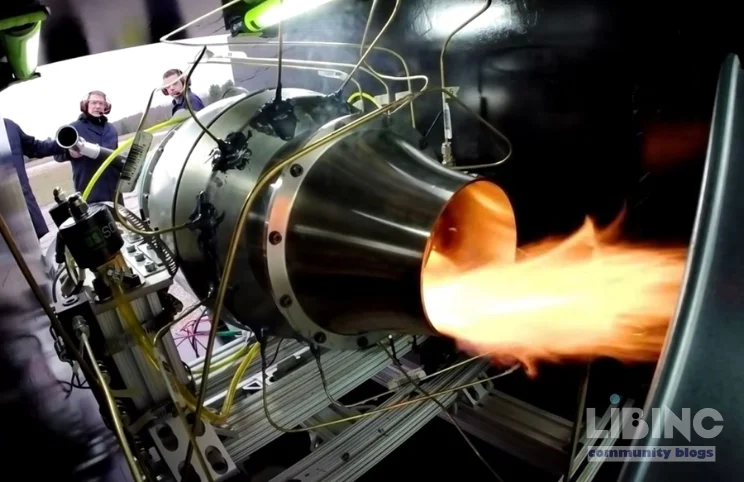
MIT’s JARVIS Challenge asked undergraduates to conceive, fabricate, assemble, and test a 50-100 pound thrust jet engine running on Jet-A, within four weeks. The objective demanded full integration across design, materials, manufacturing, and testing. The teams drew on MIT shops, commercial software, and external test rigs, with Parley providing a unified interface to frontier LLMs and prompting data. The exercise was as much an education experiment as a capability test: it sought to reveal how AI copilots affect a real engineering workflow under time pressure and safety constraints. The outcome underscored that AI-assisted engineering scales speed and breadth, but it does not erase expert judgment or the complexities of physical realization.
Ultimately, an AI-native engineer is not defined by using AI, but by leading it: knowing when to trust it, when to challenge it, and how to translate AI outputs into working hardware. The JARVIS experience also highlighted a core constraint: manufacturing remains the fundamental rate limiter. This is not a failure of AI; it is a reminder that the translation from virtual models to tangible parts drives the pace of innovation in safety-critical hardware. The conclusion is not merely that AI helps; it is that education and hands-on experience determine how effectively AI copilots can enhance engineering outcomes.
Block 1 — Analytics in AI-assisted engineering
During the sprint, teams leaned on AI to summarize textbooks, learn design software, source vendors, and organize trade studies. This analytic uplift allowed students with limited turbomachinery background to acquire core concepts rapidly and to set up initial design roadmaps. AI’s strength here lies in pulling disparate sources into coherent baselines, enabling faster iterations without sacrificing rigor. The pilot also demonstrated a key truth: briefing AI to align with physical constraints matters as much as the data it consumes. In other words, analytics can accelerate momentum, but it cannot replace the discipline of first principles in jet-engine design.
For the participants, Parley offered visibility into how prompts were used, which models were engaged, and the cost per prompt. This transparency reduced blind spots in tool use and introduced a practical discipline: trackability of AI-based decisions. The ability to audit AI decisions is crucial when the target is a safety-critical device where traceability underpins certification. In this sense, the JARVIS instrumented workflow turns AI copilots into measurable contributors rather than opaque accelerants.
Analytically, teams employed AI to generate and compare design alternatives, structure bill-of-materials, and synthesize literature on combustor configurations and turbomachinery basics. Some groups used AI to build initial CAD geometries and run preliminary simulations. The interaction was iterative: AI suggested options, human engineers filtered and refined them, and the cycle repeated. This collaboration illustrates how analytics can create a more informed, faster decision loop without eroding the discipline of engineering judgment.
One team created an agent in Parley to function as a virtual project manager, coordinating tasks, timelines, and resource requests. This experiment showcased AI’s potential to improve coordination in a multi-team sprint. However, the tool’s success depended on the team’s ability to define clear milestones and to monitor progress with qualitative and quantitative checks. In essence, analytics can federate effort, but it requires disciplined governance to deliver reliable hardware outcomes.
Yet the analytics story disclosed concrete limits. Generative AI offered design alternatives and filled knowledge gaps, but several participants reported hallucinations and overconfidence when the AI’s outputs clashed with practical constraints. The absence of tactile feedback and a live sense of scale in early design can mislead even experienced students. When the AI did err, confidence in subsequent prompts deteriorated, and that skepticism rippled through the design process. This dynamic underscores a fundamental principle: analytics must be tethered to physical understanding and empirical validation to remain trustworthy in hardware engineering.
- Summaries of turbomachinery fundamentals
- Learning curves for CAD/CAE tools
- Vendor sourcing pipelines and evaluation rubrics
- Trade-space comparisons across architectures
From a broader perspective, analytics in AI-assisted engineering acts as a force multiplier for those who already grasp first principles. It lowers the barrier to exploring diverse architectures, but it does not automate intuition or hands-on fabrication. The end result is an environment where data-informed judgment, not data alone, drives progress in safety-critical hardware.
Block 2 — Contrast in AI-assisted engineering practice
Contrasts in the JARVIS teams reveal a nuanced truth: experience matters, and skepticism can be a strategic advantage. The two most senior teams relied heavily on AI to advance their designs and manufacturing planning, while the winning team, 811 Crew, entered with stronger turbomachinery fundamentals and a more selective AI approach. The fastest teams benefited from AI’s ability to extend their reach across design space, yet the ultimate victory demanded disciplined judgment and a clear boundary between when to delegate to an AI tool and when to trust human checks.
In practice, the teams that leaned into AI for trade studies and architecture comparisons moved faster through early phases. They used AI to surface design candidates, organize supplier data, and assemble preliminary simulations. However, as the project progressed toward hardware fabrication and testing, the value of AI declined if the team’s engineering intuition could not intervene to correct model shortcomings. This contrast underscores a core insight: AI copilots amplify capability, but they do not substitute for domain expertise and hands-on problem solving in safety-critical hardware.
The finalists encountered a second contrast: vendor relations. AI searches surfaced potential vendors, but many lacked the alignment or responsiveness required by the four-week timeline. The teams with pre-existing personal relationships and a culture of proactive communication navigated procurement hurdles more smoothly. In a domain where supply-chain fragility translates directly into program risk, human networks and relational capital remained decisive operating levers even in an AI-enabled workflow.
At the same time, the winning team—despite being more conservative with AI usage—demonstrated that time saved in design must be translated into executable fabrication, assembly, and test readiness. The ability to convert theoretical models into real hardware hinges on a robust interplay between first-principles knowledge and disciplined project execution. AI copilots can accelerate crossing the design space, but they cannot shortcut the realities of machine shops and test stands.
- AI-led trade studies vs. engineering intuition
- Impact of vendor relationships on schedule risk
- Prototyping pace and test readiness
- Balance between AI usage and fundamental engineering skills
This contrast emphasizes a practical rule for AI-assisted engineering: buy time with AI, but deploy human expertise to validate, adapt, and finalize hardware architecture and fabrication paths. The intelligent use of AI should expand the design window while preserving the integrity of core engineering judgment under safety constraints.
Block 3 — Cause-and-effect in AI-assisted engineering
The JARVIS experience maps a clear cause-and-effect chain: AI copilots accelerate information gathering, design-space exploration, and documentation; however, without strong domain understanding and reliable fabrication channels, speed gains dissipate when verification or manufacturing bottlenecks arise. The cause is not AI failure but misalignment between AI outputs and the realities of hardware production, especially for a safety-critical system like a jet engine combustor. The effect is that the fastest path to a first ignition remains constrained by physical assembly, material behavior, and supply-chain timeliness.
In practical terms, AI-enabled design decisions benefit most when the team can continually verify them against empirical evidence and test data. When early AI-driven suggestions fail to account for wall-plug constraints, material limits, or tolerancing, engineers must intervene, override, or reframe the problem. The JARVIS data imply that the design-build-test cycle can shrink dramatically, but the cycle’s bottleneck migrates from computation to fabrication and testing if teams do not preserve direct access to shop floor realities and validated test rigs.
Moreover, the AI tools’ reliability hinges on the engineers' ability to spot hallucinations and inconsistencies early. A misstep in a CAD parameter, a misinterpreted reference, or an overreliance on optimistic assumptions can derail progress well before ignition. The cause-effect pattern thus favors a disciplined blend: leverage AI for exploration, yet anchor decisions with first-principles critique, experimental checks, and hands-on prototyping.
Another causative factor is the students’ level of experience. The MIT faculty observed that younger students benefited from structured AI exposure, while more experienced students could harness AI more effectively when anchored by strong fundamentals. This dynamic suggests that the value of AI copilots grows with a coder-engineer’s deep understanding of physics, fluid dynamics, and materials science. Without that anchor, AI guidance risks steering projects toward brittle or impractical designs.
- AI accelerates exploration; fabrication becomes the pace-setter
- First-principles checks preserve engineering integrity
- Fabrication and procurement as primary bottlenecks
- Experience amplifies AI effectiveness in hardware design
From a systems perspective, the JARVIS results imply that the real leverage of AI in safety-critical hardware lies at the intersection of data-driven exploration and disciplined execution. When teams couple AI-driven insights with rigorous validation, the design-build-test cycle can contract without sacrificing reliability. The mechanistic link between AI output quality and hardware success rests on the integrity of human-in-the-loop oversight and the strength of experiential knowledge in propulsion and turbomachinery.
Block 4 — Expert reconstruction for the AI-native engineer
The final synthesis from JARVIS is less about the AI itself and more about what it takes to become AI-native in engineering practice. The participants who matured into AI-enabled workflows showed two consistent traits: a solid foundation in first principles and a readiness to direct AI outputs rather than be directed by them. The most successful engineers combined curiosity with discipline, leveraging AI to expand their design space while maintaining ownership over critical decisions and experimental validation.
Experts at MIT emphasize that the education arc is central to this transformation. Coursework, internships, and hands-on extracurriculars like MIT Motorsports and Rocket Team prove indispensable for cultivating the intuition needed to validate AI-generated hypotheses. In the AI era, the most valuable asset is not speed alone but the judgment to deploy AI tools where they add real value and to challenge them where they risk misdirection. Education thus becomes the primary multiplier for AI-assisted engineering productivity.
Practically, the path to an AI-native engineer includes cultivating a toolkit of competencies: robust first-principles reasoning, disciplined model verification, and a pragmatic sense of how to translate AI outputs into hardware reality. It also means embracing a culture of rapid experimentation, with explicit checks for safety, manufacturability, and certification readiness. The JARVIS takeaway is clear: AI copilots multiply performance, but only a well-prepared engineer can steer them toward reliable, auditable outcomes in propulsion hardware.
Looking forward, the implications for aerospace and other safety-critical fields are substantial. If small teams can compress long design-build-test cycles into weeks with well-managed AI copilots, workforce dynamics, R&D timelines, and competitive strategies will shift accordingly. The next generation of engineers will need to combine hands-on expertise with the judgment to harness AI as a strategic partner rather than a substitute for human accountability. The key constraint remains manufacturing reality; AI can bend the curve, but human hands and oversight keep the curve from breaking.
- Foundations in first principles as multipliers of AI
- Structured coursework and internships to build intuition
- Hands-on teams and shop-floor exposure as essential training
- AI copilots as strategic partners in hardware development
In sum, JARVIS demonstrates that AI copilots can have a multiplicative effect on engineering productivity, with judgment and first-principles thinking as the ultimate differentiators. The true value of AI in safety-critical hardware lies not in automating design but in shaping engineers who can lead AI intelligently. That leadership—knowing when to trust, when to challenge, and how to translate outputs into safe, reliable hardware—defines the future of engineering practice.
As the field evolves, the takeaway remains practical and unglamorous: education is the most valuable preparation for an AI-enabled workforce. With the right training, teams can compress complex development cycles while maintaining the integrity and accountability required by safety-critical propulsion systems. The promise is not merely faster design; it is a more capable, responsible engineering discipline that can harness AI without surrendering human accountability.
Closing the practical framework for AI-assisted engineering
AI copilots unlock rapid exploration, but reliable hardware requires a governance layer that ties discovery to verification, manufacturability, and certification constraints. A lean framework can be introduced at project kickoff: define decision boundaries for what AI suggestions are trusted, establish data and model versioning, and embed a fast feedback loop from test rigs to design revisions. For jet-engine like systems, mandate a human-in-the-loop review before CAD changes affect tolerances; couple AI-driven proposals with a rule-based V&V plan; build a living record of experiments, vendor assessments, and material limits. This approach keeps speed while preserving safety and accountability.
| Aspect | Traditional Flow | AI-assisted Flow | Impact | Example |
|---|---|---|---|---|
| Exploration speed | Sequential, conservative | Parallel, broad surface | Faster options | Trade-space surfacing |
| Decision traceability | Manual notes | Logs prompts/models | Audit-ready | Certification-ready records |
| Design space coverage | Limited by prior art | Broad proposals | Richer options | Hybrid optimization |
| Validation complexity | Lab-scale only | Model-verification aided | Requires cross-checks | Plan multi-stage V&V |
| Manufacturing readiness | Late-stage | Integrated checks | Risks reduced | Process capability alignment |
| Supply-chain risk | Reactive sourcing | Proactive vendor data | Lower risk, higher reliability | Data-driven supplier eval |
| Certification alignment | Post-design | Continuous alignment | Fewer surprises | Traceable design history |
| Resource usage | Human-hours | Compute + human checks | Net time savings | Balanced workflow |
In practice, a practical routine includes lightweight V&V sprints, versioned CAD shells, and automated tolerance analyses that run in minutes rather than days. This makes it possible to explore more configurations while keeping the path to ignition safe and certifiable.
- AI governance and V&V
- Data and model versioning
- Manufacturing readiness checks
- Audit trail and traceability
Ultimately, AI copilots are enablers, not substitutes. The plan uses AI to expand the design envelope while skilled engineers ensure that final designs meet safety, performance, and production requirements. This disciplined blend is the path to dependable propulsion hardware in an AI-enabled era.
Frequently asked questions about AI copilots in engineering
What are AI copilots in engineering, and how do they work in practice?
AI copilots in engineering are decision-support tools that assist with information gathering, design option generation, and task coordination. They integrate prompts, historical data, and simulation outputs to surface viable alternatives, compare trade-offs, and assemble preliminary work artifacts. Humans review these propositions, apply domain experience, and translate the results into working hardware. This collaborative loop expands exploration while preserving control over critical decisions. Emphasis is placed on traceability and auditable steps to support certification and regulatory readiness.
Analytically, the value comes from structured prompts, reproducible data lineage, and disciplined vetoes where human expertise overrides AI suggestions when safety or manufacturability are at stake.
How can teams ensure safety and regulatory compliance when using AI copilots for jet-engine design?
Safety and regulatory compliance hinge on a formal V&V framework, versioned data and models, and an auditable design history. Teams define decision boundaries, require human-in-the-loop validation for critical CAD changes, and enforce strict tolerancing and material-limit checks early. Regular flight- and test-stand simulations are cross-validated against baseline physics. Documentation is kept in a version-controlled repository with traceable queries and design rationales. By embedding certification-relevant criteria into every iteration, AI copilots support compliance rather than circumvent it.
Analytically, success is measured by the presence of repeatable validation cycles, clear decision logs, and demonstrable alignment with safety standards before hardware fabrication proceeds.
What metrics indicate success for AI-assisted engineering in practice?
Key metrics include cycle time reduction for design iterations, the rate of successful design-to-fabrication handovers, the frequency of validated vs. rejected AI-driven proposals, and the traceability score of decision histories. Additional indicators are the proportion of design changes verified by test rigs and the reduction in procurement delays due to better supplier data. A robust metric set couples speed with reliability, ensuring that compressed cycles do not compromise safety or manufacturability.
Analytically, these metrics should be monitored continuously and benchmarked against baseline projects without AI copilots to quantify tangible impact.
What are typical bottlenecks when applying AI copilots to complex hardware?
Common bottlenecks include fabricability constraints that AI fails to capture at early stages, vendor responsiveness under tight timelines, and gaps between digital models and physical test rigs. Mitigation involves early inclusion of manufacturing constraints, strengthening supplier relationships, and implementing rapid, small-scale verification tests that validate critical assumptions. The goal is to move decision control toward areas where human judgment adds the most value while letting AI accelerate exploration elsewhere.
Analytically, bottlenecks shift from computation to production realities unless teams maintain a strong loop of empirical validation.
How should data governance and model validation be set up for AI-assisted engineering?
Data governance requires versioned datasets, transparent data provenance, and access controls for sensitive information. Model validation should include unit tests for prompts, cross-checks against physics-based baselines, and audit trails that show how AI outputs influenced decisions. Regular retraining with curated, representative data ensures AI responses stay aligned with current design knowledge. This combination maintains confidence in AI as a partner rather than an opaque source of results.
Analytically, governance and validation establish trust, reproducibility, and certification readiness across all AI-assisted workflows.
What skills should teams develop to become AI-native engineers?
Teams should blend strong foundational physics, materials science, and propulsion knowledge with disciplined model verification, data stewardship, and a bias toward rapid experimentation. Practice should emphasize hands-on fabrication, test planning, and a culture of critical questioning toward AI outputs. The aim is to cultivate leaders who can direct AI tools, validate results with empirical data, and translate insights into safe, reliable hardware decisions.
Analytically, the shift is from tool use to strategic collaboration, where human judgment and domain expertise govern AI-driven exploration.





Add a comment
To comment, you need to register and authorize
Comments