

AI-assisted engineering in practice: the JARVIS Challenge and the limits of AI in safety-critical hardware design
Table of contents
- Lead framing
- Analytics view: AI-assisted engineering as a multiplicative force
- From promise to limits: AI helps and hurts
- Cause-and-effect dynamics in AI-guided hardware design
- Expert reconstruction: implications for education and industry
- What this means going forward
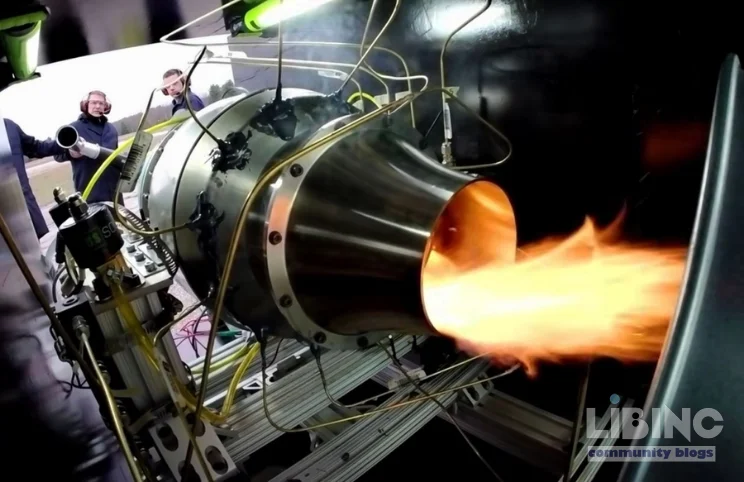
Artificial intelligence has accelerated software engineering, but the real proving ground remains physical hardware. When the task shifts from generating code and documentation to conceiving, designing, and building a complex jet engine, AI tools face fundamental limits. The JARVIS Challenge at MIT invited undergraduates to compress the entire design-build-test cycle for a small gas-turbine engine, using AI as their primary engineering partner. The experiment probed whether AI copilots can meaningfully shorten iteration loops while maintaining the safety and reliability that define aerospace hardware.
The stakes were high: a four-week sprint culminating in real-world fabrication, assembly, and testing, with partners providing access to machine shops, vendors, and AI platforms via Parley. The overarching question was not whether AI can imitate engineering thinking, but whether AI can extend human judgment—knowing when to trust outputs, when to challenge them, and how to translate AI-derived insights into dependable hardware. In this sense, the JARVIS Challenge tested a core tenet of AI-assisted engineering: a multiplicative effect hinges on domain expertise and disciplined integration of AI into the workflow, not on AI autonomy alone.
Analytics view: AI-assisted engineering as a multiplicative force
The analysis of the MIT teams reveals a consistent pattern: AI can dramatically multiply engineering throughput when paired with deep first-principles understanding. A multi-team environment, spanning freshmen to seniors across the School of Engineering, created a natural experiment in AI augmentation versus traditional practice. In practical terms, AI served as a fast accelerant for tasks that do not themselves require engineering judgment: sourcing vendors, organizing CAD data, running design-space explorations, and producing comparative analyses between competing architectures.
The design-build-test cycle is a chain of decisions, each with consequences that cascade through schedules and safety margins. AI copilots accelerated early-stage exploration by generating multiple architectures and trade studies, trimming the search space before engineers committed resources to fabrication. This analytical leverage, however, depends on interpretable outputs from AI and the engineers’ ability to validate those outputs against physics-based intuition and empirical testing. In other words, AI is a powerful accelerator, but it does not substitute for the fundamental discipline that turbomachinery demands: thermodynamics, fluid mechanics, materials behavior, and the ability to reason through non-idealities in a real hardware context.
A notable capability was AI-enabled project management: one team built an agent in Parley to shepherd information flow, deadlines, and task assignments. Yet the success of such agents hinged on the team’s ability to align AI prompts with evolving design requirements and the physical realities of build constraints. The juxtaposition of high enthusiasm and careful restraint became a defining feature: AI sparked momentum, but it also exposed gaps in tacit knowledge and the need for tight human oversight to avoid drifting into overreliance or misinterpretation of AI outputs.
The empirical takeaway is not merely that AI can speed things up; it is that AI accelerates the right things: structured knowledge transfer, rapid scenario analysis, and disciplined design iteration that preserves safety and reliability. For safety-critical hardware, the speed advantage must be matched by rigorous validation, clear traceability from AI suggestions to design decisions, and explicit checks that keep human judgment at the center of the engineering process.
This analytic view also highlights a recurring bottleneck: manufacturing and vendor integration. Even with unlimited AI access, teams confronted real-world constraints in sourcing parts and establishing relationships under tight timelines. The JARVIS data show that AI can help surface unfamiliar vendors and summarize supplier options, but it cannot replace established personnel networks or guarantee on-time fulfillment. In effect, AI’s momentum is bounded by the hard realities of hardware supply chains and the need for hands-on workmanship in fabrication and testing.
From promise to limits: AI helps and hurts
The contrast between early optimism and late-stage challenges is instructive. AI excels at gathering dispersed knowledge, reconstructing design rationales, and proposing architectural alternatives. When the teams faced week two—precise CAD work, intake of components, and prototype fabrication—AI’s reliability gaps surfaced: hallucinations, overly optimistic conclusions, and a lack of grounded physical intuition increasingly undermined confidence. Engineers who trusted AI too early found their workflows slowed as they needed to repeatedly verify outputs against fundamental physics. In this sense, AI’s utility is not universal; it is conditional on the engineer’s ability to challenge, cross-check, and apply first-principles thinking.
The participants’ own reflections emphasize a critical dynamic: AI is most valuable when engineers retain control of the critical design decisions. Elizabeth Tupaj of team 811 Crew captured this tension succinctly: AI is helpful for information retrieval and organization, but it cannot replace understanding of real-world phenomena. When the engineer loses the thread of what is happening in the physics of the combustor, the AI’s suggestions lose credibility and momentum wanes. The human-in-the-loop remains the decisive factor for safety and reliability in a physically realized engine.
The vendor bottleneck illustrates a second contrast: AI can surface new supplier options, but the social and logistical aspects of procurement—trust, reliability, and timeliness—still require established relationships. In a field where a single month’s delay can derail a test program, human networks, studio-level craftsmanship, and pragmatic negotiation matter as much as algorithmic optimization. Here, AI’s value is in augmenting vendor discovery and decision support, not in replacing supplier engagement or the nuance of real-world timelines.
Finally, the safety-critical nature of the task governs the boundaries of AI usefulness. The successful ignition and stable operation achieved by the top teams demonstrate a hybrid model: strong fundamentals, disciplined testing, and AI-assisted exploration. The best performers did not abdicate responsibility to AI; they used it as a multiplier while maintaining tight control over the core physics and engineering decisions. This points to a pragmatic truth: AI copilots amplify expertise when engineers curate the inputs, govern the outputs, and retain accountability for the final hardware.
Cause-and-effect dynamics in AI-guided hardware design
To map the causal structure, we need to distinguish factors that enable AI to contribute meaningfully from those that undermine it. The JARVIS experience suggests a chain of cause-and-effect relationships:
- First-principles literacy drives credible AI outputs. When students understand gas turbine thermodynamics and turbomachinery concepts, AI's numerical and heuristic suggestions become starting points rather than final answers.
- Prompt discipline and prompt-chaining determine the quality of AI guidance. Clear prompts oriented to physics questions and constraints yield more actionable design options than generic information queries.
- Iterative testing cadence enables rapid verification. The ability to test each candidate design on a stand, observe performance, and feed results back into the AI loop closes the feedback loop and curbs hallucinations.
- Vendor and manufacturing reality sets the ceiling for AI impact. Even optimal AI-generated designs fail if supply chains cannot deliver the necessary parts on time or if fabrication capabilities cannot realize the intended geometry with required tolerances.
- Education and culture shape outcomes. Teams that blend curiosity with caution—leveraging AI to explore, but sticking to fundamental engineering practice—move fastest without compromising safety or reliability.
- Human judgment as a multiplier is the essential element. AI amplifies judgment, but it cannot replace the decisive insight that engineers bring through experience, intuition, and responsible risk-management.
The net effect is not a binary win for AI or a rejection of AI; the causal pathway shows that AI’s value emerges from a disciplined integration where domain knowledge anchors AI outputs, and the engineering team maintains governance over critical decisions. In a safety-critical hardware context, the cause-and-effect logic favors a hybrid model: AI accelerates routine work and exploration, while human judgment governs design integrity, safety margins, and manufacturability.
The JARVIS cohort also highlights a broader implication: AI’s role in education shifts from a simple tool to a catalyst for problem-solving approaches. Students who internalize the limits of AI while wielding first principles develop a form of “AI literacy” that enables them to steer the technology rather than be steered by it. This is not merely a technical skill; it is a disciplinary mindset that will shape the future workforce in aerospace and beyond.
Expert reconstruction: implications for education and industry
Bringing the JARVIS experience into the long arc of engineering education yields a composite conclusion: AI copilots can turbocharge learning and performance when embedded in curricula that emphasize fundamentals, hands-on fabrication, and project-based teamwork. The students who thrived demonstrated that AI is most valuable when used to scaffold expertise rather than substitute it. The winners combined deep mental models—thermodynamics, turbomachinery, materials science—with disciplined application of AI tools to manage data, run comparative analyses, and orchestrate the workflow.
A practical implication for schools and industry is explicit: teach AI literacy as an extension of core engineering competencies. Curricula should blend formal training in design optimization, uncertainty quantification, and model-based reasoning with experiential access to manufacturing environments, real vendors, and test facilities. Internships and co-op programs should stress prompt engineering, AI-assisted project management, and the ethics of relying on machine outputs in high-stakes hardware. The MIT experience suggests that the most effective AI-native engineers are those who can lead AI, not those who merely use it.
For industry, the JARVIS findings imply a reallocation of human capital toward roles that synthesize AI results with physical validation. Task forces should be created to assess AI outputs for manufacturability, safety implications, and supply-chain viability. A successful AI-driven design program will implement robust decision logs, traceability from AI-generated architectures to hardware tests, and continuous evaluation of AI models against empirical data from test stands. In short, the future of aerospace engineering lies in teams that fuse AI copilots with disciplined hands-on engineering leadership.
Importantly, the JARVIS experiment did not declare AI a universal enabler. Instead, it offered a blueprint for integrating AI into high-stakes hardware work: establish guardrails, cultivate deep domain mastery, and maintain accountability for every decision that could affect safety. The next generation of engineers will need to navigate not only code and CAD but also the social and organizational dynamics that govern vendor relationships, manufacturing throughput, and regulatory expectations. In that sense, AI-assisted engineering becomes a leadership discipline as much as a technical one.
What this means going forward
AI-assisted engineering can dramatically accelerate the path from concept to working hardware, provided that engineers retain central control over critical judgments and safety considerations. The JARVIS Challenge demonstrates a future where AI copilots multiply expertise, shorten design cycles, and enable rapid experimentation—but only when education, testing discipline, and vendor engagement stay firmly in human hands. The most promising engineers are those who can direct AI outputs, validate them against first principles, and translate insights into reliable, manufacturable hardware.
For educators, this means embedding AI-enabled workflows into courses through projects that couple machine-building with AI-enabled analysis. For industry, the takeaway is to invest in governance structures that ensure AI augments rather than replaces human oversight, and to strengthen the social fabric of manufacturing and procurement so that AI-informed design actually translates into real-world results. The future of safe, high-performance hardware hinges on cultivating engineers who can lead AI, not just use it.
In this AI era, education remains the strongest multiplier. Mastery of first principles combined with strategic use of AI copilots will define the next generation of engineers who push the boundaries of what is possible while preserving the accountability that safety-critical systems demand.
Governance and validated AI-assisted hardware design
Even with AI copilots, turning ideas into tested hardware requires disciplined processes. This section adds a practical governance framework to translate AI insights into safe, reliable turbomachinery designs, with concrete steps to apply in courses and teams.
Table: AI-assisted design workflow options
Description: The following table highlights where AI adds value vs. where human input is essential across design stages.
| Stage | AI role | Human input | Expected outcome |
|---|---|---|---|
| Ideation | Generates architecture options | Physics intuition, constraints | Trade-space of viable options |
| Detailed design | Optimizes geometry and tolerances | First-principles checks | Dimensional-ready designs |
| Validation planning | Suggests tests and metrics | Validation plan | Test-ready plan |
| Procurement & manufacturability | Synthesizes supplier data | Vendor relationships | Supply-chain-aware options |
Analysis: The table clarifies where AI adds value and where human oversight remains essential.
Key metric highlight
Explanation: With defined milestones and decision logs, outputs from AI become auditable design inputs, not final answers.
Governance steps
- Define scope, constraints, and prompts
- Attach design logs to each AI suggestion
- Run physics-based checks early
- Involve procurement early for manufacturability
- Human sign-off before fabrication
Analysis: A staged workflow aligns AI capabilities with first-principles thinking and hands-on reality.
The expanded view emphasizes that AI's value arises when it complements human judgment, situating AI outputs within traceable design rationales and a transparent validation pathway. In safety-critical domains such as turbomachinery, this governance is not optional but foundational.
How do AI copilots speed hardware design without compromising safety?
AI copilots accelerate exploration, data handling, and option generation while engineers keep critical physics decisions in control. They shorten iteration cycles and surface validated design options when paired with first-principles analysis and rigorous testing. This combination preserves safety margins because gates, validation plans, and traceability anchor AI outputs to real physics and experiments.
Analytically, the gain comes from structured data workflows and disciplined decision logs that prevent drifting into unverified conclusions.
What does a governance framework look like in AI-assisted design?
A practical governance framework includes defined scope, decision logs, traceability from AI suggestions to hardware decisions, validation gates, and risk controls. Prompts are tied to physics constraints, and every AI-derived option carries a provable trail to be reviewed by humans at key milestones.
In practice, this reduces ambiguity and creates auditable design rationales that scale across teams and projects.
What are common failure modes and how can you mitigate them?
Common failures include AI hallucinations, overreliance, and misalignment with real-world constraints like tolerances and procurement timelines. Mitigation relies on a robust human-in-the-loop, early physics-based verification, and detailed test plans that compare AI outputs with empirical data.
Adopting multiple gates and cross-functional reviews keeps outputs grounded in first principles.
How can educators teach AI literacy in aerospace engineering?
Educators blend fundamentals with AI-enabled workflows, offering hands-on fabrication access, AI prompt engineering, and projects that require students to justify AI-derived choices with theory and tests. This builds ‘AI literacy’ that complements technical mastery, rather than replacing it.
Curricula should include design logs, traceability exercises, and ethics of relying on machine outputs in high-stakes hardware.
How should a company measure the impact of AI copilots on throughput and safety?
Measurements include cycle time, number of viable concept architectures, validation pass rate, defects per unit, and preserved safety margins. A balanced scorecard integrating qualitative design reviews provides a fuller view of effectiveness and risk reduction.
Analyses should track whether AI-led exploration actually shortens time-to-validation without compromising reliability.
What is the role of vendor management in AI-assisted design?
AI surfaces new suppliers and options; however, established relationships and reliable fulfillment remain essential. Governance should track supplier capability, lead times, and compliance, ensuring AI-suggested vendors meet engineering and regulatory requirements.
Practical emphasis lies in integrating procurement constraints into AI prompts and validation criteria to avoid downstream delays.






Add a comment
To comment, you need to register and authorize
Comments