

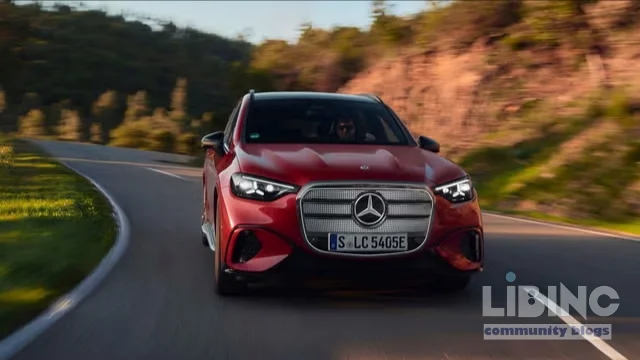
GLC400 4Matic Electric: Mercedes-Benz’s Bold Compact EV Redefining Design and Tech
Table of contents
- Lead
- Analytics: Design, powertrain, and architecture
- Contrast with tradition and rivals
- Cause-and-effect: how the tech shapes driving
- Expert reconstruction: what this means for Mercedes’ strategy
- Conclusion
Mercedes-Benz stamps its EV identity on a familiar SUV with a grille that dominates the front end. The GLC400 4Matic Electric wears a blockbuster nose that nods to the W111 heritage while housing an 800-volt powertrain and a 94 kWh usable battery. The bet is clear: bold styling must sit alongside long-range charging and refined ride in a compact luxury SUV. The risk? Aerodynamics and efficiency risk getting compromised by the dramatic fascia. The stakes are high: customers demand premium interiors, fast charging, and real-world range. This piece analyzes the GLC400 Electric from four angles—analytics, contrast with rivals, cause-and-effect of its tech, and expert reconstruction of Mercedes' EV strategy.
Beyond the showy grille, the GLC400 Electric leverages an all-new platform that lengthens the body and stretches the wheelbase, with a focus on interior space and ride comfort. The 94 kWh pack powers two motors for 483 hp and 590 lb-ft, while the 800-volt architecture supports up to 330 kW charging and fast fill from 10 to 80 percent in about 22 minutes. MB.OS and the Hyperscreen anchor the cockpit experience, linking driver assistance, infotainment, and passenger media in a seamless, semi-autonomous interface. These choices aren’t cosmetic; they shape what the vehicle can do in daily use and on cross-continental trips.
Analytics: Design, powertrain, and architecture
The GLC400 Electric rides on a purpose-built platform that increases length by around 5 inches and stretches the wheelbase by 3.9 inches to 117.0 inches. The result is more cabin headroom and legroom for both rows, while the chassis accommodates a heavier battery without robbing the ride of composure. The GLC grew in length and wheelbase not as a cosmetic expansion, but to preserve practicality inside the confines of a compact-SUV footprint.
Under the floor sits a 94 kWh usable battery, composed of four flat lithium-ion NMC modules. The battery is arranged with a dedicated electronics compartment at the rear, isolated from the main pack to simplify service and thermal management. The architecture is deliberately modular: the electronics and monitoring elements can be serviced or swapped with minimal teardown, which translates into better uptime and potentially lower ownership costs over the long run. The 800-volt system reduces the mass of cabling and enables higher peak charging, key to shorter stops on long trips and more convenient daily charging routines.
Mercedes does not publish EPA figures yet, but the GLC400 Electric is touted for about 715 kilometers of WLTP range, which translates into a roughly 380-mile EPA expectation in typical mixed-use driving. While real-world range will hinge on climate control, windowing, battery state of health, and tire choice, the WLTP figure signals a competitive footprint in the compact-EV class. The pack's energy density, thermal management, and charge architecture are central to that promise, not merely a marketing number.
The twin-motor setup is the heart of the GLC400 Electric. The rear motor carries the majority of the traction, delivering 402 hp and 369 lb-ft, while the front motor contributes up to 215 hp and 221 lb-ft. A two-speed automatic on the rear unit expands low-end responsiveness and sustains efficiency at highway cruising. In mixed driving, that marriage provides brisk off-the-line torque without overwhelming the front tires in wet or slippery conditions. The net result is a drivetrain that blends immediacy with a measured, long-haul-friendly cadence—a nuanced takeaway for an SUV that must balance family practicality with performance expectations.
Bringing the ride and handling into balance, the GLC400 Electric benefits from the optional Agility & Comfort package. This package adds adaptive air-spring suspension, intelligent dampers, and rear-axle steering. The car-to-X communication links with the cloud to anticipate obstacles and adapt damping before dynamic load transfers become uncomfortable. The approach is subtle: the system does not shout; it smooths. The result is a ride that remains compliant on rough urban streets and serene on long highways, without the typical stiffness some sportier EVs demand to meet performance claims.
Contrast with tradition and rivals
The GLC400 Electric’s grille is more than a design flourish; it’s a bold wink to heritage. The oversized mouth references 1959’s W111 without inviting a donut-rotation of the old model’s rationale into a modern, aerodynamically efficient package. This is not a mere style exercise; it sets the tone for a brand that expects to blend dramatic styling with engineering rigor. The result is a disagreeably memorable face paired with a cabin that feels meticulously refined rather than gimmicky.
The interior is where the GLC400 Electric judges the balance most critically. The Hyperscreen, a 39.1-inch panel that spans the dashboard, anchors a cockpit designed to feel unified rather than mosaic-like. The instrument cluster floats at one end, the infotainment sits at the center, and the passenger display occupies the far end. The experience is cohesive, with a consistent theme of warm ambient lighting and tactile materials—open-pore wood, carbon fiber, and metal accents—that convey Mercedes' luxury intent while resisting the sterile look some EV cabins adopt.
In practice, the Hyperscreen’s breadth is a double-edged sword. It conveys a premium, tech-forward aura, but it also compresses sightlines and can be distracting in busy urban conditions. MB.OS, the brand’s new AI-driven operating system, makes voice interactions feel natural. The system can differentiate drivers from passengers to prevent non-driving requests from interrupting critical tasks, and it can pause videos or dim screens if the driver looks away from the road. The technology is compelling, but it’s not a panacea; it requires a learning curve and a trust relationship with an interface that becomes part of the driving task rather than a separate gadget.
The GLC400 Electric’s daily usability improves with practical details: a standard glass panoramic roof helps with perceived space; the vegan interior option demonstrates Mercedes' willingness to pursue sustainability on materials without sacrificing luxury. The 162-star, three-pointed-embers Sky Control option for the roof’s ambiance is a nicety that can reinforce a buyer’s emotional connection to the car, though it adds cost and complexity. For many buyers, these elements contribute to a premium feel that sets the GLC400 Electric apart from more pragmatic compact-EV options.
The chassis, too, is telling. Agility & Comfort’s dampers, air springs, and rear-axle steering calm highway sway while preserving confident cornering in less predictable conditions. The front motor’s late engagement during acceleration preserves a composed initial surge, complementing the rear unit’s torque vectoring for a smooth transition between modes. The result is a car that feels refined and capable rather than alarmingly quick in demon-stration mode; it’s the kind of acceleration that earns trust in everyday driving, not just data-sheet claims.
From a charging standpoint, the GLC400 Electric supports both NACS and CCS with an adapter, reflecting Mercedes’ willingness to adapt to regional charging ecosystems. A peak charging rate of up to 330 kW means a meaningful reduction in downtime for cross-country trips, especially with a 94 kWh usable pack. Real-world charging, however, depends on the station’s capability and battery state—factors that can erode ideal times if pushed to extremes on longer trips. Still, the capability is meaningful in the context of a luxury compact SUV, where owners value convenience as much as speed.
In the space of the 2027 model year, the GLC400 Electric positions itself as a compelling option for buyers who want a premium, tech-forward compact SUV with strong daily usability, a distinctive design language, and solid charging performance. The question for Mercedes is whether the bold grille and advanced software suite will translate into tangible ownership advantages over established rivals in the segment that also prizes efficiency, ride, and interior control quality. The jury is out, but the signs point toward a positive alignment between design bravado and practical capability.
Cause-and-effect: how the tech shapes driving
- Cause: Four-module 94 kWh NMC battery under the floor; Effect: Lower center of gravity and improved packaging enable a confident handling balance and more interior space without compromising trunk practicality.
- Cause: 800-volt architecture with high peak charging; Effect: Faster charging times and lighter cabling, enabling shorter charging stops on longer trips and better energy efficiency across the system.
- Cause: Two-motor setup with a 2-speed rear gearbox; Effect: A broad torque curve, improved off-the-line response, and efficiency optimization at highway speeds.
- Cause: MB.OS with voice and driver/passenger differentiation; Effect: A more intuitive human-machine interface that reduces distraction and tailors vehicle responses to the active user.
The front motor’s contribution entering the mix is highly context dependent. In normal driving, the rear motor leads, delivering most of the torque at launch and maintaining momentum through mid-range accelerations. The front unit engages with a brief, almost unnoticeable delay, though its contribution becomes more pronounced under Sport mode or when aggressive throttle input is required. The two-speed rear transmission helps keep the powertrain efficient at cruising speeds while still providing a strong pull when you press the accelerator hard. The interplay between the motors is a key nuance in the GLC400 Electric’s personality: not a conventional single-motor EV, but a hybridized drive strategy designed to maximize real-world performance and efficiency across a range of driving situations.
Battery management and cooling are also decisive in shaping the car’s behavior. The battery’s modular arrangement simplifies thermal control and service access, while the 330 kW max charge rate makes long trips more palatable. The engine-like rhythm of the two-speed gearbox, paired with a motor that can spool up quickly to synchronize with the road, creates a driving experience that feels both responsive and controlled rather than dramatic and unsettled. These cause-and-effect relationships are fundamental to understanding why the GLC400 Electric can feel refined in daily driving while still offering satisfying performance when the road turns a little spirited.
Regeneration settings further alter the driving feel and efficiency. The car provides three fixed levels of regeneration plus an Auto setting. The Auto mode is the outlier, delivering variable recuperation that can surprise drivers who expect a predictable one-pedal experience. The D- setting provides maximum recuperation for a near one-pedal drive, while D offers a more comfortable, linear deceleration. Practically, most drivers will settle into one fixed level for regular use and switch to a different mode for spirited driving or on downhill stretches where regenerative braking can replace some mechanical braking. This design choice has tangible implications for both energy management and driving ergonomics, especially in urban environments where frequent stops demand consistent deceleration behavior.
Expert reconstruction: what this means for Mercedes’ strategy
From an optics-and-technology standpoint, the GLC400 Electric signals Mercedes-Benz’s intent to blend heritage with cutting-edge software. The bold grille and chrome-laden front end anchor a design language that aims to be instantly recognizable as a Mercedes, even as the vehicle adheres to modern EV cues with an avant-garde cabin. This is a deliberate brand statement: architecture, interior tech, and the driving experience are designed to work in concert to deliver a premium experience that isn’t easily commoditized by value-focused competitors.
Performance and range targets place the GLC400 Electric squarely in the premium mid-size EV market, a space Mercedes must effectively defend against rivals from Audi, BMW, Volvo, and others. The 4Matic system, with its balanced torque distribution and advanced suspension, should appeal to buyers who value comfort and quiet progress over outright corner-carving ability. The availability of a vegan interior option shows Mercedes is pursuing sustainability as a design criterion without compromising interior ambiance. The Hyperscreen, MB.OS, and advanced driver-assistance features create a software-forward impression, aligning with the industry-wide shift toward connected, intelligent cabins that augment rather than obscure driving responsibility.
Pricing and timing are critical. With a target around $63,000 for the base GLC400 Electric and a second, rear-drive variant on the horizon, Mercedes aims to capture a substantial share of the luxury compact-EV market while preserving back-end profit potential through options such as the vegan interior, the 39.1-inch Hyperscreen, and the Agility & Comfort package. In practice, this means buyers must weigh the premium for interior tech and brand cachet against the realities of range, charging speed, and ride comfort in their daily lives. The strategic bet is that the GLC’s expanded dimensions, interior space, and feature set offset the premium price with a superior ownership experience across a broad spectrum of usage patterns.
Looking ahead, the GLC400 Electric could catalyze a broader simplification of Mercedes’ EV lineup. The company’s move to a dedicated platform for the GLC’s first electric iteration suggests a path toward shared modular architectures that can scale across different models and segments. The challenge will be to maintain distinctiveness as the brand’s EV family grows, ensuring that each model remains unique in a way that justifies its price and preserves brand identity without becoming an echo of the others. The Hyperscreen and MB.OS will need to mature in tandem with evolving software ecosystems to sustain a sense of novelty over time, a critical factor for a vehicle positioned as both a daily driver and a long-range cruiser.
For buyers, the practical implication is clear: the GLC400 Electric delivers a compelling blend of design drama, interior luxury, and credible performance wrapped in Mercedes’ engineering ethos. It isn’t a radical departure from the GLC lineage, but it does push the envelope in tech integration, charging speed, and cabin experience. If the package translates into reliable real-world range, consistent charging, and a ride that remains comfortable across daily use and longer trips, the GLC400 Electric stands to become a strong anchor in Mercedes-Benz’s growing electric portfolio.
In the end, Mercedes has crafted a vehicle that asks the question: can you have style, space, and substance in a compact EV without compromising the brand’s traditional strengths? The GLC400 4Matic Electric answers with a careful yes, backed by a coherent engineering approach and a thoughtful, technology-enabled cabin. The result is a vehicle that could redefine expectations in the segment if the real-world numbers keep pace with the promises outlined in the company’s specifications and the on-paper performance.
Conclusion
The GLC400 4Matic Electric makes a clear statement: Mercedes-Benz intends to lead with a blend of heritage-influenced design and high-tech practicality in the EV era. Its bold grille, widespread interior tech, and premium comfort enable a distinctive identity without sacrificing efficiency or usability. The car’s 800-volt architecture, 94 kWh battery, and dual-motor setup deliver credible performance and fast charging, while MB.OS and the Hyperscreen provide a living, learning cockpit that adapts to driver preferences. The key question remains whether real-world range and ownership experience will match the promise. If they do, the GLC400 Electric could become a defining model for the brand in the next wave of electric luxury SUVs.
In short, the GLC400 4Matic Electric is not a nominal electrification of a familiar chassis; it’s a deliberate evolution designed to preserve Mercedes-Benz’s premium edge while embracing the practicalities of modern electric mobility. The result is a vehicle that feels cohesive, refined, and purpose-built for the way many buyers actually live and travel—on a daily basis, yet capable of longer adventures with minimal compromise.
Expanded ownership implications
Real-world ownership hinges on how the GLC400 Electric translates its engineering into daily usability. The combination of an 800-volt system, a 94 kWh usable pack, and a two-motor layout isn’t just about peak figures—it’s about predictable, comfortable operation across seasons and trips. Day-to-day tasks like commuting, school runs, and weekend getaways benefit from the car’s refined ride, quiet cabin, and intelligent regen behavior, while long trips gain from rapid charging and adaptive software features that smooth planning and energy use. The following elements insert practical anchors (specifications, quick visuals, and a staged charging journey) to help translate lab numbers into real-life confidence.
Key specifications at a glance
| Metric | Specification | Notes |
|---|---|---|
| Battery (usable) | 94 kWh | Modular stack under floor |
| WLTP range | 715 km | Real-world ~EPA 380 miles |
| Peak charging | 330 kW | DC fast charging capable |
| Motors | Rear 402 hp / 369 lb-ft; Front up to 215 hp / 221 lb-ft | Two-speed rear gearbox aids efficiency |
These numbers translate into daily practicality: quick top-ups on road trips, ample interior space for family and gear, and a ride that remains composed even when the battery is heavy. The 800-volt foundation reduces copper mass and enables shorter charging breaks, while MB.OS and Hyperscreen integrate navigation, charging stops, and vehicle data into a single, coherent experience that minimizes cognitive load during long drives.
Key ownership metrics
Range (WLTP): 715 km
Charge rate: up to 330 kW
Battery: 94 kWh usable
Charging strategy matters: a cross-country trek benefits from capable DC charging and preconditioning, while city commutes reward efficient regen and route planning. The car’s software can preset climate and charging profiles to optimize range, comfort, and cost in real time.
- Precondition the battery to a suitable temperature during travel to maximize charge rate.
- Pull into a DC fast charger with 330 kW capability; target a 10–80% lift in ~22 minutes when possible.
- During long stints, use Auto regeneration to balance braking feel and energy recovery on downhill segments.
In sum, the GLC400 Electric blends distinctive styling with a coherent tech stack that earns trust through consistent performance and thoughtful engineering, not just impressive numbers.
- Real-world range varies with climate and use of climate control.
- Charging stops depend on local infrastructure; plan with MB.OS.
- Software updates can refine efficiency and user experience.
Conclusion
The GLC400 4Matic Electric makes a clear statement: Mercedes-Benz intends to lead with a blend of heritage-influenced design and high-tech practicality in the EV era. Its bold grille, widespread interior tech, and premium comfort enable a distinctive identity without sacrificing efficiency or usability. The car’s 800-volt architecture, 94 kWh battery, and dual-motor setup deliver credible performance and fast charging, while MB.OS and the Hyperscreen provide a living, learning cockpit that adapts to driver preferences. The key question remains whether real-world range and ownership experience will match the promise. If they do, the GLC400 Electric could become a defining model for the brand in the next wave of electric luxury SUVs.
How far can the GLC400 Electric travel on a full charge in real-world conditions?
The GLC400 Electric targets about 715 km of WLTP range, with an approximate 380 miles EPA expectation in mixed use. In cold weather, highway speeds, or with climate control active, expect a meaningful reduction. Practically, most owners report ranges that align with a long daily commute and occasional longer trips when charging infrastructure and preconditioning are favorable. This balance between long-range promise and real-world variability is typical for premium EVs, and Mercedes provides tools to minimize the variance through route planning and adaptive energy management.
From a stewardship perspective, the car’s thermal management and the modular battery layout help preserve capacity, while the 330 kW peak rate shortens charging downtime on long adventures. For buyers, the takeaway is that planning around charging stops and climate control remains important to maximizing daily usability.
What charging speeds and stops should I expect on long trips?
The GLC400 Electric can accept up to 330 kW at compatible DC fast chargers, enabling a 10–80% charge in roughly 22 minutes under ideal station conditions. The real-world time depends on charger availability, battery temperature, and station load. In practice, drivers often plan stops around 15–25 minutes at networked DC hubs and use preconditioning to ensure the battery stays within the optimal temperature window for rapid charging. This pattern makes cross-country travel more feasible without frequent long detours for charging.
Mercedes’ navigation and MB.OS planning tools assist in selecting stops with reliable high-speed chargers and real-time availability updates, reducing range anxiety and downtime during long trips.
How does MB.OS enhance daily usability and driver safety?
MB.OS offers a semi-autonomous feel with context-aware voice control and driver/passenger differentiation to minimize interruptions. In practice, it helps keep focus on the road by intelligently prioritizing critical tasks and screening non-driving requests. It also learns driver preferences over time, improving climate, seat comfort, and ambient lighting choices. While MB.OS is powerful, it requires a learning curve and some initial setup to tailor the interface for individual routines, after which daily use becomes notably smoother and safer.
From a reliability standpoint, Mercedes’ software strategy hinges on continual updates that refine motor control, energy management, and infotainment responsiveness, reinforcing long-term value for tech-forward buyers.
How does the two-motor setup influence performance in everyday driving?
The rear motor provides the primary torque for quickest response, while the front unit fills in under heavy throttle or when traction is challenged. The two-speed rear gearbox enhances efficiency at highway speeds and improves low-end response, delivering a balanced feel that is confident without being abrupt. In normal driving, you’ll experience smooth power delivery and refined progression rather than sudden bursts, which bodes well for family use and daily commuting.
In Sport mode or on steeper grades, the front motor engages more, giving the system a coordinated, predictable amplification that remains controllable and reassuring with the car’s stability and torque-vectoring systems.
What interior and material options reinforce Mercedes’ luxury ethos?
A vegan interior option demonstrates Mercedes’ commitment to sustainability without compromising luxury touch and feel. The Hyperscreen and Sky Control roof ambience add to the premium cabin experience, though they introduce higher price points and a learning curve for new users. In practice, the interior feel remains a core differentiator in this segment, where tactile materials, ambient lighting, and ergonomic layouts influence perceived value as much as software capability does.
For owners who value unique atmosphere and responsible materials, these choices translate into emotional connection and long-term satisfaction, especially when paired with comfortable ride quality and a quiet cabin.





Add a comment
To comment, you need to register and authorize
Comments