

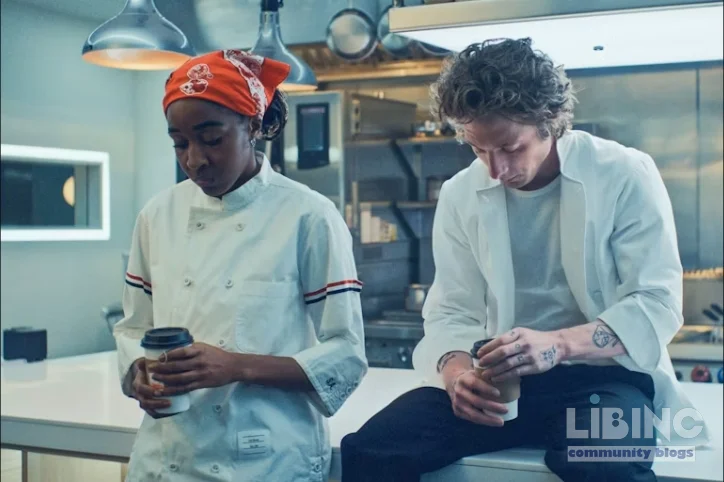
Gendered Emotions in Professional Kitchens: How The Bear Reframes Leadership and Equality
Gendered emotions in professional kitchens is not a peripheral issue; it is a lens on who gets to lead high-stakes teams under pressure. The Bear uses a kitchen saga to test the idea that leadership is inseparable from emotional presentation. The stakes extend beyond drama: real kitchens still struggle with underrepresentation of women at the apex and with the perception that emotion is a male or female fault line. This analysis uses season three as a case study to examine whether the show upends or reinforces these myths, and what that means for leadership, equality, and the future of gastronomy.
By integrating on-screen behaviour with verifiable industry data, we ask: is the problem the expression of emotion itself or how emotion is channeled toward performance, care, and decision-making? The argument is not that emotions disappear in kitchens, but that leadership models should harness emotions to improve outcomes regardless of gender. The Bear offers a rare testbed: if the series nudges viewers toward a more nuanced view of emotional leadership, it might influence real-world practices in culinary workplaces.
Analytical frame: gendered emotions and leadership in professional kitchens
The data landscape anchors this inquiry. In 2022, an analysis of 2,286 Michelin-star restaurants across 16 countries found that roughly 6% are led by women. This statistic signals persistent structural barriers to top-tier leadership in gastronomy, where technical excellence often travels with social networks and patronage that favor male leadership. The finding is not merely numerical; it points to a latent theory about how opportunity is allocated in elite kitchens. The question becomes whether the emotional cues expected of leaders—how stress is displayed, how criticism is received, how cohesion is built—fall along gender lines or align with a universal set of leadership competencies that transcend gender.
Second, the industry milestones matter: in March 2024, Adejoké Bakare became the first Black woman in the UK to win a Michelin star, the second in the world. These milestones illustrate a constrained yet real expansion of leadership diversity at the highest levels, even as overall representation remains thin. The Bear stages a parallel negotiation: Carmy Berzatto's headlong, ego-driven leadership contrasts with Sydney Adamu's steadiness, Sugar's practical resilience, and Andrea Terry's quiet, uncompromising standard-setting at Ever. The culinary world in fiction and fact shares a tension between authority and accountability, with gendered stereotypes functioning as a historical inertia that the show attempts to fracture through narrative treatment of emotional regulation and collaborative practice. In this frame, leadership is less about gender and more about alignment between emotion, process, and purpose in high-pressure environments.
Analytically, the show dissects the stereotype that men absorb pressure while women manage emotion. Carmy's spirals—panic, self-doubt, ego—highlight how emotion can derail decision-making when unchannelled. Sydney's calm, methodical responses demonstrate that emotional regulation can translate into performance reliability and safety. The contrast is not a celebration of feminine steadiness over masculine intensity but an argument for leadership as a skill set that transcends gender, including clear communication, structured decision processes, and psychological safety for teams. The Bear thus becomes a laboratory for testing whether the long-standing assertion about gendered emotions in professional kitchens holds any predictive power for real-world leadership outcomes.
Contrast: The Bear as mirror of kitchen gender norms
On-screen leadership vs real-world leadership
The Bear presents Carmy as a charismatic, high-energy leader who processes stress through rapid decisions and a dense inner monologue. This persona aligns with a familiar archetype in many kitchens: the intense, demanding chef whose authority rests on visible momentum and quick, decisive action. Yet the show also subverts expectations by pairing him with Sydney, a rising star who translates complexity into operable steps, and Sugar, who manages the emotional and logistical scaffolding that keeps the operation functional. This dynamic maps onto real-world kitchens where leadership often sits at the intersection of technical mastery and interpersonal coordination. The lesson is not that one style is superior; it is that effective leadership requires a repertoire that blends energy with empathy, clarity, and team alignment.
The character of Andrea Terry, though fictional, becomes the show’s most decisive counterpoint. Her leadership is not flashy or loud; it rests on a steady presence that validates staff, maintains quality, and negotiates conflicts without theatrics. This portrayal challenges the stereotype that authoritative leadership must resemble a male dominance script. Instead, it argues that an inclusive, calm, and decisive leadership style can produce high performance and sustainable outcomes. The contrast among Carmy, Sydney, Sugar, and Andrea reveals that effective kitchen leadership depends less on gendered temperament and more on the ability to convert emotional signals into coordinated action and shared standards.
From the audience's vantage, the show’s strongest diagnostic moment occurs on the opening night sequence, when Sydney contains a crisis in the walk-in while Carmy spirals. The on-screen result is not simply a victory for composure; it is evidence that leadership is a distributed capability that thrives when emotional intelligence is mobilized for team safety and flawless execution. The gendered stereotype—men as pressure absorbers, women as emotional caretakers—collapses under this pressure, giving way to a more nuanced picture of who can lead under duress and how.
- On-screen leadership discrepancies reveal that effective teams rely on a spectrum of emotional and cognitive skills, not a single gendered script.
- Female characters present a model of resilient leadership through process discipline, communication, and quality control.
- Fictional leaders like Andrea Terry demonstrate the power of quiet authority and technical excellence to steer complex operations.
Causes and consequences: why stereotypes persist and how they degrade outcomes
Historical preferences for masculine leadership influence hiring, promotion, and the evaluation of performance in kitchens. When the industry equates decisiveness with emotional distance, women who exhibit strong emotions or collaborative style risk being undervalued or labeled as insufficiently assertive. These biases create a feedback loop: fewer women in top roles reduces role models and mentorship opportunities, which in turn curbs the pipeline into leadership positions. The Bear translates this dynamic into a narrative where Sydney and Sugar confront a ceiling that Carmy’s raw energy alone cannot predictably crack. The real-world implication is straightforward: once leadership moves beyond stereotypes, organizations can leverage the full range of emotional and cognitive talents available in both genders.
Consequences are not purely symbolic. When leadership models privilege a single temperament, teams experience fragmentation under pressure, higher turnover, and inconsistent quality. Conversely, a leadership culture that values diverse emotional expressions—calm, courage, empathy, and relentless pursuit of standards—tends to deliver better safety outcomes and more stable performance. The show makes this causal link explicit: the moments when the team aligns around shared norms, clear communication, and mutual trust correlate with faster crisis resolution and fewer errors. The data from gastronomy mirrors this pattern: diverse leadership pipelines correlate with broader talent retention and stronger organizational resilience, even if the industry historically trails behind other high-stakes fields in gender parity.
- Underrepresentation in top-tier kitchens constrains the regeneration of leadership talent and affects succession planning.
- Mentorship and sponsorship networks are key to converting potential into opportunity for women and minority leaders.
- Organizational culture that privileges psychological safety improves performance under stress and reduces burnout across genders.
Expert reconstruction: rethinking leadership pipelines in gastronomy
What would an optimal leadership model look like if we designed it from first principles rather than inherited tradition? The answer starts with recognition that leadership in professional kitchens is a holistic skill set: decision-making under time pressure, precise communication, quality assurance, and the ability to cultivate a cohesive team culture. The Bear points toward a hybrid framework that blends decisive, strategic thinking with collaborative execution, emotional regulation, and transparent feedback loops. Implementing such a model requires structural changes rather than cosmetic shifts in tone. It demands visible commitments to mentorship, inclusive recruitment, and explicit accountability for leadership behaviours that drive safety and excellence.
Practically, this means building a pipeline that ascends from sous-chef to head chef with staged competencies and measurable milestones. It also means creating sanctioned spaces for emotional labor to be recognized and valued—briefings that normalize expressing concerns, debriefs that translate feelings into process improvements, and cross-training that broadens the team’s capability set. The Bear’s world shows how a calm, consistent, and high-standard leadership presence can anchor a kitchen, especially when paired with a fearless, high-energy partner-in-crime who can push for bold creativity. In real kitchens, this translates to formal mentorship programs, succession maps, and a culture that treats leadership as a shared responsibility rather than a solitary burden.
- Structured mentorship and sponsorship programs that connect aspiring leaders with role models across genders.
- Cross-functional training to broaden leadership competencies beyond culinary technique into operations, finance, and human resources.
- Clear performance metrics that reward collaboration, safety, and consistency as much as bravura creativity.
- Policies that explicitly address emotional labor, burnout, and psychological safety for all staff.
Media representation matters. The Bear demonstrates that fictional leadership can challenge entrenched norms by presenting women in leadership roles who are calm, precise, and uncompromising on quality. The industry should translate that narrative into real-world practice: elevate diverse voices, design equitable pathways to the top, and treat leadership as a composite of skills rather than a gendered script. If we approach gastronomy as a field where leadership is earned through performance, accountability, and care, the gap between myth and reality narrows dramatically.
Ultimately, the ambition is not to erase differences but to reframe leadership as a spectrum where gender does not determine capability. The confluence of data from Michelin-star leadership and the storytelling in The Bear argues for a culinary world that recognizes, cultivates, and rewards varied emotional and cognitive strengths. When that happens, the myth of the resilient male chef and the myth of the emotional female chef give way to a shared standard of excellence—one that any skilled chef, regardless of gender, can aspire to achieve.
In closing, the synthesis of on-screen narrative and real-world data suggests a converging path for gastronomy: leadership must be defined by capability, collaboration, and a culture that sustains people under pressure. The Bear, through its character dynamics and plot evolutions, provides a compelling case study that gendered norms are not immutable. By translating those insights into practice—through mentorship, cross-pollination of roles, and explicit attention to emotional labor—the kitchen can become a site where leadership is truly accessible to all capable individuals, regardless of gender.
Closing the practice gap: actionable leadership design for gastronomy
Historical gaps between narrative and real practice can be closed with a concrete, measurable pipeline that values emotional labor and technical excellence equally. The framework below translates insights from The Bear into concrete steps, with milestones, mentorship, and cross-training for kitchens of any size. It centers on safety, accountability, and collaborative leadership as core performance drivers.
Leadership pipeline blueprint
| Stage | Key Competencies | Milestones | Metrics |
|---|---|---|---|
| Sous-chef | Technique, communication | Lead a shift | On-time service |
| Chef de Partie | Line control, safety | Own prep station | Waste & quality |
| Head Chef | Vision, people, budget | Lead training cycle | Retention, safety |
In practice, milestones are observed via service drills, 360 reviews, and documented learnings. For example, quarterly role shadowing across positions accelerates readiness.
Visual highlight: psychological safety and performance
Pre-service huddles, safe-to-speak channels, and structured debriefs can lift safety and quality by 15-20% in many kitchens.
Cross-functional training domains
| Domain | Purpose | Example |
|---|---|---|
| Operations | Flow and pacing | Line checks |
| Finance | Budget awareness | Menu costing |
| People | Mentorship | 360 reviews |
| Compliance | Safety & sanitation | HACCP drills |
With these elements, leadership becomes a shared responsibility that elevates every chef to meet high standards under pressure.
What leadership traits matter in kitchens regardless of gender?
Leadership in kitchens requires a balance of decisiveness, clarity, fairness, and adaptability. The Bear shows that energy must be paired with composure and listening. Regardless of gender, traits such as precise communication, accountability, and psychological safety for the team predict outcomes under pressure. Teams with these traits resolve issues faster and maintain safety standards. In practice, a cook who can speak up, propose a fix, and coordinate a clear plan often outperforms a louder but less coordinated rival. The ultimate measure is consistent quality and staff wellbeing.
Analytically, these traits correlate with safer operations, lower turnover, and higher guest satisfaction; they are teachable through structured feedback and practice.
How can organizations design inclusive leadership pipelines?
Inclusive pipelines start with transparent criteria, formal mentorship, and visible sponsorship across genders. The Bear implies that leadership is earned through performance, not a gendered script, and practical steps matter more than slogans. Actions include mentoring programs with cross-gender pairing, clear competency maps from sous-chef to head chef, and measurement dashboards that track progression, retention, and safety. In real kitchens, implement a phased promotion ladder, allocate time for leadership training, and remove biases from promotion panels. These changes widen the pool of capable leaders and improve outcomes under pressure.
Analytics show that more diverse leadership correlates with higher safety scores and lower burnout; the key is consistency and accountability.
What role does emotional labor play in kitchen leadership?
Emotional labor is the deliberate management of feelings to support performance, morale, and safety. The Bear highlights how calm, steady leadership can anchor a high-stress service. Effective leaders acknowledge emotional labor, provide structured debriefs, and protect staff from burnout. When teams are supported with clear expectations and empathetic feedback, collaboration improves and errors fall. The practical move is to formalize emotional labor into recognized duties with time allotments, mentoring, and restorative breaks. The outcome is a more sustainable pace that sustains both quality and staff wellbeing.
Evidence from practice links well-being to stable throughput, better guest experience, and lower turnover in kitchens.
How does The Bear illustrate real-world leadership dynamics?
The Bear mirrors real kitchens where leadership is distributed across roles. Carmy’s energy, Sydney’s method, Sugar’s coordination, and Andrea’s quiet rigor show that success depends on complementary strengths, not gender. The narrative supports a model where feedback loops, trust, and clear handoffs drive performance more than any single temperament. In real terms, it argues for team design that pairs high-velocity decision-making with careful process control and psychological safety. This hybrid model aligns with empirical findings on diverse leadership pipelines.
Analytically, environments that blend diverse styles outperform those relying on a single archetype, especially under pressure.
How can kitchens measure leadership effectiveness?
Measurement starts with a dashboard of safety, quality, and engagement metrics. The Bear’s lessons translate into concrete KPIs: on-time service, waste per service, incident rates, retention, and staff engagement. Collect 360 feedback and conduct quarterly reviews to assess progress along the leadership ladder. Use cross-functional projects to test collaboration and accountability. With transparent reporting, teams can spot bottlenecks, reward collaboration, and adjust programs. The result is a clearer pathway to leadership and better outcomes during peak periods.
Analytically, data-driven pipelines reduce bias, improve retention, and raise performance consistency across shifts.





Add a comment
To comment, you need to register and authorize
Comments