

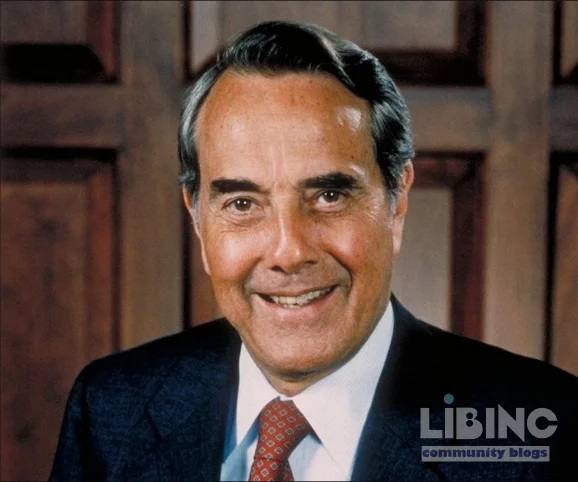
In an era of fierce ideological polarization, Bob Dole stood out as a disciplined voice who fused conservative principles with pragmatic governance. His path from small-town Kansas to the center of national power illustrates how personal history shapes policy choices and political strategy. This examination threads together Bob Dole's World War II service, legal career, and decades in the U.S. Senate to reveal how a single leader influenced civil rights, budgeting, and national memory. Rather than categorizing him as a mere party figure, we analyze the causes, consequences, and fluid dynamics of his influence, and why his example still informs debates about bipartisanship, leadership, and public service. The result is a nuanced portrait that goes beyond anecdotes to illuminate the mechanics of long-run political impact.
Analytical perspective: Bob Dole's leadership arc
Bob Dole's early life in Russell, Kansas, amidst the Great Depression, taught him resilience and focus. As a World War II veteran and a law graduate, he mapped a distinct trajectory from local office to federal influence. His ascent relied on a blend of discipline, legal acuity, and an ability to translate complex policy into achievable compromises. This analytic lens frames Bob Dole's Senate years as a case study in bridging ideological divides while preserving core principles.
In the House and then the Senate, Bob Dole navigated financial and social policy with a view to restraint and efficiency. As chair of the Senate Finance Committee and later as Senate Majority Leader, he steered budgets and tax debates with an emphasis on fiscal responsibility. He also fostered bipartisanship by positioning civil rights measures within a framework that sought practical reform rather than revolutionary change. This contextualizes Bob Dole's reputation as a bridge between conservative energy and pragmatic governance.
- Discipline shaped Bob Dole's legislative temperament and conflict management.
- Pragmatic pragmatism enabled targeted policy compromises for Bob Dole's agenda.
- Bob Dole's legal background translated into procedural efficiency in the Senate.
- Disability advocacy and social policy highlighted a humanitarian dimension of Bob Dole's conservatism.
His career also reveals tensions between ideological purity and governance pragmatism. While Bob Dole supported civil rights bills, he voted against public housing subsidies and some healthcare initiatives, reflecting a skeptical stance toward expansive welfare programs. Yet he championed federal aid to the handicapped and reduced eligibility for other programs, suggesting a nuanced approach to federal welfare that valued accountability alongside compassion. These choices illustrate how policy nuance can coexist with party loyalty, shaping a lasting legislative footprint.
Contrasting Bob Dole with contemporaries
Compared with more ideologically pure peers, Bob Dole aimed for outcomes that could win broad support rather than polarize the Capitol. His willingness to entertain amendments and engage with opponents created room for incremental reforms, especially on civil rights and disability policy. The result was a leadership style that prioritized durability over dramatic gestures, reducing the risk of stalemate even when partisan winds turned strong.
By the mid-1990s, as the Republican Party faced internal realignments, Bob Dole's Senate strategy showcased a contrasting path to the more combative postures elsewhere in the party. He balanced conservative rhetoric with a capacity to negotiate, enabling cross-party votes on key issues and preserving institutional legitimacy in the Senate. This contrast helps explain Bob Dole's unusual durability as a political figure despite electoral defeats in 1976 and 1996.
- Public image vs policy substance: Bob Dole combined humor and seriousness to persuade.
- Conservative discipline vs practical welfare considerations: selective support for targeted aid in Bob Dole's approach.
- Presidential ambitions vs sustained Senate leadership: emphasis on legislative power over personal office in Bob Dole's career.
The contrast also shows how the Republican Party evolved around Bob Dole. His leadership helped anchor the party in a tradition that prized process, institutions, and measured policy reform, rather than pure ideological conquest. This nuanced stance is a key part of his legacy for students of American politics and party dynamics.
Cause-and-effect: from experiences to outcomes
World War II experiences trained Bob Dole in crisis management, risk assessment, and the value of steady, incremental gains. That background translated into a Senate leadership style that sought durable bargains rather than explosive policy shifts. The result was a Senate capable of enduring budget fights and long fights over civil rights, even when popular sentiment shifted.
His legal career produced a disciplined approach to crafting legislation. As a state attorney and later a national legislator, he framed issues with precise language and procedural acuity. This clarity helped him shepherd complex bills through committees and floor debates, where ambiguity often derails proposals. The effect was more predictable legislative outcomes than contemporaries achieved.
Policy outcomes reflected Bob Dole's selective compassion. He supported federal aid to the handicapped, aligning with disability rights advocates, while resisting expansive subsidies that could strain federal budgets. This calibration shaped how disability policy evolved and influenced later debates around social safety nets. The cause-and-effect pattern shows how conservative leadership can empower targeted social progress without sacrificing fiscal discipline.
On the political stage, Bob Dole's leadership contributed to the Republican Party's posture in late 20th-century governance. His ability to secure bipartisan support on certain reforms helped preserve legislative norms and avert disruptive cycles of gridlock. The effect was a mixed record, lauded for balance in some moments and criticized for maintaining status quo in others. Either way, his influence on how parties manage governance persists.
Expert reconstruction and legacy
From the Senate floors to philanthropic campaigns, Bob Dole built a career that fused military service, legal discipline, and policy impact into a coherent leadership narrative. He demonstrated that a principled stance can coexist with pragmatic deal-making, producing durable policy outcomes and a resilient political brand. His example informs contemporary leaders seeking to reconcile ideological commitments with legislative feasibility.
Beyond the public bills, Bob Dole's legacy includes hunger relief and anti-poverty initiatives. He helped raise more than $170 million for a WWII memorial and championed programs that addressed hunger and poverty at home and abroad. The Percy Jones Army Hospital, now Hart-Dole-Inouye Federal Center, stands as a reminder of Dole's wartime experiences and the collaborative memorial projects that followed. These efforts amplified the moral dimension of political leadership and broadened the scope of what partisan actors can achieve when they pursue common goods.
The personal side matters too. Bob Dole's long marriages to Phyllis Holden, later life with Elizabeth Halford, and his devotion to family life humanized a figure often reduced to a set of votes. His post-Senate work as a lawyer and public speaker showed that influence endures after formal office ends, especially when it translates into sustained civic contributions and public remembrance.
Bob Dole died on December 5, 2021, leaving behind a complex legacy that scholars and practitioners continue to study. He embodied a political era in which bipartisanship had value and political memory served as a compass for policy choices. His life invites contemporary audiences to rethink how leadership can combine conviction with compromise for enduring national effect.
Bob Dole's life illustrates how principled conservatism, disciplined governance, and a willingness to work across lines can yield lasting institutional and social benefits. The lessons from his rise and recalibrations remain relevant as policymakers confront new divides, demanding both clarity of purpose and pragmatic pathways to progress.
Analytical perspective: closing a crucial dimension
Beyond branding, a critical facet of Dole's influence lies in procedural mastery—how he framed debates, scheduled committee action, and built cross‑party support for durable reforms. This dimension shows governance as steady work inside institutions, not only public theater.
In the Senate Finance Committee and later as Majority Leader, he used calibrated messaging and careful concessions to move budgets and reforms through a polarized chamber. Civil rights measures were pursued with pragmatic amendments, while targeted welfare policies reflected a discipline that valued accountability alongside compassion.
Leadership mechanisms in practice
| Mechanism | Purpose | Example | Outcome |
|---|---|---|---|
| Calendar management | Align legislative timing with budget cycles | Finance Committee scheduling and floor action windows | Predictable passage paths even amid partisan storms |
| Targeted amendments | Incorporate bipartisan tweaks to win votes | Civil rights clause tweaks and welfare predicates | Broader coalitions without sacrificing core aims |
| Messaging discipline | Frame issues around concrete outcomes | Public briefings and Senate floor remarks | Clear voter understanding and reduced misinterpretation |
| Symbolic yet principled initiatives | Link policy goals to shared national memory | Support for memorials and targeted civic projects | Broad-based legitimacy for reforms with a humane face |
The inclusion of practical governance tools helped Dole steer complex policy through a fickle Senate, turning ideological commitments into durable public policy while maintaining institutional legitimacy.
An emblematic moment of his approach was funding for memorials and civic projects; the figure of over $170 million signaled how symbolic investments can mobilize broad support while keeping a lid on overall spending. This illustrates how memory projects can align with fiscal discipline and policy aims when led by a steady hand.
Timeline of leadership milestones
- World War II service and legal career shaping a practical, steady leadership ethos.
- Senate Finance Committee chairmanship: fiscal framing and budget discipline.
- Senate Majority Leader: fosters cross‑party votes and preserves institutional norms.
These milestones reflect a governance narrative where conviction coexists with procedural craft, enabling durable policy progress in a polarized era.
What aspects defined Bob Dole's leadership style in the Senate?
Bob Dole's leadership style blended disciplined bargaining with institutional respect, establishing a predictable rhythm of committee pacing, messaging discipline, and carefully targeted amendments that made complex policy workable across party lines even when disagreements were sharp, because he framed issues in terms of concrete outcomes rather than pure ideology, used data and precedent to justify choices, and maintained a steady, communicative approach with both allies and rivals. Analytically, this approach reduced uncertainty in the Senate and increased the probability of durable law.
His method prioritized durable outcomes over dramatic gestures, helping to anchor a tradition of measured reform that valued process as a catalyst for progress.
How did Dole balance conservative principles with bipartisanship?
In practice, Dole connected conservative aims—fiscal restraint, accountability, and limited welfare expansion—with pragmatic compromises that could attract support from moderate colleagues. The direct effect was a smoother passage for reform packages that otherwise might have stalled in partisan friction. Analytically, this balance preserved policy legitimacy and institutional credibility even when full ideological alignment was not possible.
This balance also produced a model for cross‑branch governance in which principled conservatism does not preclude pragmatic governance.
What was Dole's approach to disability policy?
The disability policy arc under Dole combined humanitarian concerns with fiscal cautions. He supported targeted aid that uplifted disabled Americans while resisting sweeping expansions of entitlement that could threaten budget stability. The first sentence here summarizes a direct stance; the subsequent analysis shows how targeted programs can coexist with fiscal discipline and civil rights advancement.
Practically, this approach informed later disability policy debates and helped anchor disability rights within a broader framework of accountable governance.
How did Dole influence civil rights legislation?
His influence on civil rights was characterized by pursuing practical reforms and amendments that could attract broad support without overturning established political coalitions. The direct answer; he used bipartisan channels to advance incremental improvements, creating durable protections while maintaining party cohesion.
Analytically, this demonstrates how cross‑cutting coalitions can be built around workable compromises that still broaden civil rights protections.
What lessons does Dole's leadership offer for modern governance?
First, leadership anchored in procedural craft and disciplined communication can produce durable results in polarized systems. Second, linking policy goals to shared values and memory projects can foster broader legitimacy. Third, balancing conviction with flexibility helps sustain governance norms and reduces the risk of outright gridlock.
For practitioners today, the core lesson is that steady, principled negotiation can outlast partisan fervor and shape long‑term national outcomes.
How did Dole's wartime service shape his political career?
War service fostered crisis management, risk assessment, and a bias toward incremental gains. The direct answer: such experiences wired a preference for calm, calculated decision‑making and a focus on durable institutions. The deeper takeaway is that personal history can translate into a governance style that values steadiness over spectacle.
Operationally, this translated into a Senate leadership approach that could steward complex legislation through turbulent times with a focus on long‑term national interests.





Add a comment
To comment, you need to register and authorize
Comments