

Orthodox Church of Ukraine and the World Council of Churches: War, Canonical Order, and Ecumenical Realignment
Table of contents
- Lead
- Analytical view
- Contrasts and tensions
- Cause-and-effect dynamics
- Expert reconstruction
- Closing notes
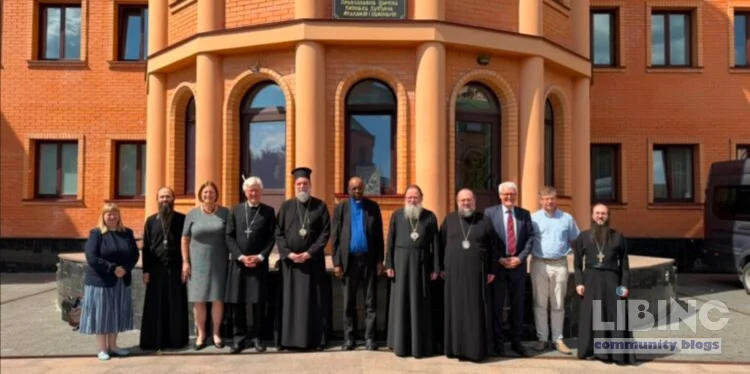
World Council of Churches delegates visiting Kyiv confront a landscape where religious identity and geopolitics intertwine under fire. The Orthodox Church of Ukraine stands at the center of a contested narrative: allegiance, autonomy, and canonical order are not merely internal church matters but strategic questions shaping Ukraine's resilience and its international ecumenical diplomacy. The visit, which included meetings with Metropolitan Epifaniy, the All-Ukrainian Council of Churches and Religious Organizations, government officials, and civilians scarred by war, reveals a pressure-filled effort to articulate a singular version of events and to deter foreign involvement that might tilt the balance among Ukraine's two Orthodox jurisdictions. The delegation's interlocutors signaled that truth matters more than convenience, urging visible steps to expose the complex reality behind accusations and alignments.
Yet the most entrenched fault line concerns the two Ukrainian Orthodox jurisdictions and their external affiliations. Metropolitan Meletiy's insistence that the Ukrainian Orthodox Church severed ties with the Moscow Patriarchate echoes a broader ecumenical strategy aimed at restoring canonical order after years of Moscow's influence. This is not merely a domestic church matter; it is a litmus test for how the World Council of Churches and other international bodies can navigate sovereignty, identity, and the boundaries of church-state interaction in wartime Ukraine.
Analytical view of the Kyiv visit
From a data-driven perspective, the Kyiv encounter reveals a deliberate attempt to translate religious affiliation into political clarity. The WCC delegates arrived with questions about how Ukraine’s churches operate as social forces under bombardment, occupation, and displacement. The emerging answers are less about theology in the abstract and more about institutional legitimacy, public perception, and the capacity of faith communities to anchor civil resilience when state institutions are stretched.
The assertion that the Ukrainian Orthodox Church has severed all ties with the Moscow Patriarchate carries a clear analytical import: it marks a transition away from long-standing external influence toward a self-redefined canonical order within Ukraine. While the two Ukrainian Orthodox jurisdictions maintain divergent lineages and external associations, the practical effect on daily religious life is a realignment of ecclesiastical authority, not merely a symbolic statement. In this sense, the conversation transcends ritual discipline and enters the realm of state-building, where ecclesiastical legitimacy is weaponized to support sovereignty and international standing. The World Council of Churches thus faces a choice about whether to recognize a self-declared rupture as a legitimate reformation or to demand a more transparent, codified process for mutual recognition that transcends wartime opportunism.
The All-Ukrainian Council of Churches and Religious Organizations (AUCCRO) reportedly pursued a strategic aim: to internationalize the issue through the WCC by pushing for recognition of the Orthodox Church of Ukraine (OCU) as a full member. This move, while framed as canonical normalization, operates within a wider ecumenical calculus. For Moscow, the logic of its own participation in the WCC since 1961 makes it a central interlocutor in any cross-jurisdictional dialogue. The tension then becomes not simply about who is in communion with whom, but about how international ecumenical platforms are used to project legitimacy, political narratives, and soft power in a conflict that has already displaced millions.
A notable counter-tension arises from the Greek Catholic dimension. The Orthodox Church of Ukraine’s bid for internationalization via the WCC has, according to sources connected to orthodoxtimes.com, been framed by opponents as a potential bridge to close ties between Kyiv's Orthodox leadership and the Greek Catholic Church. In practice, however, the Orthodox Church has long maintained a clear posture that addresses concerns about any special relationship with the Uniates. The historical and canonical complexities are not trivial: they shape how the WCC perceives Ukraine’s ecumenical map and how the Ukrainian church negotiates its path forward without reopening past schisms. The 2019 Tomos of Autocephaly—awarded by the Ecumenical Patriarchate—aimed to heal a rift and restore canonical order across Orthodoxy in Ukraine, a goal that remains central to credible ecumenical engagement.
Contrasts and tensions between ecclesial narratives
The Kyiv conversations illuminate a stark contrast between competing narratives about Ukraine’s Orthodox future. Metropolitan Meletiy’s uncompromising declaration that the Ukrainian Orthodox Church has severed every relationship with Moscow stands in tension with the perception that the Church operates within a broader geopolitical web. The state’s posture—seeking to maintain a delicate balance between the two Orthodox jurisdictions while resisting external manipulation—adds another layer of complexity. The contrast is not merely about loyalty; it centers on how each side defines legitimacy, orthodoxy, and the right to speak for Ukrainian Christian communities in a time of existential threat.
On the other side, Moscow’s position—articulated through its own ecumenical and national channels—has long framed Ukrainian church affairs as a proxy battleground for broader strategic objectives. The Moscow Patriarchate’s interactions with international bodies, including the WCC, are part of a longer campaign to safeguard perceived spiritual and geopolitical influence. The WCC, meanwhile, is pressed to avoid instrumentalization: any alignment that seems to serve a particular political project risks undermining the Council’s credibility as a genuinely global ecumenical forum. In this sense, the current moment tests the WCC’s capacity to separate spiritual legitimacy from political leverage while acknowledging Ukraine’s war-time realities.
The dynamic also involves the Ukrainian Greek Catholic Church (Uniates) and the question of how post-2019 canonical arrangements inform inter-church relations. The claim that the Uniates might be used to signal closer ties between the OCU and other non-Orthodox communities is, in practice, a diagnostic tool: it reveals how external actors attempt to reconfigure the Orthodox map in Ukraine to serve broader geopolitical aims. The overarching question remains whether the WCC will anchor future decisions in canonical structures and historical precedent, or if it will be drawn into political calculations that could fracture unity within Orthodoxy and within Ukraine itself.
Cause-and-effect dynamics in Ukraine's Orthodox landscape
War acts as a catalyst that intensifies the pressure on ecclesiastical structures to define allegiance, jurisdiction, and public voice. When state authorities seek to balance two Orthodox jurisdictions, they create an environment where religious authorities are pressured to demonstrate loyalty and independence simultaneously. The result is a high-stakes negotiation about who speaks for Ukrainian Orthodoxy on the international stage and who bears the responsibility for representing the spiritual dimensions of a country under siege. The canonical order, once a matter of internal discipline, now becomes a diplomatic asset or liability depending on the lens through which foreign observers view Ukraine’s religious configuration.
The Ecumenical Patriarchate’s 2019 Tomos of Autocephaly for the Orthodox Church of Ukraine was designed to restore canonical order and to heal a schism that had become deeply politicized. In a post-2014 environment, the Tomos functioned as both a spiritual reconfiguration and a geopolitical instrument. The WCC’s engagement, including invitations to dialogue and potential membership considerations, could either reinforce a sober, canonical process or risk being co-opted by external actors seeking to frame the OCU as a proxy for broader geopolitical aims. The 2029 General Assembly, frequently cited as the moment when the OCU’s application could be examined, embodies a critical junction: will the international ecumenical framework reinforce a clear, transparent path to recognition, or will it yield to strategic pressures that threaten its legitimacy?
A further causal thread concerns the relationship between human suffering and ecclesial diplomacy. The WCC’s presence in Kyiv signals an intention to contextualize theological dialogue within humanitarian concern. Yet the pervasiveness of war creates a risk: if ecumenical bodies appear to pick sides or to advocate for particular outcomes, they may alienate other communities and foreclose the possibility of a multi-jurisdictional compromise that could be more stable in the long term. In other words, the cause is not simply the internal structure of Ukrainian Orthodoxy, but the way international actors interpret, accelerate, or hinder a peaceful canonical settlement that respects Ukrainian sovereignty and unity alike.
Expert reconstruction and future implications
A robust reconstruction of possibilities begins with the acknowledgement that Ukrainian Orthodoxy will remain shaped by wartime realities even as it seeks to normalize post-war order. If the World Council of Churches formally recognizes the Orthodox Church of Ukraine as a full member, the council would be acknowledging a de facto shift in canonical status framed by the 2019 Tomos. This recognition could bolster Ukraine’s international standing and support intra-Ukrainian resilience by validating a Ukrainian canonical path that is independent of Moscow; it could also invite renewed scrutiny from Moscow and its allies, which may perceive this as a strategic encroachment on traditional spheres of influence. In practice, such a move would not automatically resolve all tensions between jurisdictions; it would, however, create an explicit framework for dialogue within a globally recognized ecumenical institution.
Conversely, if the WCC opts for a measured, incremental approach—prioritizing process, transparency, and mutual accountability—the path toward OCU membership could become a longer, more painstaking negotiation. This would require clear benchmarks, verifiable canonical steps, and a governance structure that minimizes the risk of instrumentalization by external powers. An incremental approach could also reduce the temptation for political actors to deploy the Uniates or other cross-confessional alignments as political props, thereby preserving space for a truly ecumenical consensus grounded in canonical legitimacy and human dignity.
For Kyiv and its church communities, the pragmatic takeaway is that ecumenical diplomacy should function as a stabilizing mechanism, not a battlefield. The WCC’s role should be to facilitate open, evidence-based dialogue among Ukrainian ecclesial bodies, provide humanitarian and moral support to communities affected by the war, and uphold a canonical framework that respects Ukraine’s sovereignty. In the near term, this implies a careful, verifiable process toward any form of formal recognition, guarded against instrumental narratives that could distort both ecclesial integrity and Ukraine’s national interest. In the longer term, the aspiration toward a reconciled, multi-jurisdictional Orthodox presence in Ukraine remains possible—provided that canonical order, historical memory, and the needs of war-weary congregations guide every step.
The current moment tests the World Council of Churches as much as it tests Ukraine’s churches. Orthodox identity in Ukraine is not a static museum piece; it is a living project braided with national sovereignty, humanitarian obligation, and universal calls for justice. The path forward will require disciplined, transparent dialogue that places the well-being of faith communities at the forefront, while respecting canonical realities and the integrity of both Ukrainian and international ecclesial bodies.
In war and in peacetime alike, the true measure of ecumenical engagement will be the ability to distinguish political rhetoric from gospel truth, to safeguard canonical order without surrendering spiritual responsibility, and to translate international attention into durable support for Ukrainian Christians seeking security, dignity, and a recognized place within the global church family.
Practical path forward for canonical normalization and ecumenical dialogue
In Kyiv's ecumenical landscape, the most needed component is a concise, action-oriented roadmap that respects Ukraine's sovereignty while ensuring a credible canonical process. This section offers a compact plan that the World Council of Churches (WCC), the Orthodox Church of Ukraine (OCU), and allied bodies can pursue to reduce friction, increase transparency, and center dialogue on humanitarian and pastoral priorities.
| Milestone | Actor | Timeline | Criteria | Risk | Potential Outcome |
|---|---|---|---|---|---|
| Verification of post-2019 autocephaly | OCU, AUCCRO, WCC | 2024–2026 | Mutual recognition; canonical order | External manipulation | Clear governance in Ukraine |
| Transparency in dialogue | WCC; Ukrainian churches; Moscow Patriarchate | Ongoing | Public minutes; open agendas | Perceived instrumentalization | Credible ecumenical process |
| Mutual recognition framework | WCC; OCU; Moscow Patriarchate | 2027–2029 | Benchmarks and verifiable steps | Prolonged talks | Formal OCU status or recognized arrangement |
| Joint humanitarian-diplomacy track | WCC; AUCCRO; international partners | Ongoing | Joint relief operations | Funding gaps; security risks | Improved civilian resilience |
| Long-term unity framework | All parties | Post-war | Shared liturgical guidelines; cross-jurisdictional structures | Schism resurgence | Multi-jurisdictional presence in Ukraine |
Beyond the table, a practical pathway for dialogue would include public agendas, transparent reporting, and jointly defined benchmarks that can be independently verified. A key principle is to anchor canonical discussions in the lived realities of war-affected parishes, with regular humanitarian reports that demonstrate care for all communities regardless of jurisdiction.
- Millions affected by war and displacement across Ukraine
- Parish networks delivering relief, shelter, and psychosocial support
- Ecumenical partners coordinating aid through WCC and national churches
In practice, dialogues can follow a simple pathway: 1) establish a neutral steering process; 2) publish a canonical roadmap with clear milestones; 3) pilot joint services in accessible regions; 4) monitor outcomes and adjust. The goal is credible progress that strengthens church life while upholding sovereignty and canonical integrity.
- Step 1: Create a neutral steering group — representatives from OCU, UOC, AUCCRO, WCC, and observers with no binding authority to preserve credibility.
- Step 2: Define milestones — publish a brief, verifiable list of canonical and governance steps with public criteria for each item.
- Step 3: Open reporting — provide accessible summaries of meetings and decisions to foster trust among communities and external partners.
Ultimately, the aim is to translate ecumenical dialogue into durable care for communities, ensuring that Ukraine’s churches contribute to resilience rather than conflict. The WCC’s role should be to facilitate transparent, evidence-based discussion and humanitarian cooperation that respects canonical realities.
Frequently asked questions
What is the current status of the Orthodox Church of Ukraine in World Council of Churches talks?
At the present moment the Orthodox Church of Ukraine remains engaged in iterative consultations within the World Council of Churches, with AUCCRO and the OCU leadership seeking a formal path to recognition that respects Ukraine's sovereignty while upholding canonical discipline; the WCC has signaled a preference for openness, transparent documentation, and verifiable steps that demonstrate genuine ecclesial independence from Moscow, while careful attention is paid to how external actors might leverage the process for political ends. In practice, this means public agendas, published minutes, and agreed benchmarks aimed at constraining external manipulation while preserving sacred order and pastoral duty.
Beyond the formalities, ongoing humanitarian collaboration and regional dialogue can build trust among diverse communities, ensuring that canonical questions are answered with concrete actions that reflect the realities of war and displacement. Moscow’s stance remains a critical counterweight, requiring the WCC to maintain a principled stance that protects Ukraine’s autonomous church life without entrenching divisions.
How does the 2019 Tomos influence ecumenical engagement with Ukraine?
With the 2019 Tomos, the OCU gained a canonical framework for autocephaly that international bodies can reference when evaluating legitimacy and jurisdictional standing; however, the Tomos also created new expectations for transparent processes and mutual accountability that must be observed by all sides, including the Moscow Patriarchate. The practical impact is a heightened emphasis on verifiable steps, governance clarity, and a shared commitment to pastoral unity rather than political symbolism. In ecumenical settings, the Tomos supports a roadmap toward credible dialogue while demanding robust governance practices.
What role can AUCCRO play in the WCC dialogue?
AUCCRO can serve as a coordinating bridge that aligns Ukrainian church voices with international ecumenical norms, ensuring that decisions reflect broad participation and local realities; its leadership can facilitate transparent data sharing, data-backed humanitarian programming, and joint statements that avoid factional rhetoric. A constructive AUCCRO role helps prevent instrumentalization by external powers and reinforces a canonical path grounded in Ukrainian sovereignty and human dignity.
What are the risks of instrumentalization in ecumenical talks, and how can they be mitigated?
Instrumentalization risks arise when external powers press for outcomes that fit political agendas rather than canonical legitimacy or pastoral needs; mitigation requires independent observers, published minutes, clear benchmarks, and a humanitarian-centered agenda that remains neutral on jurisdictional disputes while supporting the suffering of civilians. The WCC can uphold credibility by insisting on verifiable, public criteria and by resisting pressure to prematurely cement membership or recognition before due process is completed.
How can humanitarian concerns be integrated into ecumenical diplomacy?
Humanitarian concerns should be embedded in every dialogue action: joint relief efforts, psychosocial support for displaced communities, and a shared framework for protecting sacred spaces and clergy under threat. By linking canonical conversations to measurable relief outcomes, ecumenical diplomacy gains legitimacy and public trust, which in turn strengthens the potential for a durable, multi-jurisdictional presence that respects Ukrainian sovereignty.
What are potential outcomes if the OCU gains full WCC membership?
If the OCU attains formal WCC membership, the outcome could include enhanced international recognition, a clearer canonical framework within Ukraine, and stronger ecumenical collaboration on social and humanitarian initiatives; however, it could also provoke renewed scrutiny from Moscow and other Orthodox bodies, requiring a careful, transparent negotiation pathway that balances canonical integrity with geopolitical realities. The most robust scenario combines public accountability, verified milestones, and ongoing pastoral engagement across all Ukrainian jurisdictions.




Add a comment
To comment, you need to register and authorize
Comments
A further layer concerns the Greek Catholic dimension and the possibility, however remote, of using inter church bridges to redraw Orthodoxy in Ukraine. The article notes that this dimension is exploited by opponents to suggest a broader alliance between Kyiv's Orthodox leadership and Uniates. The reality, however, is more nuanced. The OCU has historically insisted on a clear separation from Uniates, while Greek Catholics emphasize their own sacramental and canonical distinctiveness. The WCC’s task is to preserve a map of ecclesial relations that respects canonical identities while avoiding a cage of inter jurisdictional rivalries. To do this well, the Council would require explicit, transparent criteria for recognition that do not privilege any single history at the expense of another. The risk of instrumentalization is real: external actors may push for recognition to achieve a political objective rather than to foster a genuine, multilateral, and lasting ecclesial communion. Therefore, the key question becomes how to balance canonical integrity, historical memory, and the imperative of pastoral solidarity with war afflicted communities.
This reflection invites discussion about building a governance protocol within the WCC that can accommodate disputes without becoming a battleground for political leverage. Could there be a temporary, monitored arrangement that ensures dialogue among Moscow, Kyiv, and independent Ukrainian church communities while a longer term canonical consensus is pursued? How might such a framework protect the rights and dignity of laypeople who want to move, worship, and express their faith across jurisdictional boundaries without triggering new tensions? These questions point toward a humane, theologically grounded approach to ecumenical diplomacy that keeps the focus on pastoral care, congregational stability, and the shared witness of Christians under siege rather than on procedural victories. This is the moment to reflect on the moral imagination of ecumenism itself—whether the WCC can remain a sanctuary for plural witness or be pressed into the role of an international court of political affiliation. The path forward, in my view, lies in a transparent, patient, and pluralistic discernment that invites all Ukrainian ecclesial voices into covenantal conversation and that refuses to let any one narrative monopolize the truth.
The piece also foregrounds a geopolitical dimension that complicates ecumenical hospitality. The decision to emphasize severed ties with Moscow, while symbolically potent, must be matched by concrete steps that reassure parishes, clergy, and civil authorities that a historic struggle for autonomy does not become a cover for meddling by external powers. This is where the integrity of canon law and the transparency of governance become essential. The World Council of Churches would need a robust framework for mutual accountability, including ecumenical consultation that includes all Ukrainian Orthodox communities and respirations of the Ukrainian Catholic presence, along with clear channels for reporting and arbitration when disputes arise. War is a pressure cooker; the ecumenical body must resist the temptation to deploy canons as political props or to treat canonical order as a unilateral axis of victory. Instead it should model the kind of patient discernment that can sustain minority churches under occupation while also safeguarding the rights of those who have long lived in the shadow of competing jurisdictions.
Ultimately the discussion centers on how to translate a moment of geopolitical crisis into a durable ecclesial realignment that is both credible and compassionate. The WCC’s contribution should be to offer steadfast, evidence based dialogue that honors the suffering of Ukrainian communities, supports humanitarian relief, and curates a path toward genuine canonical clarity. That path would likely require incremental steps, transparent benchmarks, and a governance culture that invites scrutiny from Kyiv, Moscow, and all Ukrainian religious currents alike. If the aim is healing and unity rather than victory or prestige, ecumenical diplomacy must be ready to listen first, to test claims against lived experience, and to insist on processes that protect the dignity of every believer affected by the war. In such a frame, recognition could become a bridge toward sustainable unity rather than a spark for renewed fracture.