

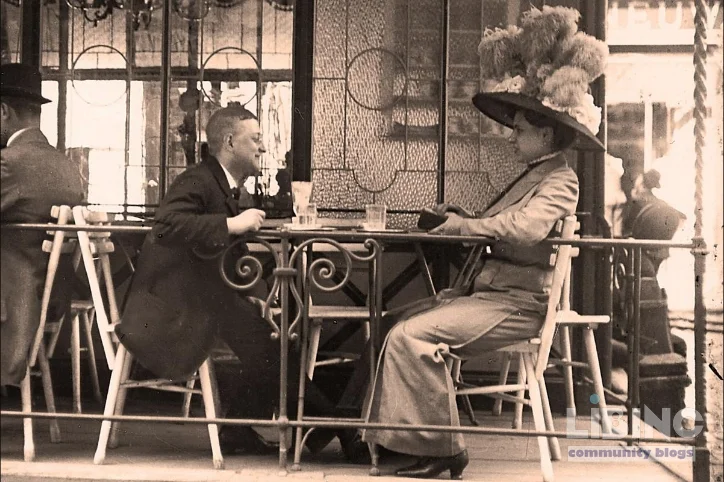
Vienna coffeehouse culture as the cradle of modernism and catastrophe: Café Central, Young Vienna, and a world on the brink
Within the labyrinth of late 19th‑century Vienna, a simple newspaper story became a hinge on which the city’s literary life swung toward modernity. Peter Altenberg, a cigarette salesman turned diarist, wrote a brief poem in honor of a missing 15‑year‑old girl, then watched a constellation of writers drift into Café Central. The moment was less about casual chance than about a cultural economy in which the coffeehouse functioned as an incubator for critique, tenderness, and a new social sensibility. The problem is simple but consequential: why did a club of readers and writers, gathered around a table with strong espresso and louder opinions, become the engine of a modernist turn? The stakes are equally plain — the coffeehouse became not merely a venue but a reflexive laboratory where the self could be tested against an empire’s pressures and a continent’s convulsions. The hidden conflict lies in the tension between leisure and peril: a space that nurtured genius yet overlooked the precursors of catastrophe. This article traces the analytic arc that binds Café Central, the Young Vienna circle, and the wider dynamics of the Austro‑Hungarian Empire to the outbreak of war, asking what the coffeehouse reveals about how modernism and history collide in a single city.
Table of contents
Analytical Reading of Vienna's Coffeehouse Epoch
The encounter at Café Central is more than a anecdote about Altenberg’s poetry; it is a data point in the larger phenomenon of Vienna’s coffeehouse culture, a social architecture that enabled rapid idea exchange and fragile loyalties. The café’s physical layout—a succession of smoke‑filled rooms extending into a central courtyard—created a microclimate where modernist sensibilities could germinate, mutate, and propagate. This is not mere romanticism about a city’s mood; it is a case study in how space conditions cognition. The coffeehouse was a public stage for private thought, a venue where the self could experiment with tempo and form, especially under Machian imperatives that the self is a convenient fiction. Altenberg’s “telegram‑style of the soul” aligns with this experiment in self‑presentation: prose that compresses sensation and insight into brisk, aphoristic units. The central technical problem for the era was not only how to write about life but how to live it in prose that could travel across minds as quickly as a cup travels through the bloodstream. The result is a literature that does not merely report reality but negotiates it, translating interior experience into a social performance that could be shared, contested, and refined within the coffeehouse’s democratic precincts.
In the circle that gravitated around Café Central, the term Young Vienna arose as more than a label; it signified a constellation of writers who treated immediacy, ambiguity, and irony as the core materials of art. This group leaned on the empirical texture of modern life and on the provocative ideas of Ernst Mach, whose insistence that the self is not a fixed entity gave them a framework to treat perception as a process rather than a possession. The practical implication was a writing habit that favored impressionistic sketches, feuilletons, and crisp vignettes over grandiose narratives. Such form—short, perceptual, and densely annotated—became the structural grammar of a new literary generation. Yet the same habit of intimate observation bred a kind of self‑absorption that Karl Kraus would later recognize as danger: a literature that could be inwardly fulfilled yet outwardly blind to looming political and military storms. The empire’s slow modernization with its cultural promises created a paradox: social security and aesthetic freedom coexisted with a fragile political equilibrium that could fracture at the slightest provocation.
When readers in Vienna encountered Altenberg’s poem or Schnitzler’s playlets, they encountered a sensibility trained to translate the external world into a private, portable voice. The coffeehouse thus functions as a technics of modernism: it accelerates the conversion of sensory life into literary form, and it provides a social audience for that conversion to be tested. This is not merely historical color; it is a mechanism by which an entire artistic culture reconfigures its tools to meet modern life’s pace. In this sense, the question shifts from what the writers did to how the coffeehouse’s rhythms redistributed attention—toward experiences that could be quickly shared, evaluated, and imitated. The result is a literature that not only reflects modern life but also helps to shape it by granting a certain legitimacy to spontaneity and skepticism.
Through Contrast: Cafés, kafanas, and the Politics of Space
The Vienna coffeehouse and the Belgrade kafana occupy parallel functions in their respective urban ecologies, yet they diverge in mood, governance, and political consequence. Vienna offered a relatively stable, ever more secular public sphere where the literati and the critics could test ideas with a “democratic club” aura, as Zweig described it, accessible on a modest budget. In this sense, the coffeehouse resembled a neutral ground for the exchange of taste, style, and conceptual risk. The kafana, by contrast, packed politics, memory, and revolutionary fervor into every table. Serbian and South Slav patrons used these spaces as forums where grievances could be voiced and conspiracies discussed with a visceral immediacy that Vienna’s rooms rarely permitted. The environment itself mattered: Belgrade’s kafanas were not mere social rooms but political theaters where demonstrations, arguments, and even violent acts could crystallize into organized action. The contrast between these spaces is not only geographic but existential. Vienna’s rooms offered a sanctuary from the world, an eddy where writers could cultivate a private sensibility in a stable empire. The kafanas offered the world in naked, sometimes brutal terms; they remade public life as an arena for collective risk. The difference mattered because it helped explain why the Balkans could erupt into war even as Vienna pursued a modernist poetics of self‑constraint and ironic distance.
Within this contrast, the influence of nationalism and mass politics becomes legible. The Balkan nationalist movements—embodied by figures like Gavrilo Princip and the milieu surrounding Young Bosnia—found in the kafana a training ground for discipline, secrecy, and the romanticized calculus of violence. The Zlatna Moruna kafana in Belgrade, a modest haunt with a dangerous reputation, resembled a laboratory where individuals could rehearse acts of political theatre away from the rigid social code of the empire. The poets and philosophers in Vienna’s cafés pursued a different program: to demystify sensation and to turn interior experience into a public language that could critique power without surrendering to it. This is not a moral judgment but a critical distinction about the social life of ideas. The two worlds illumed each other only in danger: Kraus warned that Vienna’s literati risked turning a “world destruction” into entertainment if they mistook their own internal conflicts for universal truth. The Balkan radicals, meanwhile, trained themselves to translate grievance into action, a transformation that could not be contained within any single coffeehouse.
Even the role of outsiders confirms the spatial logic. Leon Trotsky’s long tenure in Vienna placed him among newspapers and chessboards, a figure who could observe the city’s quiet dynamics with a non‑local urgency. He was impressed by the cosmopolitan inventory of the Central, yet he also saw the danger in the city’s inward gaze. “Who would have expected that of Herr Bronstein from Café Central!” he joked, recognizing that a place famous for its relaxed sociability could harbor a sharper, more dangerous awareness of global trajectories. The lesson is not merely about notable cameos; it is about how space calibrates perception. In Vienna, cultural virtuosity could be read as a form of critical power; in Belgrade, space amplified the tempo of political grievance into action. The two cities show how a cultural habit—reading, conversing, sipping—can diverge into different political futures depending on the social weather around it.
From Cup to Consequence: How a Culture of Quiet Sitting Becomes a Political Moment
Cause and effect emerge most clearly when we track the transition from introspective modernism to overt political violence. The coffeehouse culture produced a particular habit of attention: writers trained to linger on nuance, to compress experience into compact forms, and to read the world through the lens of imperfect, provisional knowing. This habit—an asset for literary experimentation—also carried a risk: when a society carries intense grievances, the same skills that permit patient reflection can be redirected toward patient preparation. The Austro‑Hungarian Empire, framed as a multi‑ethnic project, relied on a logic of stability that could suppress difference without addressing it. Within this fragile equilibrium, nationalist narratives grew louder in the periphery and in the periphery’s periphery—areas like Bosnia and parts of Serbia—where kafanas became nodes of radicalization. The result was a mismatch between the empire’s claim to order and the energies raging just beyond its borders. It is in this mismatch that the idea of a world on the brink becomes real rather than rhetorical. The assassination of Archduke Franz Ferdinand by Gavrilo Princip did not emerge from the coffeehouse; it was shaped by the Balkan cafés, the nationalist propaganda circulating within them, and the sense that the empire could not fulfill the promises of its own modernizing project. Princip’s actions were the dramatization of a longer geometric progression: from local grievance to an act considered heroic by its participants, to a war that consumed empires and redefined modern political life. The narrative arc from Altenberg’s poem to Sarajevo’s courtyard is not linear but entangled in a web of social practices that made such events thinkable, possible, and ultimately consequential.
In the Vienna context, the empire’s stability created room for experimentation, but it also inflated the consequences of misreadings. The Balkans, even if distant to many Viennese readers, remained a pressure valve whose release would reshape Europe. The essayistic and bibliographic ferment in Vienna did not vanish; it redirected its energy toward understanding catastrophe with the same analytic precision with which it once described a coffee‑spoon’s worth of caffeine and concision. Kraus’s critique—an insistence that the city’s literature could not ignore the external danger—reads as a productivity warning: a culture that confuses inward sophistication with moral innocence risks being blind to political reality. The cross‑pollination of ideas across borders means that the same habit of skepticism that fuels literary innovation can also seed political indifference unless anchored by a robust ethics of civic awareness.
Within this causal frame, the role of broader world events becomes not a distant backdrop but a causal pressure that bends local habit into history. The Balkan Wars, the annexation of Bosnia, and the formation of a Greater Serbia produced a climate in which young conspirators found both a platform and a cause. The Serbian kafanas’ occasional violence and the Sarajevo perimeter’s radio of rumor intensified the sense that the empire’s demise would arrive not as a gradual reform but through a decisive act. Gavrilo Princip’s execution of the Archduke culminated a trajectory that started in the intimate rooms of cafés, moved through the dens of kafanas, and ended with a continent remade by catastrophe. The lesson for modern readers is clear: spaces of contemplation and laughter can become spaces of courage, but they can also become spaces where the moral energy of a population is redirected toward annihilating violence unless there is a countervailing political pedagogy that binds art to civic responsibility.
Expert Reconstruction: Re-reading a Moment of Modernity
To reconstruct the era with analytic clarity is to acknowledge how Vienna’s coffeehouse culture functioned as a real, measurable influence on literary form and social life. The movement that became Young Vienna did not emerge in a vacuum; it developed alongside a political order that demanded both loyalty and skepticism. The coffeehouse cultivated a sensibility that could tolerate ambiguity and still demand accountability from institutions. It was a space where the private and the public fused into a single routine of reading, talking, and writing, and where modernist craft—concise prose, observational detail, and irony—could be tested against a world that required more than aesthetic competence. The empire’s experiments with modernization created a paradox: cultural liberalization coexisted with political rigidity. This tension produced a literature that could critique but not fully reform the structures around it, a condition that the Balkans exploited in ways Vienna could not anticipate.
From a methodical vantage point, the story of Altenberg and Café Central becomes a case study in the sociology of literature: how social spaces shape styles, how networks calibrate opportunities, and how a city’s self‑image can inscribe itself into a world that eventually collapses. The Young Vienna circle, with its emphasis on the immediacy of perception, teaches a broader lesson about creative ecosystems: robust creative output requires both openness to diverse stimuli and a disciplined attention to the consequences of political power. The Balkans’ ferment, in contrast, underscores the risk of a highly mobilized public sphere without parallel channels for peaceful, transformative political action. If Vienna’s modernists wrote to resist the empire’s excess, Serbs and Bosnians wrote to indict it and, in some cases, to overturn it. The juxtaposition illuminates a universal dynamic: powerful cultural movements arise within particular historical ecologies, and their fate is inseparable from those ecologies’ political grammar.
Ultimately, the perspective offered here is not nostalgic but diagnostic. The café, the kafana, and the multitude of newspapers that fed both are not relics; they are prototypes for the interplay between culture and state power. The arc from Altenberg’s coffeehouse to Princip’s gun is a stark reminder that modernity’s most consequential breakthroughs often ride on the back of ordinary routines. The tale invites us to rethink how literary innovations relate to political responsibility, how space can nurture both critical insight and moral hazard, and how cities like Vienna and Belgrade reveal the dual capacity of culture to heal and to threaten. In studying this moment, we do not merely recover a past mood; we sharpen a method for analyzing how intellectual life can carry the weight of history itself.
In the end, the ghosts of Vienna walk not only through the Palace but through the pages of its coffeehouses, through Belgrade’s kafanas, and through the minds of readers who still look for meaning in the exchange of words over a shared cup. Our ghosts, unlike Princip’s, do not carry pistols; they carry questions—about creativity, responsibility, and the future of a world that still looks to its cafés, its clubs, and its streets as the places where ideas begin and destinies are tested.
Closing reflection: the living archive of Vienna’s coffeehouse culture teaches that the everyday act of gathering to read, talk, and drink can train a generation to imagine new futures, but it can also lull a society into believing that its present order is absolute. The balance between imagination and accountability remains the true measure of any modern city’s cultural health.
Extended lens: space, pace, and civic responsibility
The expansion foregrounds concrete mechanisms by which a table of talk mutated into political perception. Public sphere, modernist prose, and the Young Vienna ethos all ride on this shared tempo.
Table: Key spatial dynamics in Vienna's Central coffeehouse
| Feature | Effect on Dialogue | Modernist Impact |
|---|---|---|
| Layout | Smoke-filled rooms, courtyard flow | Encouraged rapid exchanges |
| Audience | Mixed readers, critics, poets | Democratized critique |
| Rhythm | Short notes, vivid anecdotes | Fostered impressionistic prose |
To fill gaps in the earlier account, this section foregrounds how layout pushed readers toward a shared tempo and how that tempo shaped perception of self and empire. Practical scenarios: a fragment becomes a toast, a critique becomes a feuilleton, a mock debate becomes a public ritual.
Infographic: Influence timeline (select moments)
- 1888 Altenberg’s poem signals a literary turn
- 1890s Café Central as a hub for Young Vienna
- 1900s Kraus’s press critique tempers optimism
- 1914 Archduke shot shifts discourse from culture to catastrophe
In this light, a small room not only hosts talk; it calibrates the ethical horizon of a generation.
Takeaways for rigorous reading
- Space links social imagination to prose style.
- Private reflection must balance public accountability.
- A mobilized public sphere needs reform channels to avoid violence.
The expanded view narrows the line from Altenberg to the street actions of 1914, showing that architecture of talk helps explain history's turning points and offers a template for analyzing modern cultural ecosystems.
The extended examination thus makes explicit how the coffeehouse, the kafana, and the surrounding media ecosystems formed a shared grammar of perception, capable of both radical creativity and dangerous misreadings.
What role did Vienna coffeehouses play in modernist literature?
Vienna coffeehouses acted as living laboratories for modernist literature. They fostered rapid critique, concise prose, and a public sphere where ideas could be tested among diverse readers. This environment helped shape the immediacy and skepticism that define early modernist writing, linking everyday social life to literary innovation.
Analytically, the coffeehouse enabled a feedback loop: readers became co-authors of the moment, and the social rhythm influenced form, pace, and tone. The result was a literature oriented to perception, irony, and the negotiation of self within a changing empire.
How did the design of Café Central influence discussion and ideas?
Café Central’s layered rooms and open tables created a microclimate for debate. Quiet corners allowed intimate argument, while larger tables amplified collective exchange. The acoustic and spatial setup encouraged endurance of complex ideas and a culture of quick, shared judgment, shaping modernist reception and critique.
Practically, a single debate could seed a feuilleton, while a long conversation could become a networked critique, spreading through newspapers and salons alike.
What is the contrast between Vienna coffeehouses and Belgrade kafanas in shaping political action?
Vienna’s coffeehouses tended toward critical irony and a cultivated public sphere, testing ideas with aesthetic restraint. In Belgrade, kafanas functioned as political theaters where grievances could be voiced and organized into action. The environment matters: one nourishes reflective critique; the other channels mobilization and risk, helping explain divergent historical trajectories within a shared regional modernity.
How did the Young Vienna circle influence prose forms?
The circle prioritized immediacy, impressionistic sketches, and concise feuilletons over grand narratives. This empirical texture of modern life encouraged prose that compressed sensation into portable, testable forms, shaping a distinctly modernist cadence that could travel quickly across minds.
What is the connection between coffeehouse culture and the onset of war?
The same habits of attentive skepticism and social testing could become instruments of mobilization when political grievances escalated. In the Balkans, kafana networks amplified grievances into organized acts, culminating in events like the Sarajevo assassination. The piece argues that cultural practices can both illuminate and destabilize political futures when civic channels fail.
What lessons can modern writers learn from this episode?
Balance private reflection with civic responsibility. Recognize how space and social rhythms shape perception, public debate, and ethical thresholds. Build in checks that translate critical insight into accountable action, preventing art from becoming mere entertainment amid rising political stakes.




Add a comment
To comment, you need to register and authorize
Comments
This reading invites discussion about the architecture of modernism: to what extent did the arrangement of rooms, the rhythm of conversations, and the social etiquette of listening condition what counts as a credible modernist gesture? Could different rooms or different publics have produced a different literary ecology? And how does the model of a public stage for private thought sit with the article’s claim that literature can critique power without fully reforming its structures? The piece hints at a double bind: genius flourishes in the coffeehouse, even as that same culture might cultivate attentiveness to danger only when catastrophe becomes imaginable. In sum, the coffeehouse appears as a laboratory for form and for sociability, a place where the private details of perception become a shared instrument for questioning the world.