

Nolan's Odyssey: An In-Depth, Expert Analysis of Christopher Nolan's Homeric Adaptation
Table of Contents
Christopher Nolan's The Odyssey translates a foundational myth into a modern cinematic event, but the project refuses to be reduced to a hero's journey or a parade of spectacle. The film promises grandeur and delivers it with a cold, lucid intelligence that asks more questions than it answers. The central question is not whether the epic can fit into a contemporary blockbuster, but what happens when a creator of colossal scale chooses to complicate the text rather than simply illuminate it. The risk is high: too much reverence invites nostalgia, too little reverence invites cynicism. The direction of this analysis is to dissect Nolan's Odyssey along four throughlines—analytics, contrast, causality, and reconstruction—and to locate where the film earns its metatextual bravura and where it overreaches in service of a more provocative reading of the Homeric saga.
Analytics of Nolan's Odyssey
From the opening frames, Nolan's Odyssey asserts a paradox: it uses cinema's most expansive technologies to pry open a text that is, at its core, about the limits of human reach. The film achieves a scale that evokes a Homeric epic even as it constrains its characters within recognizably modern boundaries. This is not simply a matter of visual grandeur; it is a deliberate recalibration of myth into a contemporary language of sound, light, and motion. The achievement rests on a precise alignment of image and tempo, where long takes, tidal waves, and aerial cinematography become the grammar through which the Odyssey speaks in a new key.
Homeric epic ambition becomes a test of technical discipline: Nolan leverages Hoyte van Hoytema's IMAX 70mm sensibilities to push the frame toward the heavens while anchoring Odysseus' interiority in close, tactile moments. The result is a paradox: the exterior sublime highlights the interior cost—Odysseus' mind, not just his wits, carries the epic burden. This is where the film reveals its metatextual core, as the camera's eye questions the naval bravado of the voyage and foregrounds ambiguity as a thematic engine. The juxtaposition of godlike weather and mortal fragility is deliberate, reconfiguring the Odyssey's dependence on epic spectacle into a meditation on weathered agency and the price of cunning.
The film's sensory architecture reinforces its analytic claim. Göransson's score, drawing on the Chernobyl soundscape approach—engineered atmospherics, percussive resonance, and a palette of archaic timbres—renders the environment as a percussionist partner to Odysseus and his crew. The use of antique instruments—the aulos, the fyell, and the lyre—anchors the score in a historical depth that refuses to permit a purely modernized, synthetic sound. This is not mere nostalgia; it is a deliberate attempt to translate an ancient resonance into a contemporary acoustic footprint that accompanies moral questions rather than simply thrills. The film's sonic design becomes a central explanatory layer, clarifying why certain choices feel modern and why others feel ancient, a deliberate synthesis of two temporal registers in a single listening experience.
Calypso's intercession, Circe's rhetoric, and Penelope's shadowed voice appear as strategic pauses that interrupt Odysseus' forward motion. These interruptions are not decorative; they function as metacognitive breaks that invite spectators to reflect on the cost of a life spent in strategic deception. The narrative pacing—moments of awe interleaved with introspective, sometimes painful, admissions—serves as a structural proof of concept: the Odyssey can be told as a study in restraint even within a spectacle-driven framework. This alignment of form and content demonstrates how Nolan's Odyssey uses the medium to argue that the epic's true scale is psychological, not merely geographical, an insight that resonates with scholars and cinephiles alike.
Through contrast: text, technique, and tone
The film positions itself in sustained dialogue with its source while searching for a modern vantage point. The dialogue operates on several levels: fidelity to the Homeric arc, critical distance from the source's patriarchal frame, and a conscious re-centering of female voices within a male-centered narrative. This is unmistakably a staging of contrast: the classic text with its episodic cadence, and Nolan's text with its cinematic grammar of simultaneity, immersion, and ambiguity. The tension between reverence and revision becomes the film's engine, and its most provocative move may be the decision to foreground Penelope as a co-architect of the voyage rather than a mere observer of it. The result is a nuanced, if challenging, feminist re-reading that does not reduce the epic to a social statement but uses gendered fault lines to illuminate a broader ethical inquiry.
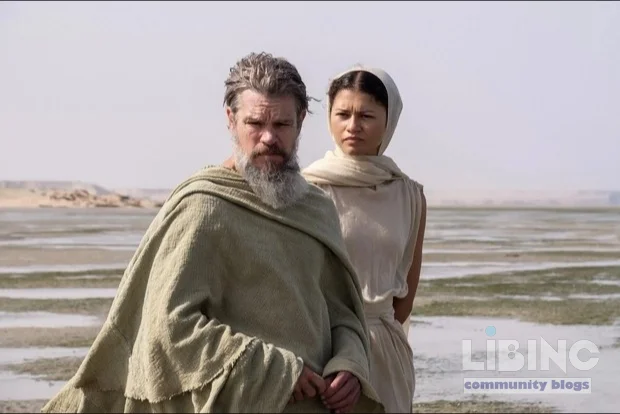
From a stylistic perspective, this Odyssey leans into a Victorian-level precision in its mise-en-scène while embracing a contemporary appetite for moral complexity. The casting choices create a dynamic range of interpretive possibilities: Charlize Theron as Calypso offers a poised counterpoint to Damon’s Odysseus, while Zendaya's Athena remains a silent referent whose presence is felt through action more than speech. Tom Holland's Telemachus embodies a precocious, unsettled youth that emphasizes generational tension rather than familial harmony. The result is an interpretive field where the text's legendary hierarchy is unsettled—heroism becomes a function of restraint, cunning, and the capacity to acknowledge error. This revisionary stance, while controversial in some quarters, stands as a serious contribution to how we understand mythopoetic cinema in the 21st century.
The dramaturgy hints at an overarching through-line: a readerly, almost editorial intervention in the myth. The film nods to Emily Wilson's translation not as a literal guide but as a conceptual framework that foregrounds voice, agency, and interpretive multiplicity. The moments when Penelope speaks with authority or Circe recounts the cost of violence translate into a broader ethical conversation about how myths get policed, contested, and reinterpreted. In this sense, Nolan's Odyssey is less a faithful rendition and more a critical re-telling—a metatextual gesture that invites viewers to rethink what a Homeric epic is for, and to whom it is accountable in a modern cinematic context.
Cause and effect: decisions that shape meaning
Every creative decision in Nolan's Odyssey creates a ripple effect that shapes audience perception and critical interpretation. The use of IMAX 70mm, the decision to intersperse non-linear flashbacks, and the choice to compress certain episodes into lean sequences all function as causal levers that alter how the epic is felt rather than simply how it is told. By trimming some episodes to brief, event-like milestones, the film risks losing some texture, yet gains a sharpened focus on Odysseus as a problem solver under existential pressure. The cause—an insistence on cinematic immediacy—produces the effect of a heightened sense of danger, a more immediate connection to the ship and the storm, and a narrative rhythm that privileges introspection over exhaustive cataloging. This is where the metatextual argument takes root: the film chooses impact over encyclopedic coverage, and the result is a more suggestive, less literal Odyssey.
The score's architectural logic is a further causal agent. Göransson's score operates as a living membrane between sea, sky, and memory, translating maritime danger into human fear and hope. The environmental textures—wind, water, metal, and distant choral lines—mirror Odysseus' evolving self-awareness, and the music's dynamics signal the moral stakes behind each strategic choice. The entwined soundscape and visuals generate a causality loop: an epic environment becomes a catalyst for ethical reflection, which in turn reframes how the audience reads Odysseus' eloquence, his strategic deception, and his moments of vulnerable admission. In short, sound design and cinematography do not merely illustrate the epic; they actively shape its meaning.
Casting and performance choices produce a predictable yet meaningful chain of effects. Damon’s Odysseus tends toward intellectual problem-solving, challenging the audience to reassess what constitutes heroic leadership in a modern context. Hathaway’s Penelope embodies resilience, patience, and agency at crucial junctures, reframing domestic space as a theater of resistance and moral clarity. Pattinson's Antinous and Holland's Telemachus add sharpened moral contrasts that force a reconsideration of power, vulnerability, and legacy. The net effect is a nuanced causality that links character portrayal to interpretive reading: when actors carry the text’s moral weight with restraint, the film invites deeper, more complicated interpretations of what the Odyssey can mean today.
Expert reconstruction: alternate readings and futures
If we entertain a reconstruction of Nolan's Odyssey, we lean into an imagined set of edits and emphases that illuminate the film's current choices while testing their boundaries. An expert reconstruction would keep the core metatextual argument intact while offering a more explicit structural map for audiences to follow the shifting ethical terrain. One possible revision would extend Penelope’s arc, granting her a more explicit arc of sovereignty that parallels Odysseus' cunning with a parallel, complementary intelligence. This would not erase the film's anti-patriarchal nuance but would foreground a more pronounced reciprocity between spouses as co-authors of the voyage. The result would be a clearer articulation of the film's feminist undercurrent without diluting the chase for existential meaning that defines Nolan's Odyssey.
Another plausible reconstruction focuses on non-linear chronology as a formal argument rather than a stylistic ornament. Allowing additional flashbacks to emphasize Circe's perspective and Calypso's bargaining could intensify the film's critique of war ethics and the use of myth as justification for violence. In practice, this would reconfigure the audience's tactility with memory—turning the voyage into a recursive meditation rather than a singular ascent. The cinematic language, already adept at translating myth into mood, would gain a stronger argumentative spine: the Odyssey would become less about achieving Ithaca and more about recognizing the costs of the voyage, both to Odysseus and to those who bear the epics of memory. This alternative path would likely intensify the metatextual dialogue with Emily Wilson's translation and other scholarly readings, enriching the film's reception in academic and cinephile communities.
Ultimately, Nolan's Odyssey operates as a provocative test case for how myth can re-enter contemporary cinema with rigor and humility. Its strongest moments—those of elemental spectacle fused to moral reflection—stand as a high-water mark for hybrid forms that blend blockbuster craft with serious critical inquiry. If the film is to mature into a lasting contribution, future discussions should keep returning to the core interrogatives it raises: What does it mean to be Odysseus in an era of transparency and accountability? How can a mythic journey be made legible without sacrificing its mystery? The Odyssey, in Nolan's hands, remains a work of generous, contested intelligence, forever inviting new readings.
In the end, Nolan's Odyssey argues for a cinema that disarms but does not soften, that dazzles but also doubts, and that asks viewers to weigh the myth against the moral cost of its telling. It is a film designed to provoke more questions than it settles, a metatextual epic that challenges both traditional Homeric readings and the conventions of modern blockbuster storytelling. The result is a work that earns its place in the conversation about myth, memory, and the cinema of restraint, offering a durable invitation to rethink what a Homeric epic can be when reframed through the lens of Christopher Nolan's audacious vision.
In sum, Nolan's Odyssey is not a flawless synthesis, yet its ambitions mark it as a substantive argument about how myths travel through time. The film's most persuasive power lies in its willingness to let imperfection become a feature: a strategic humility that foregrounds thought over bravado and memory over spectacle. For scholars and film lovers alike, this Odyssey remains a compelling starting point for discussions about mythmaking, gendered readings, and the future of epic storytelling in a media-saturated era.
Practical workflow for metatextual analysis
To translate theory into practice, apply a concise four-axis workflow that can be used on any epic hybrid. Focus on cinematic technique, narrative timing, voice and agency, and ethical implication. Each axis yields concrete prompts and quick judgments that support reading against the grain.
| Device | Technique | Effect on meaning | Example |
|---|---|---|---|
| Scale and frame | IMAX 70mm long takes | Grand mythic horizon and mortal fragility | Opening voyage sequence |
| Sound design | Ancient + modern textures | Mythic resonance grounded in mood | Calypso/Circe interludes |
| Non-linear pacing | Interleaved flashbacks | Memory-driven emphasis over chronology | Circe episodes |
| Voice and agency | Penelope and Circe as centers | Reorients authority toward women | Penelope negotiations scene |
| Crisp restraint | Economy of dialogue | Invites interpretation, avoids encyclopedic coverage | Odysseus admissions scene |
Apply with four quick prompts for any scene: identify device, note its reading on reader expectation, map to the throughline, and consider alternative readings. This yields an immediate, action-ready analysis that complements deep scholarship.
In Nolan's Odyssey, such prompts illuminate how spectacle and restraint share one argument: the ethical weight of storytelling travels with the image. For instance, the Calypso interlude uses hospitality rhetoric to question loyalty; the Penelope sequence reframes leadership as negotiated partnership rather than solitary cunning.
Reading prompts for deeper exploration
Reading prompts for deeper exploration
- How does Penelope's agency shift the ethical center of the voyage?
- Which scenes reveal memory as a driving force rather than progress?
- What would a feminist revision add to the throughline?
These practical steps complement existing scholarship, enabling readers to examine the film's metatextual claims with clarity and consistency.
What is metatextual analysis in Nolan's Odyssey?
Metatextual analysis examines how the film comments on its source text and its own storytelling choices to reveal the conversation between myth and contemporary cinema. It emphasizes the form and function of scenes, not only their plot.
How does non-linear storytelling shape the reading of the Odyssey on screen?
Non-linear pacing highlights memory, consequence, and interpretive latitude, guiding viewers to consider ethics and reading strategies rather than a straightforward voyage to Ithaca. It reframes cause and effect as narrative arguments.
What role does Penelope play in the metatextual reading?
Penelope is recentered as a co-architect of the voyage, shifting leadership from Odysseus alone to a negotiated partnership that foregrounds agency and accountability. This reframes gender dynamics and ethical responsibility.
Which cinematic elements most reliably signal the film's metatextual aims?
Scale (IMAX), sound design, and restrained dialogue are the core levers that translate ancient questions into modern cinematic language, creating a dialogue between past and present.
What practical steps can readers use to analyze similar epics?
Apply the four axes—technique, timing, voice, and ethics—through quick prompts, then compare readings against other scholarship to triangulate meaning and reach a robust interpretation.
How can this metatextual approach inform future epic cinema?
The approach encourages directors to balance spectacle with moral inquiry, expanding how audiences engage with myths in a media-saturated era and inviting broader critical dialogue.






Add a comment
To comment, you need to register and authorize
Comments